
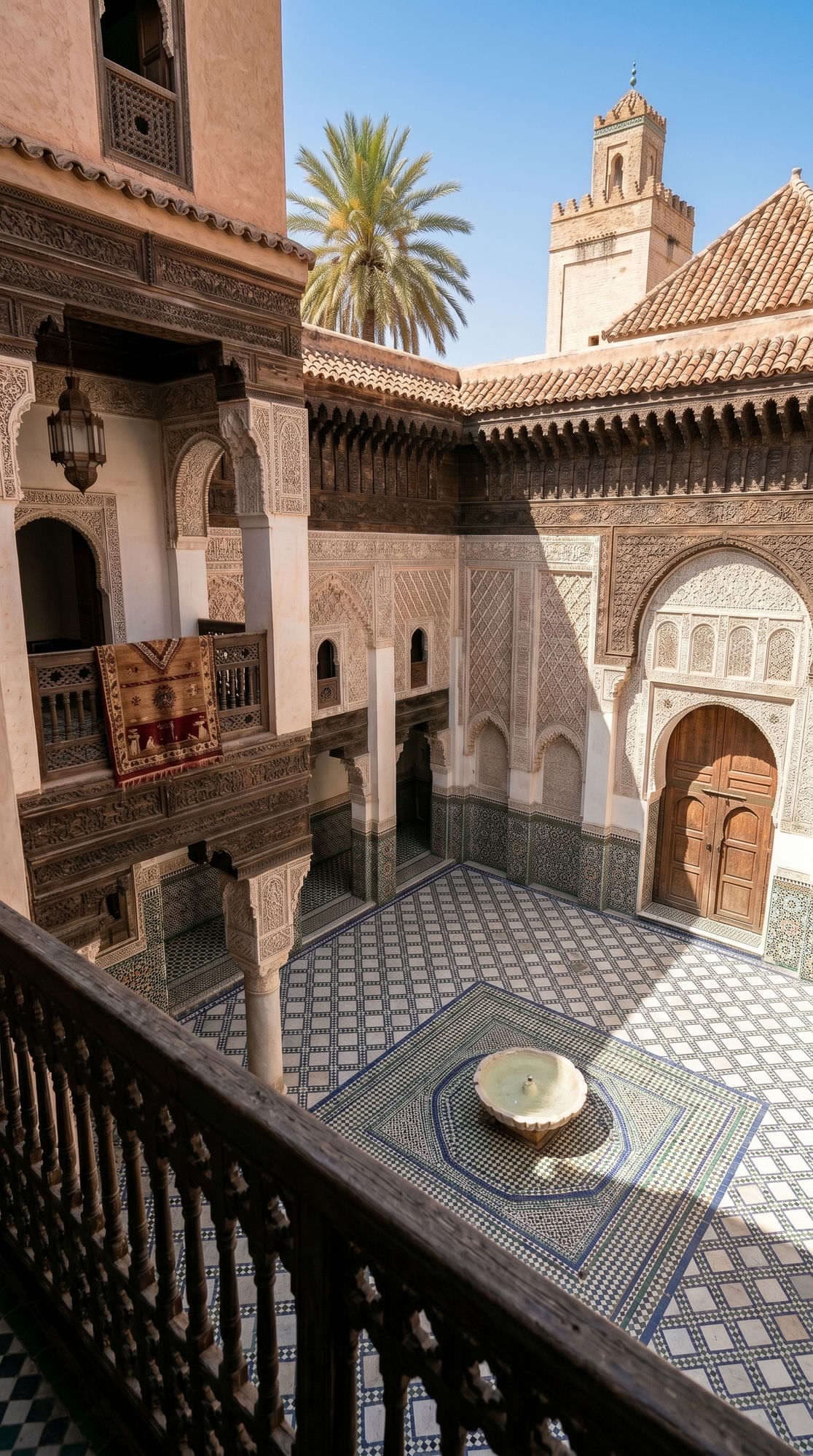
Bahia Palace is one of the most visited monuments in Morocco, drawing an estimated an estimated 500,000 visitors a year (no official annual total is published), and one of the most misunderstood. Most tourists know it as "the palace in Marrakech," but very few arrive knowing what they're actually looking at, what to prioritise, or how to avoid the most common trip-ruining mistakes. These ten things will make your visit genuinely better.
Key Takeaways
- Bahia Palace has one ticket window. In peak season, the door queue runs 30 to 45 minutes. Booking online removes this entirely and costs the same as the door price. This is the single most impactful thing you can do before you arrive.
- The palace was built by a man born into slavery who became Grand Vizier of Morocco. Understanding this story transforms what you see inside from "nice architecture" into something genuinely remarkable.
- The visitable area covers 8,000 m² across multiple courtyards, gardens, and rooms. Budget 90 minutes. Rushing through in 30 minutes means you'll miss most of what makes it worth visiting.
1. Why Book Your Tickets Before You Arrive?
This is the single most impactful thing you can do before you visit. Bahia Palace has one ticket window. During peak season (March through November), queues take 30 to 45 minutes. A pre-booked ticket lets you bypass the queue entirely and walk straight in. The price difference is minimal; the difference in experience is significant. Book at least 24 to 48 hours in advance outside peak season. During high season or around public holidays, book 3 to 5 days ahead.
Full breakdown of prices, discounts, and how to buy is on the entrance fee page.
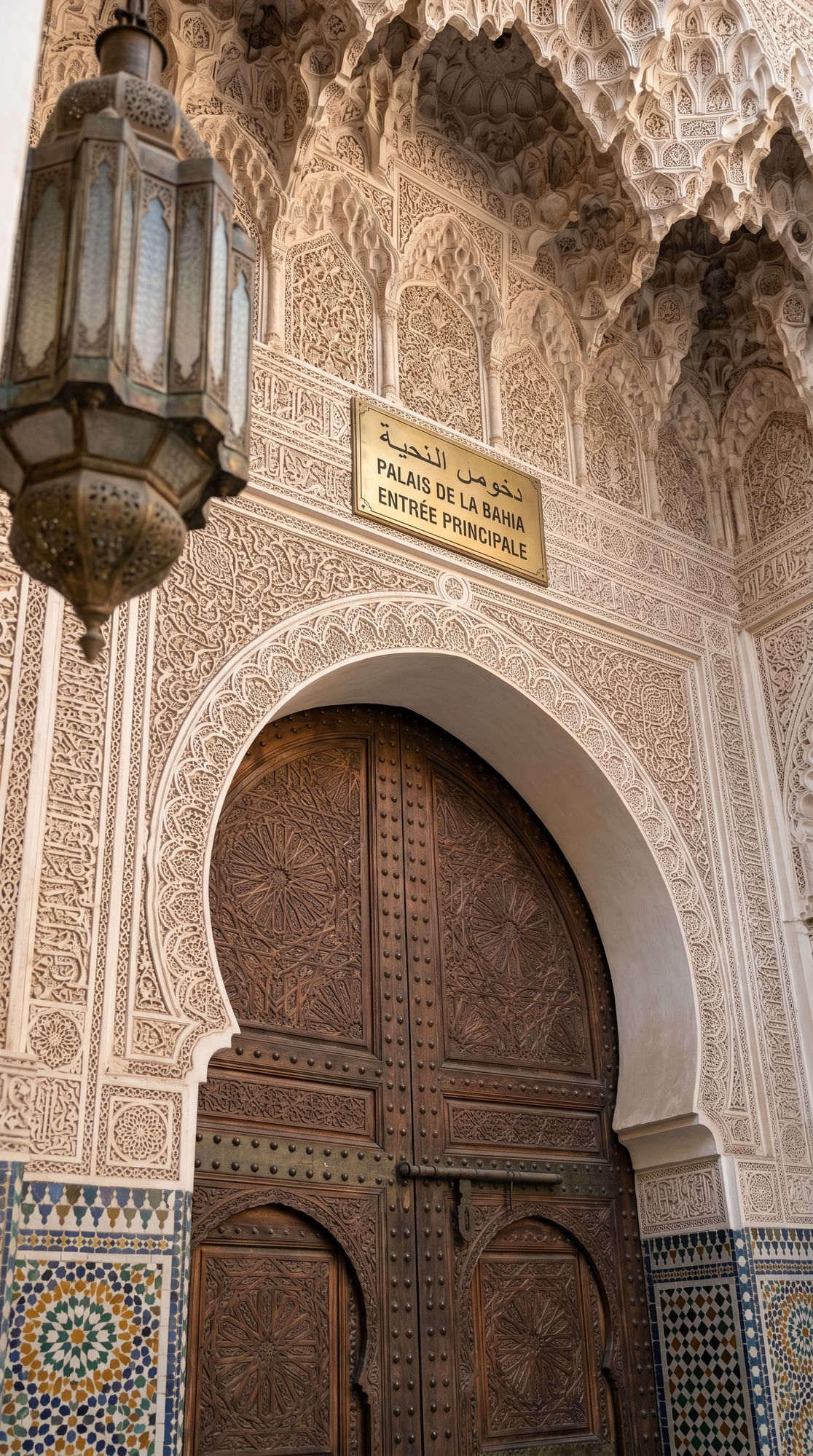
2. Why Is Early Morning the Best Time to Arrive?
Bahia Palace opens at 9:00 AM. If you can be there at opening, do it. The first 90 minutes are the quietest of the day — no tour groups, better light for photography, cooler temperatures, and room to walk at your own pace. Going early isn't just advice for photographers. Being able to move through a historic palace without being nudged along by a crowd is a fundamentally different experience. Morocco's National Tourism Office recorded 17.4 million tourist arrivals in 2024 (ONMT, Morocco Tourism Annual Report 2024), and Marrakech's major sites reflect that volume.
3. Wear Comfortable, Sensible Shoes
The visitable area covers approximately 8,000 square meters. You will walk on polished zellige tile floors — beautiful, but slippery — uneven stone passages between sections, and raised thresholds between rooms. Heels are a bad idea. Flip-flops with no grip are a liability. Wear flat, closed-toe shoes or sandals with a proper sole. You do not need to remove your shoes. Bahia Palace is not a mosque. See the full dress code guide for what to wear throughout your Marrakech day.
4. What Should You Bring to Bahia Palace?
Water: Even in spring and autumn, temperatures climb to 25–30°C by midday. There's no café or water station once you're inside. Bring a bottle per person.
Cash: The ticket window is cash only, no card readers. The official price is 100 MAD per adult (foreign visitors). Even if you've pre-booked online, you'll want cash for the medina shops, street food, and tips. The nearest ATMs are on or near Rue Riad Zitoun el Kedim.
Offline map: Download Google Maps or Maps.me offline before entering the Medina. GPS works without a data connection and makes the walk from Djemaa el-Fna straightforward. See the getting to Bahia Palace guide for route options.
5. Why Should You Learn the Story Before You Go?
Bahia Palace is stunning to look at. But without knowing what you're looking at, you'll leave thinking "nice tiles" without understanding the story behind the rooms. The palace was built by Si Moussa, Grand Vizier of Sultan Hassan I, and later expanded enormously by his son Ba Ahmed. Ba Ahmed built the palace as a monument to his own power: the name "Bahia" means "brilliant" in Arabic. The harem quarters housed four wives and 24 concubines. He died knowing the Sultan had been waiting to take everything, and within hours of his death in 1900, the palace was stripped bare overnight.
An audio guide is available for hire at the entrance. Reading a good summary the night before your visit takes 10 minutes and transforms what you see inside. The full history article covers the story in detail.
6. Which Areas of the Palace Should You Not Miss?
If you find yourself rushing, slow down in two places:
The Grand Riad: The largest open courtyard in the palace, framed by a painted wooden gallery and surrounded by orange trees. It's the spatial heart of the building and one of the most photogenic spots in Marrakech.
The Harem Courtyard and Chambers: The private quarters built for Ba Ahmed's wives and concubines. The rooms here are smaller, more intimate, and detailed in ways the grand reception halls aren't. Many visitors move quickly through the outer rooms and miss the depth of what's further inside. The room-by-room guide maps the layout so you can prioritise.
7. Can You Take Photos Inside Bahia Palace?
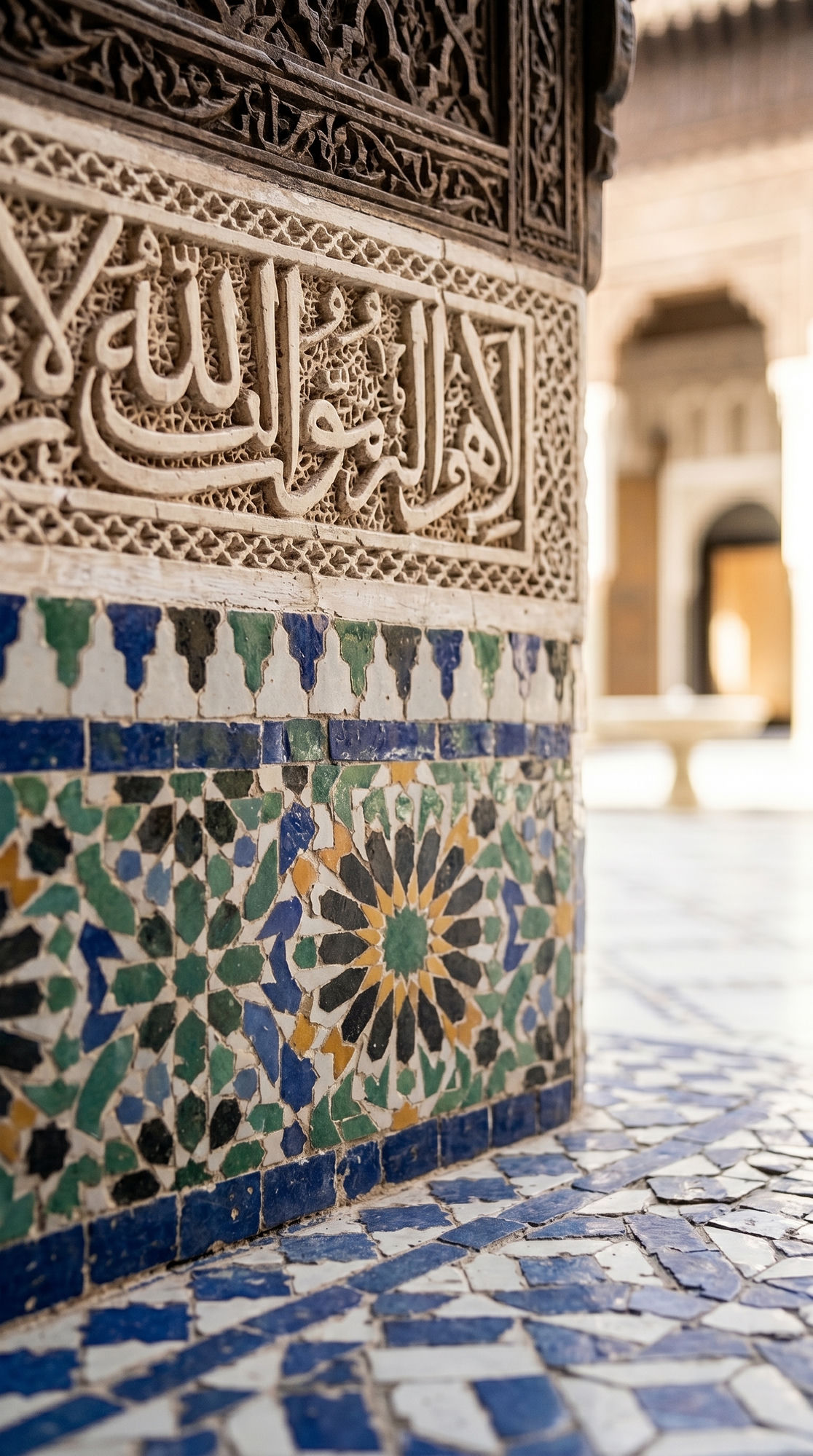
Yes, freely. There is no photography fee and no restricted area for personal cameras or phones. The one firm rule: no flash. The painted wooden ceilings, carved stucco, and pigmented tilework are old and light-sensitive. Flash is prohibited to protect them, and this is actively enforced by palace staff. Drones are not permitted inside or in the immediate vicinity.
The best light for courtyard shots is in the first two hours after opening (9:00–11:00 AM). Interior rooms are dimly lit — use your phone's night mode or increase ISO on a camera rather than flash. Full advice in the photography guide.
8. What Tourist Scams Should You Watch For Outside?
Inside the palace walls, you're fine. Outside is different, not because Marrakech is dangerous, but because major tourist sites attract people looking to earn money from visitors. The most common are: "unofficial guides" who claim guiding is mandatory or that the palace is closed (it isn't), men who walk alongside you offering to "show you the way," and henna artists who offer free application then demand an aggressive price once it's on your arm.
Download an offline map before your trip, walk with purpose, and decline unsolicited offers. For a complete guide to this, see the Marrakech safety guide.
9. Combine Your Visit with Nearby Sites
Bahia Palace sits in the southern Medina, and two of Marrakech's other major historical sites are within a short walk.
Saadian Tombs (~10 minutes south): The royal mausoleum of the Saadian dynasty, featuring intricately decorated chambers. Closed for centuries and only rediscovered in 1917.
El Badi Palace (~15 minutes west): The dramatic ruins of a 16th-century palace complex, vast roofless halls and stork-nested towers. A very different experience from Bahia, worth an hour.
A good half-day: Start at Bahia Palace at 9:00 AM, spend 1.5 hours, walk to the Saadian Tombs, then end at El Badi Palace before lunch. All three within 4 to 5 hours total. The opening hours page has current times for all three sites.
10. How Long Should You Plan for Bahia Palace?
Visitors who rush through in 30 to 40 minutes typically only see the first two or three courtyards. The private apartments, harem quarters, and gardens reward slower exploration. But unlike a museum with 50 rooms, Bahia Palace has a natural flow and a clear exit. The sweet spot is 90 minutes: enough to see every section thoughtfully without rushing, with time to sit in the Grand Riad and actually absorb where you are.
In our experience, visitors who plan for 60 minutes and find they want more are the happiest. Those who plan for two hours and feel pressured to fill the time are not. 90 minutes with a pre-booked ticket and no queue is the ideal visit.
Frequently Asked Questions
Is Bahia Palace worth visiting?
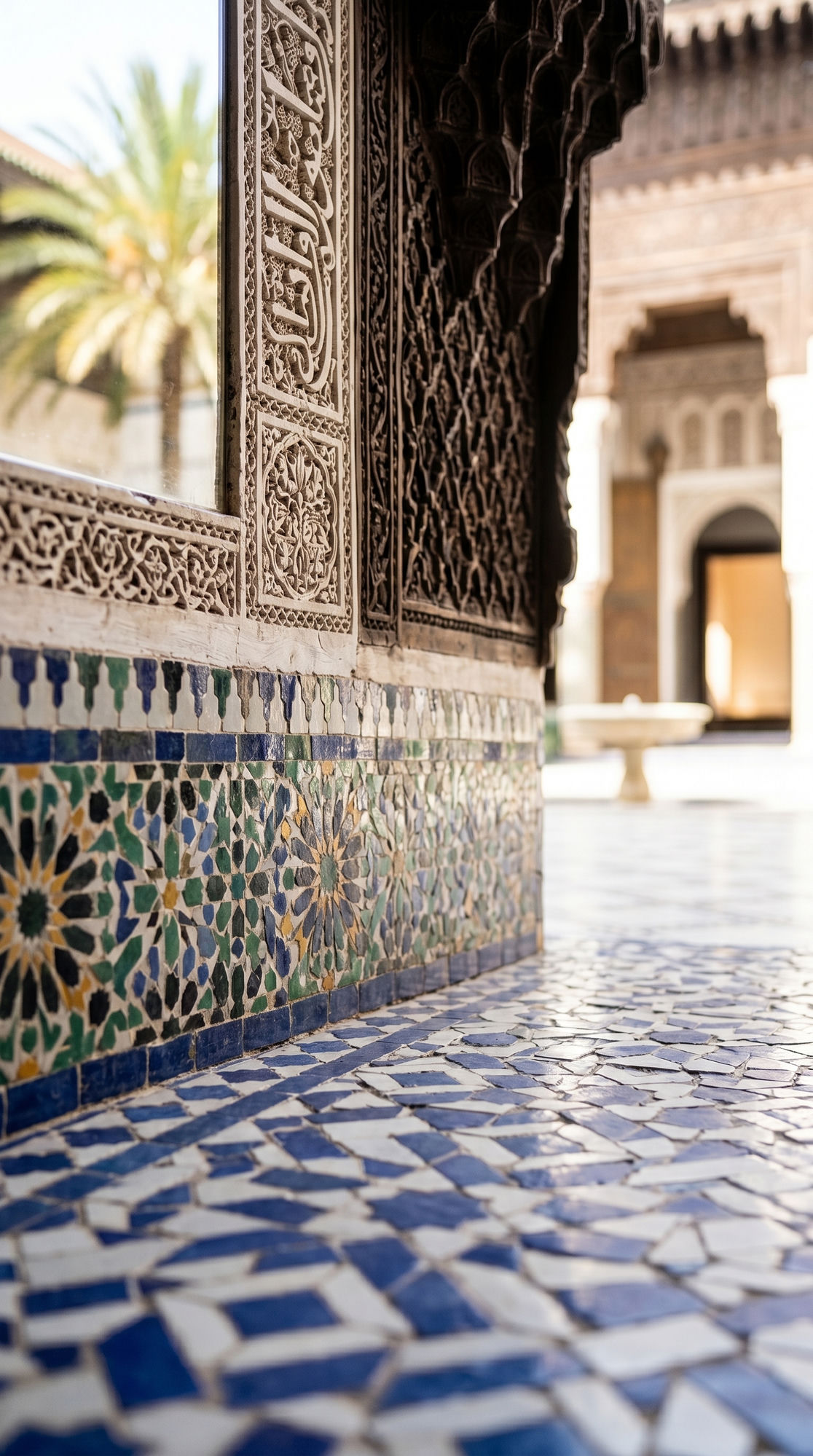
Yes, without reservation. It's one of the best-preserved examples of Moroccan-Andalusian architecture in the country, with roughly 8,000 square meters of painted ceilings, mosaic courtyards, and carved stucco work open to visitors. For architecture and history enthusiasts it's a highlight of any Morocco trip. Even for casual visitors, 90 minutes inside is time very well spent. The honest review of Bahia Palace covers the case for and against in detail.
Is Bahia Palace suitable for children?
Yes. There's a lot to look at, space to walk, and the open courtyard gardens are engaging for younger visitors. Children under 7 enter free. The main practical consideration is the walking distance through the medina. The family visitor guide covers age-specific advice and practical tips.
Can I take photos inside Bahia Palace?
Yes, personal photography is free and unrestricted throughout the palace. Flash photography is prohibited to protect the painted surfaces and woodwork. Tripods may be questioned by staff in busy areas. Video recording for personal use is generally fine.