
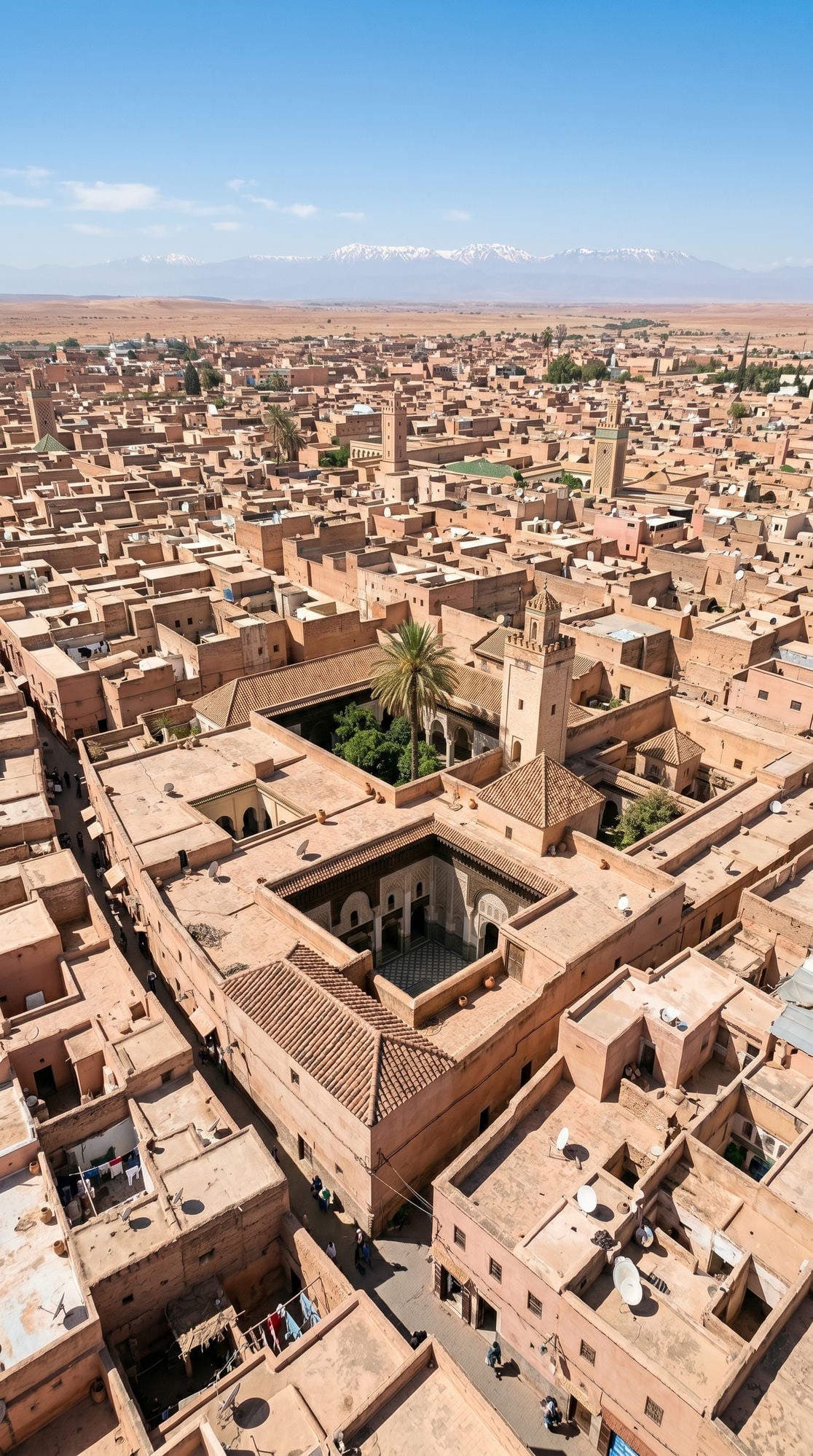
Marrakech is one of the most visited cities in North Africa, and Bahia Palace is one of its most iconic attractions. Like any major tourist destination, the Medina has a small number of predictable scams that target first-time visitors. Knowing what they are before you arrive turns almost all of them from surprises into non-events.
This guide is practical, not alarmist. Millions of visitors enjoy Marrakech every year without incident. The goal here is to help you be one of them.
Key Takeaways
- Morocco welcomed 17.4 million international tourists in 2024 (ONMT, Morocco Tourism Annual Report 2024). Marrakech is considered safe for independent travelers and is one of the country's most-visited cities.
- Six predictable scams cluster around Bahia Palace and the Medina. They follow a common pattern: a stranger initiates contact and tries to redirect you before you can think. Knowing this pattern neutralises all six.
- Booking your entry ticket online before you arrive eliminates every entrance-area scam in one step. Arrive with a QR code, not cash to hand over at the gate.
Is Marrakech Safe for Tourists in 2026?
Morocco welcomed 17.4 million international visitors in 2024, according to the Office National Marocain du Tourisme (ONMT, Morocco Tourism Annual Report 2024). Marrakech is the country's most-visited city, with a dedicated tourist police (police touristique) presence near all major attractions and an established infrastructure built around welcoming international visitors. The vast majority of people who visit Bahia Palace each year complete their trip without a single incident.
That said, petty opportunism is real and predictable. The scams described in this guide are not dangerous. They rely on confusion and social pressure, not threat. Once you know the pattern, none of them can catch you off guard.
Visitors who've reached out to us after their trips consistently say the same thing: the anxiety about Marrakech faded within an hour of arriving, and the city turned out to be far warmer and more welcoming than they expected. Almost no one who knew what to watch for had any real trouble.
What Are the Most Common Scams Around Bahia Palace?
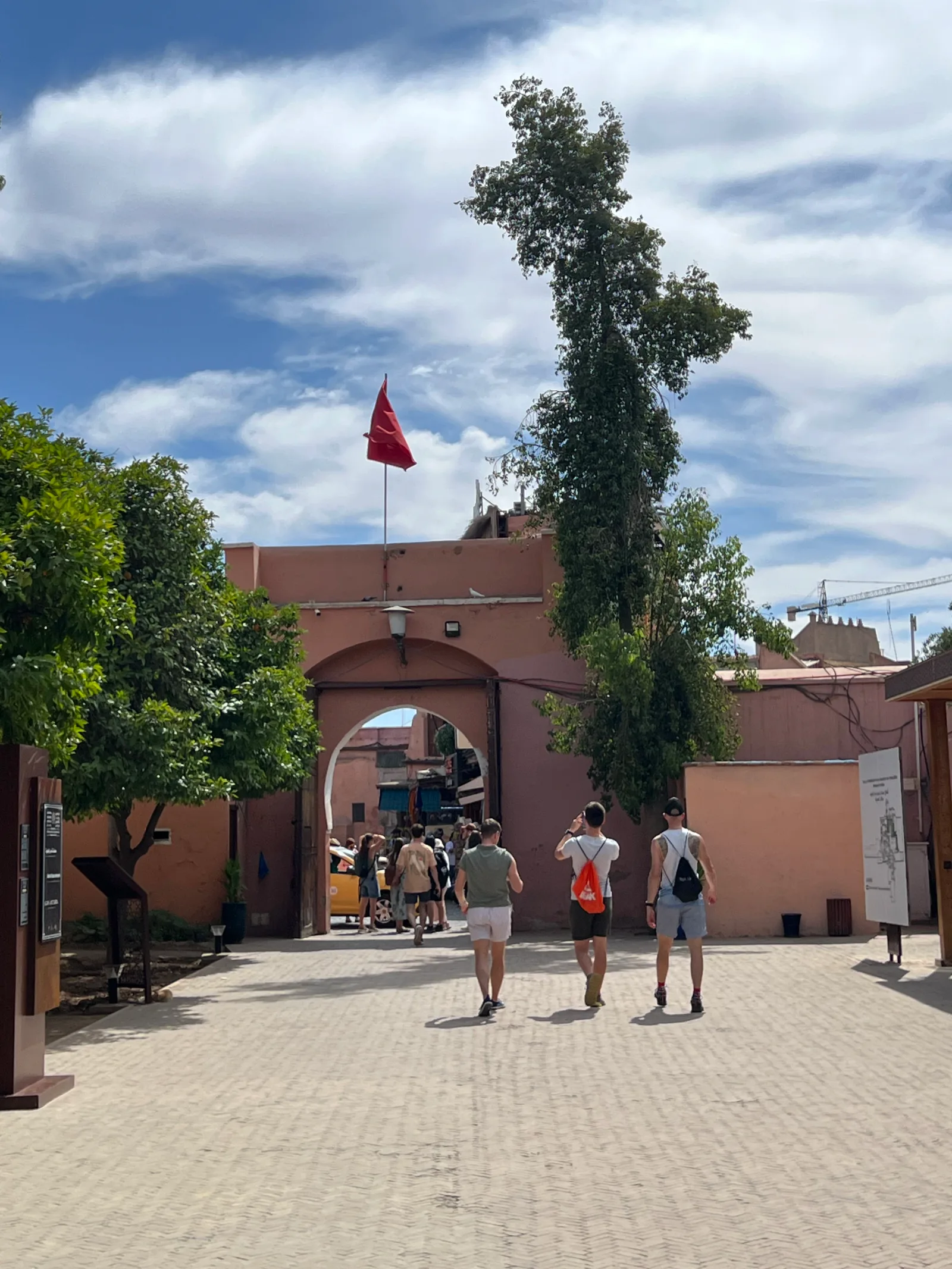
Bahia Palace is among Marrakech's most-visited attractions, drawing a significant share of Morocco's 17.4 million annual tourists (ONMT, 2024). High visitor volume makes the entrance area one of the most active locations for scam attempts in the Medina. Six distinct approaches repeat consistently. They follow a single underlying mechanism: a stranger initiates contact and tries to move you from your route before you can verify what's happening.
1. The "Unofficial Guide" Approach
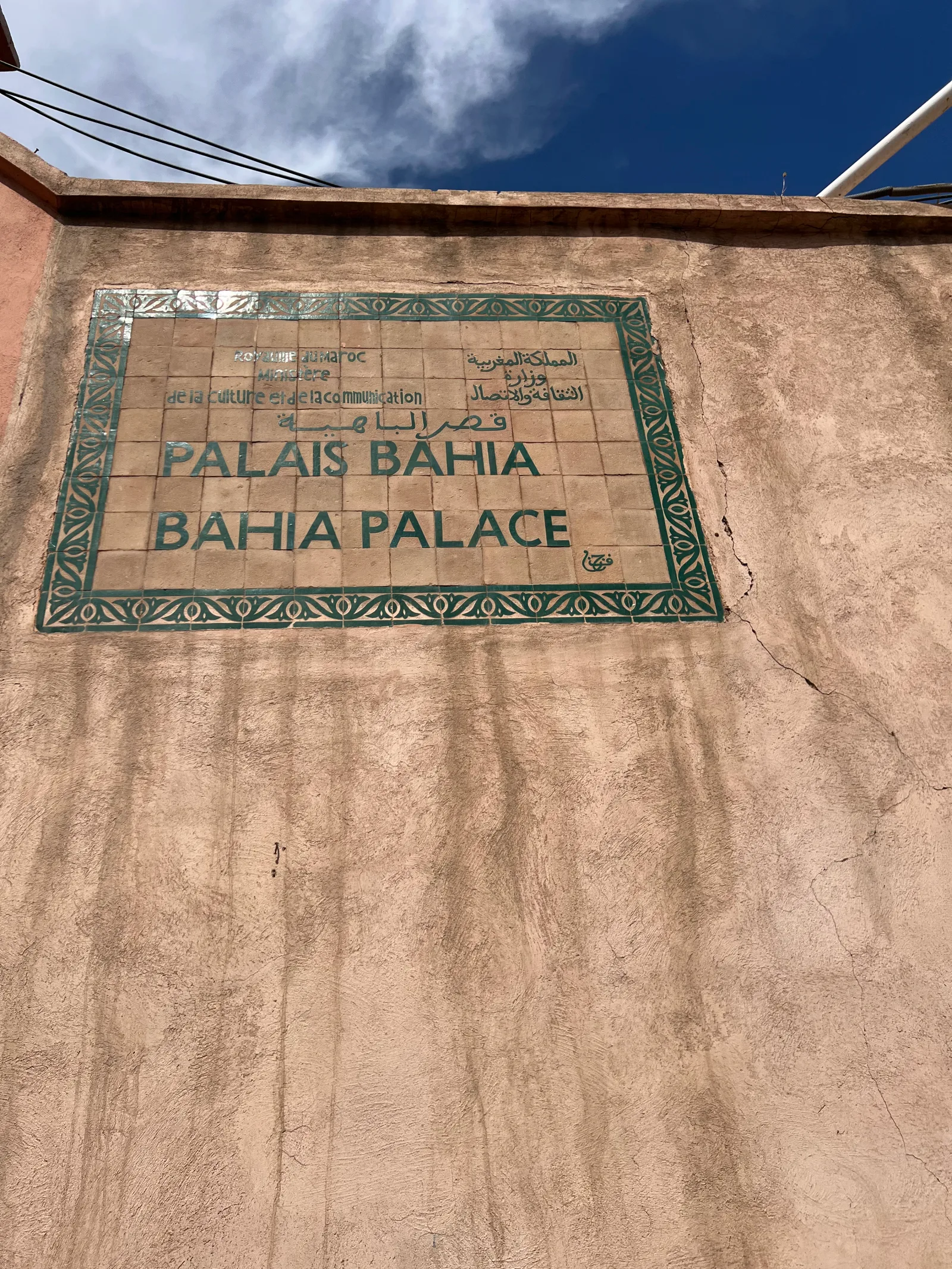
As you near the entrance, men may approach claiming to be official guides or palace staff. They are not. The palace is managed by Morocco's Ministry of Culture (e-services.minculture.gov.ma), which employs its own ticket staff. Licensed freelance guides wear a badge from the Regional Council for Tourism and will not approach you unsolicited on the street.
Walk purposefully and say "La shukran" (No thank you) without breaking stride. Do not explain yourself or engage further.
2. The "Closed Today" Claim
A stranger intercepts you before you reach the entrance and says the palace is closed today, but they know a wonderful alternative. Bahia Palace is open every day. Check current opening hours for Ramadan variations, but closure on a normal day is essentially never the case. This claim is a redirect tactic, not information.
Ignore it and walk directly to the gate to confirm for yourself.
3. The Henna Offer
Women near the entrance offer free henna as a welcome gesture. Once the design is applied, they demand 200 to 500 MAD or more. The word "free" here is a transaction opener, not a genuine offer.
Decline before they touch you. If you want henna during your trip, visit a fixed-location salon in the Medina and agree on a written price before any work starts.
4. The Fake Ticket Seller
People near the entrance offer to sell tickets at a discount or promise faster entry for cash. There is no such thing. The official Bahia Palace entrance fee is 100 MAD per person, purchased at the palace ticket window or through the official online ticketing portal.
Buying your ticket online removes this scam entirely. Arriving with a QR code on your phone means there is nothing left to offer you at the gate.
5. The Souk "Shortcut" Offer
On the walk from Djemaa el-Fna to Bahia Palace, strangers offer to guide you through the souks. The route takes you on a long detour through carpet shops and spice stalls where the guide earns a commission on your purchases. The direct route via Rue Riad Zitoun el Jedid takes about 15 minutes and is well-signposted.
Download Google Maps or Maps.me offline before entering the Medina. GPS works without a data connection and makes the route to Bahia Palace straightforward.
6. The Photograph Demand
Snake charmers, water carriers in traditional dress, and performers near Djemaa el-Fna actively position themselves for tourist photos. The moment any image is taken, payment is demanded, sometimes aggressively.
Agree on a price before photographing anyone. If you do not want to negotiate, do not photograph these performers.
How Do You Stay Safe Walking Through the Medina?
The Medina of Marrakesh has been a UNESCO World Heritage Site since 1985 (UNESCO World Heritage List entry #331) and one of the best-preserved medieval urban centres in the world. Walking through it is genuinely remarkable. A few practical habits make the experience significantly more comfortable from the moment you enter.
- Keep valuables secure. Use a crossbody bag worn across your chest, and keep your phone in a front pocket. Pickpocketing does occur in crowded areas, particularly near Djemaa el-Fna.
- Don't display expensive items unnecessarily. Cameras, watches, and visible luxury goods attract attention you don't need.
- Haggle, but with perspective. Bargaining in the souks is expected and part of the culture. A starting counter-offer of 40 to 50 percent of the asking price is typical. Most vendors enjoy the exchange.
- Use offline maps. Download Google Maps offline or the Maps.me app before entering the Medina. GPS works without a data connection and makes the route to Bahia Palace straightforward.
- Stick to busier streets after dark. The Medina is generally safe during the day. At night, the main thoroughfares remain lively and well-lit. Quiet alleys after dark are worth avoiding as a precaution.
- Dress modestly. Shoulders and knees covered is respectful and practical near historic sites including Bahia Palace. It also reduces unsolicited attention.
What Should You Do If Something Goes Wrong?
Most friction dissolves quickly when you stay calm and stop engaging. Arguing or trying to resolve a confrontation on the spot rarely helps. The Marrakech tourist police have a visible presence near major attractions including Bahia Palace and Djemaa el-Fna, and they respond quickly to complaints. Knowing you have a clear plan if something escalates is itself useful for staying relaxed throughout the day.
- Stay calm and disengage. Most pressure tactics stop the moment you stop responding. Walk into the nearest open shop or cafe if someone is being persistent. Local shopkeepers often step in to help tourists without being asked.
- Find a tourist police officer. They are identifiable by their uniform and visible near the main tourist sites. The Marrakech police touristique take tourist complaints seriously and are effective at resolving them quickly.
- Ask your accommodation for help. Riad and hotel staff are invaluable resources. They can advise, translate, or call authorities on your behalf.
- Emergency numbers in Morocco: Police: 190. Ambulance: 150. Both are free to call from any phone.
In our experience, genuine confrontations are rare. Most situations resolve in under a minute once you stop engaging. The six scenarios described in this guide cover the vast majority of what visitors actually encounter near the palace.
Frequently Asked Questions
Is Bahia Palace safe to visit alone?
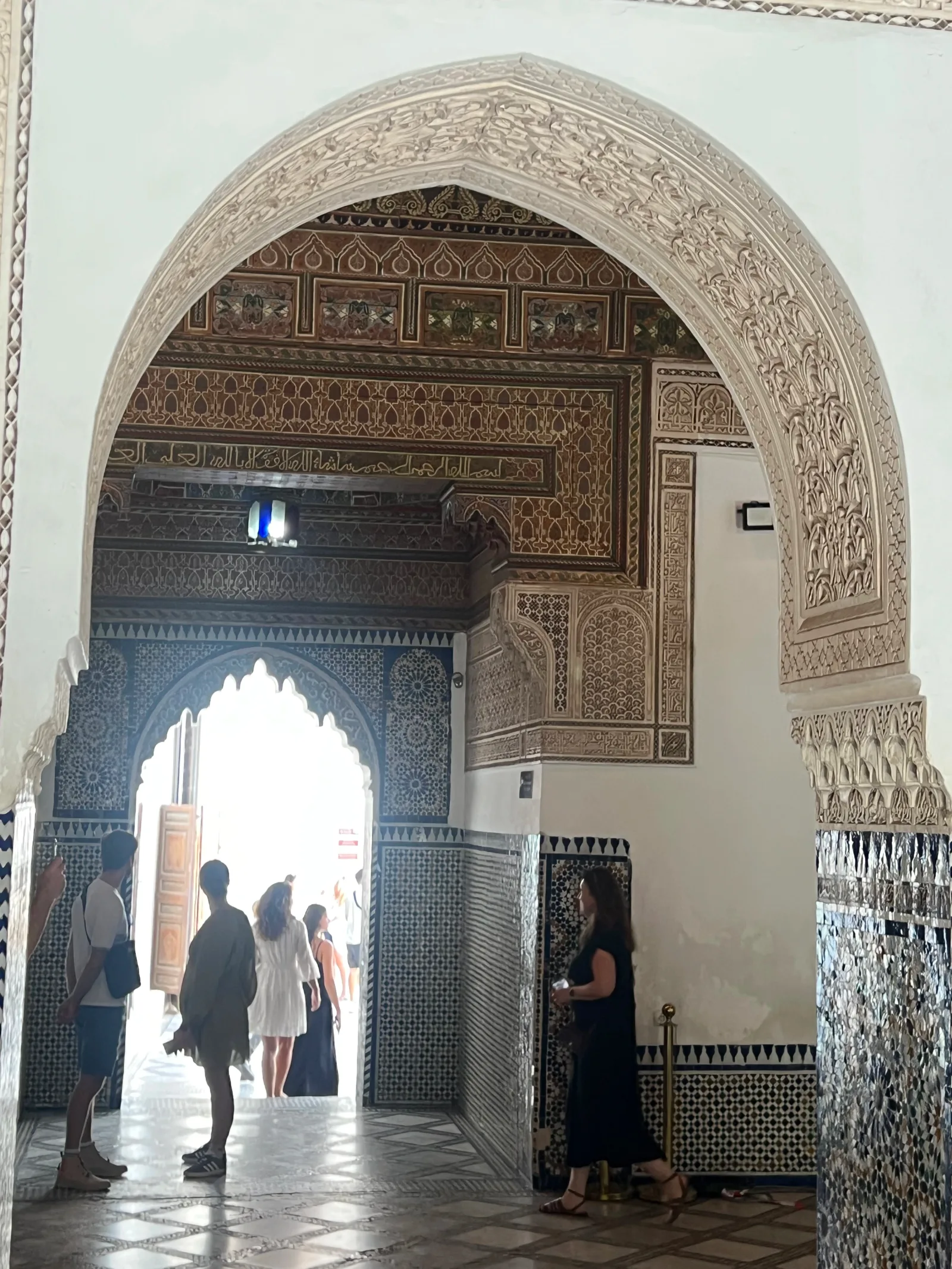
Yes. Inside the palace, you are in a staffed, managed visitor environment. The scenarios in this guide all happen outside the entrance, not inside. Solo visitors, including solo women, visit Bahia Palace daily without incident. Buying your ticket in advance and arriving by petit taxi or on foot along Rue Riad Zitoun el Jedid covers the practical side of a solo visit. See 15 practical tips before your first visit for a complete first-timer's checklist.
Is Marrakech safe for solo female travelers?
Yes, with ordinary awareness. Dressing modestly, walking with purpose, and using taxis for journeys after dark all help. Many thousands of solo women visit Marrakech every year without serious incident. A good riad in the Medina gives you a safe base and staff who know the city well.
Are taxis in Marrakech safe?
Official petit taxis (red) are safe and metered. Always confirm the meter is running before you set off, and agree on the fare in advance for longer journeys. Avoid unmarked vehicles near tourist sites. Ride-hailing apps operate in Marrakech as an alternative to flagging taxis.
Should I worry about food safety in Marrakech?
Food at busy, reputable spots is generally safe. Cooked street food from vendors with high turnover carries lower risk than raw salads or juices. Drink bottled water rather than tap water. Bottled water is inexpensive and available throughout the Medina.
How do I get to Bahia Palace without getting lost or approached?
The palace is about a 15-minute walk from Djemaa el-Fna via Rue Riad Zitoun el Jedid. Download an offline map before you leave your accommodation. Any petit taxi knows the palace by name, and the fare from central Marrakech is typically 15 to 20 MAD. See the full guide to getting to Bahia Palace for step-by-step directions by every transport option.