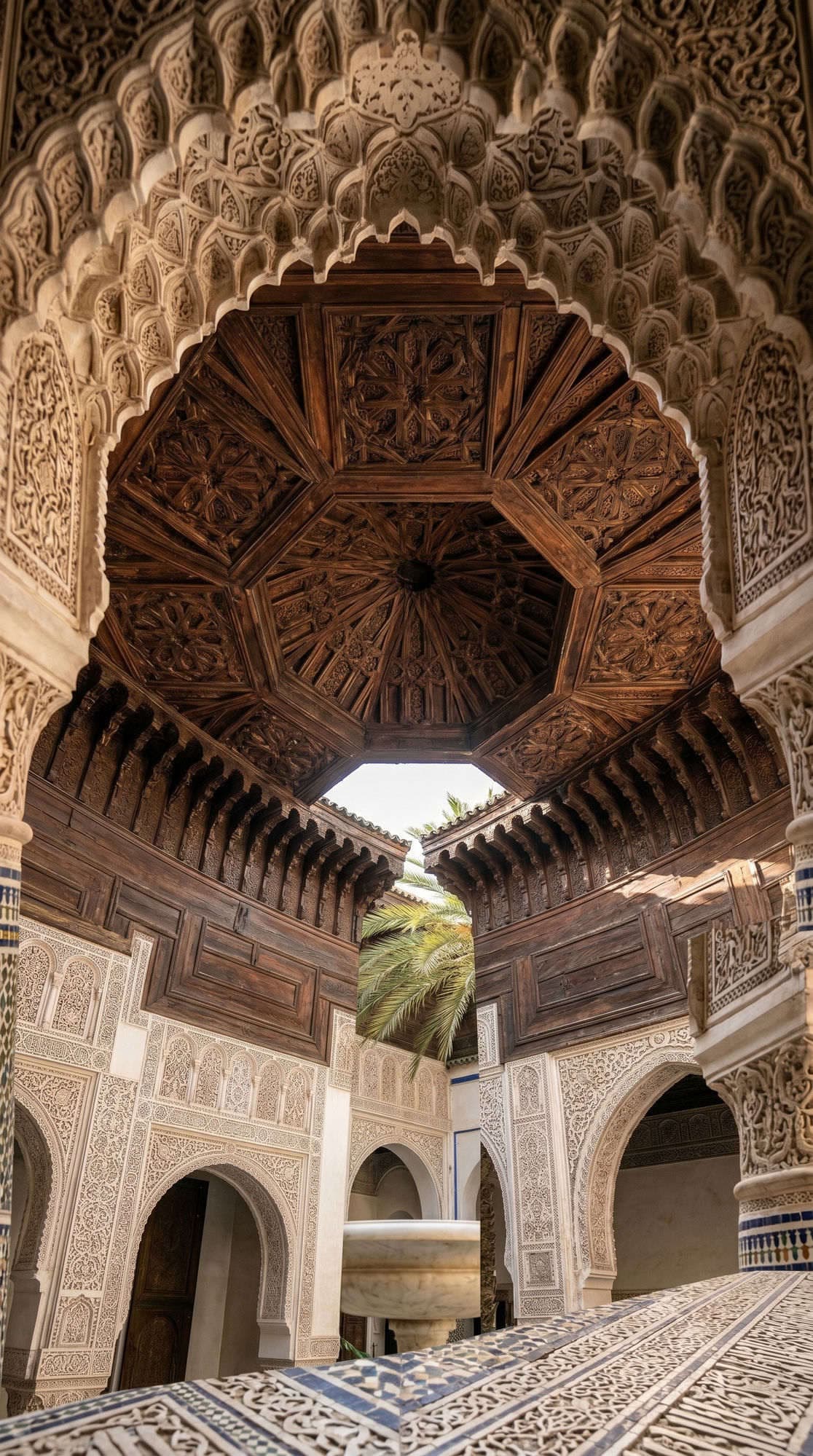
Bahia Palace is not one building but two, forty years apart. The garden chambers carry an inscription dating them to 1866–1867, when the chamberlain Si Moussa built himself a house here. His son Ba Ahmed turned that house into the palace visitors walk through today between 1894–1900, in the six years he governed Morocco in the name of a teenage sultan.
al-Bahia means “the brilliant”. It was reportedly the name of Ba Ahmed’s favourite wife, though some accounts read the name as describing the palace itself rather than a person.
Dates and figures on this page are sourced individually and listed in full under Sources.
The palace was built in two phases. Si Moussa, chamberlain to Sultan Muhammad IV and later grand vizier under Hassan I, built the first house on the site. His son Ba Ahmed expanded it between 1894–1900.
Ba Ahmed did not inherit his father’s office. He served as hajib to Hassan I from 1879, and when the sultan died on campaign in 1894 he installed the 14-year-old Moulay Abdelaziz over his elder brothers and governed in his place until his own death.
Ba Ahmed’s grandfather was enslaved, owned by Sultan Moulay Slimane, and rose to become his hajib, or chamberlain. Ba Ahmed himself was born into an established makhzen family.
The decoration was executed by Moroccan maalmin, principally Fez-trained specialists in zellige, gebs and cedar joinery. He assembled the ground by absorbing the plots of some 60 neighbouring houses, with 16 gardens acquired for the grounds.
Deverdun (1959), from the dated inscription in the two garden chambers
Deverdun (1959); Moroccan Ministry of Culture
Deverdun (1959)
Moroccan Ministry of Culture
Ghachem-Benkirane and Saharoff (1990)
Deverdun (1959)
Contemporary Moroccan chronicles, summarised in Deverdun (1959)
Moroccan Ministry of Culture
The two chambers flanking the garden carry an inscription dating them to 1866–1867, the earliest firm date on the building. Si Moussa, chamberlain to Sultan Muhammad IV and later grand vizier under Hassan I, builds it as a private residence, not yet as Bahia.
Deverdun (1959)
Si Moussa’s son Ahmed ibn Moussa becomes hajib, chamberlain, to Sultan Hassan I. He does not inherit his father’s vizierate; he builds his own position over the next fifteen years.
Deverdun (1959)
Hassan I dies on campaign. Ba Ahmed conceals the death long enough to install the 14-year-old Moulay Abdelaziz over his elder brothers, and becomes grand vizier and de facto regent. He begins expanding his father’s house into a palace.
Deverdun (1959)
Ba Ahmed absorbs the plots of some 60 neighbouring houses and 16 gardens. The great marble courtyard is dated 1896–1897 by inscription. The architect is Muhammad ibn Makki al-Misfiwi of Safi.
Deverdun (1959)
Ba Ahmed dies in Marrakesh. Sultan Moulay Abdelaziz reportedly orders the palace looted of its valuables and the household expelled. The fixed decoration survives because it cannot be carried out.
Deverdun (1959)
Under the French Protectorate the palace becomes the official residence of the resident-general, France’s representative in Morocco.
Moroccan Ministry of Culture
palaceHistory.tl7Text
Moroccan Ministry of Culture
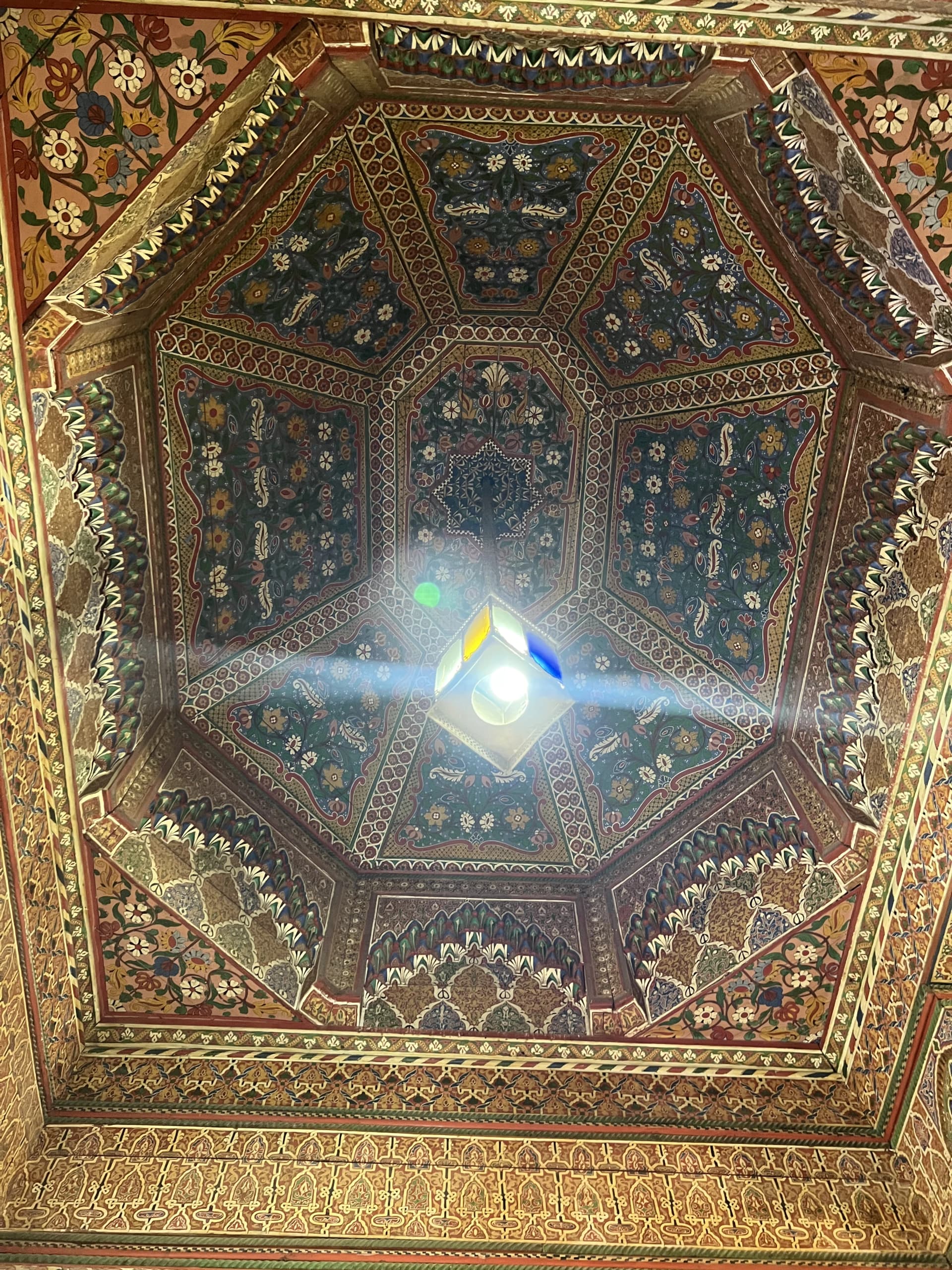
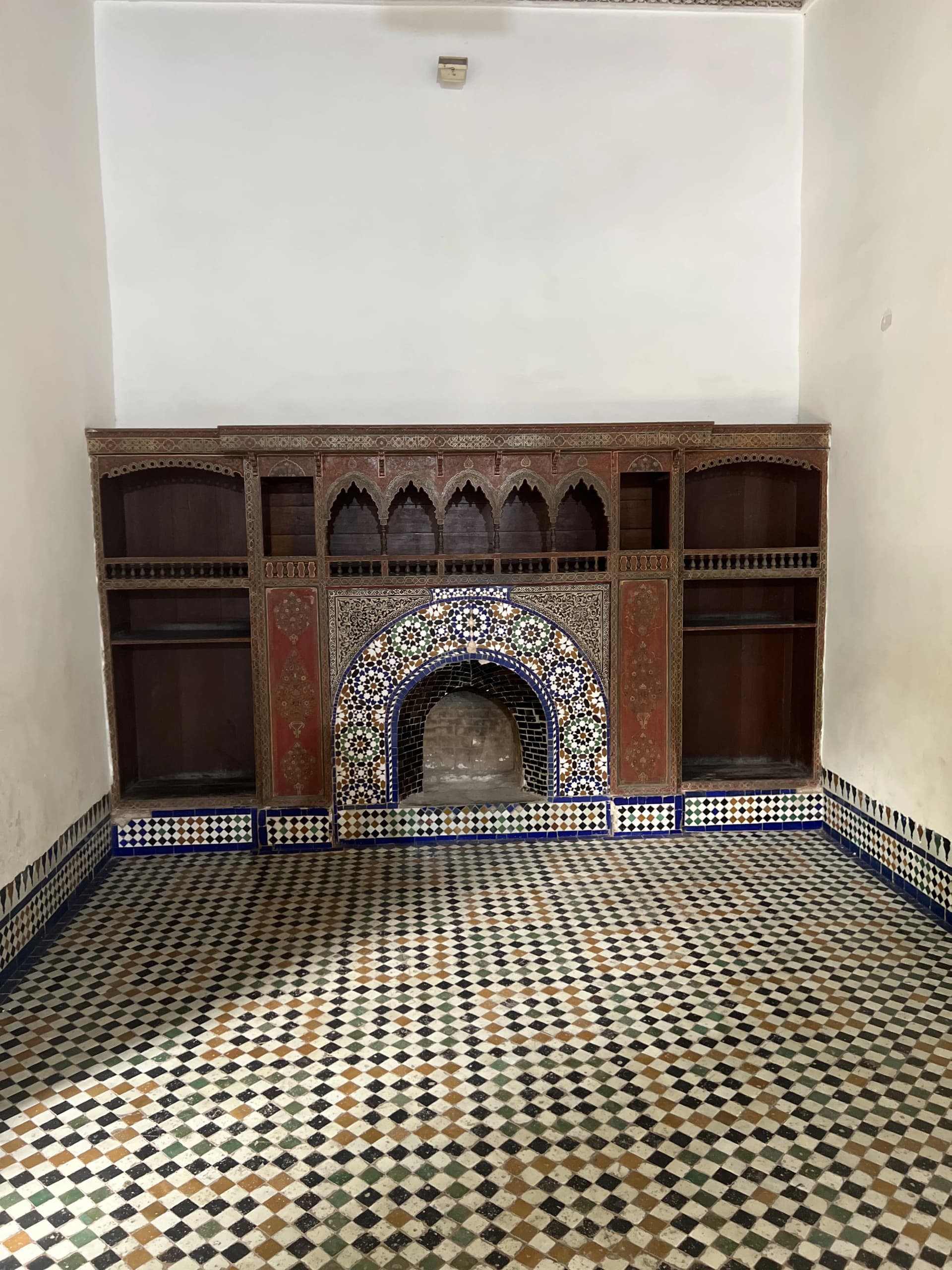
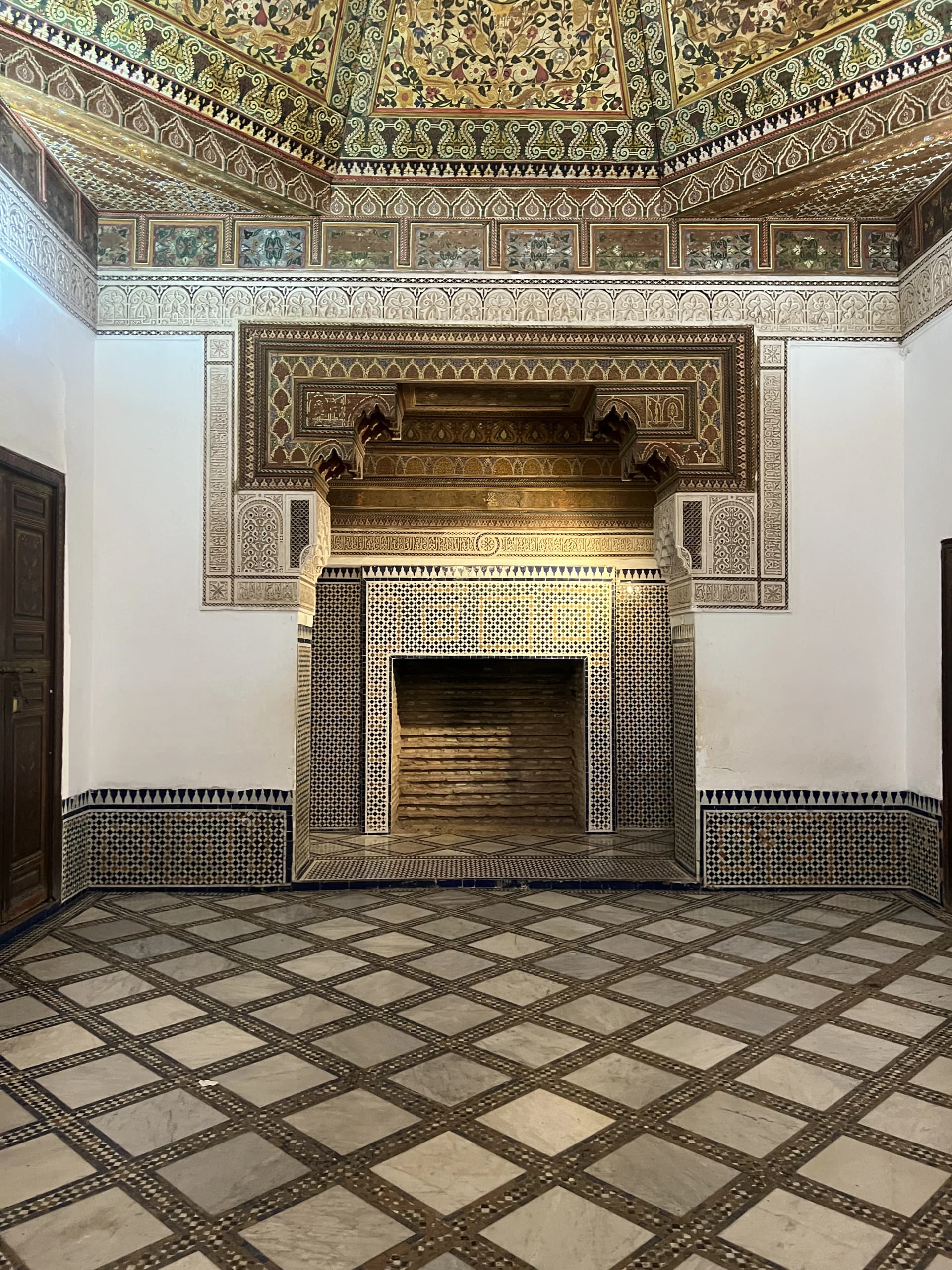
The decoration is Moroccan work in a style with deep Andalusi roots, executed by Fez-trained maalmin. The craftsmen were Moroccan, not imported from al-Andalus, which had ended four centuries earlier. Four trades account for almost everything a visitor sees.
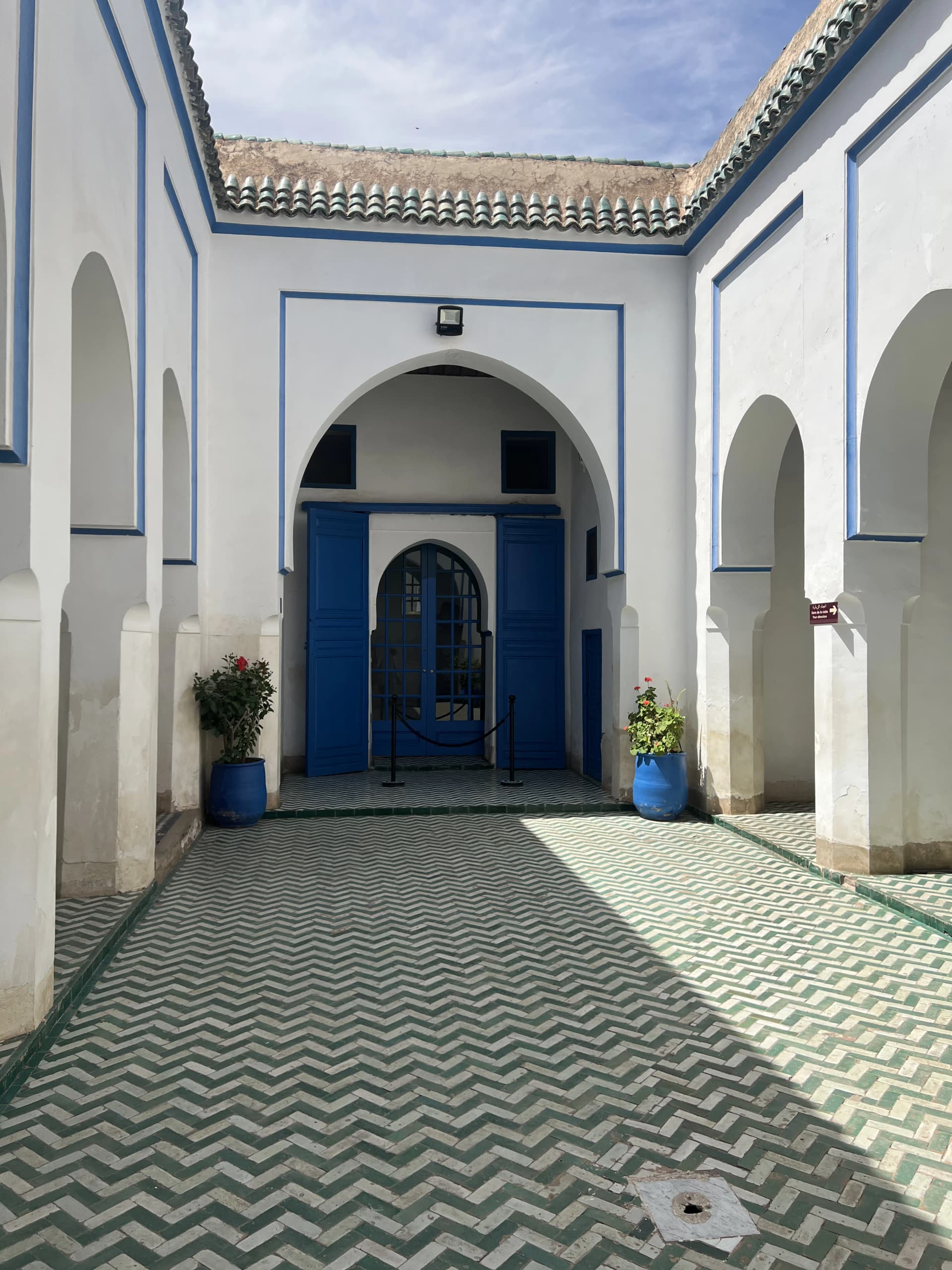
Zellige
Hand-cut glazed terracotta mosaic, laid across floors and lower walls.
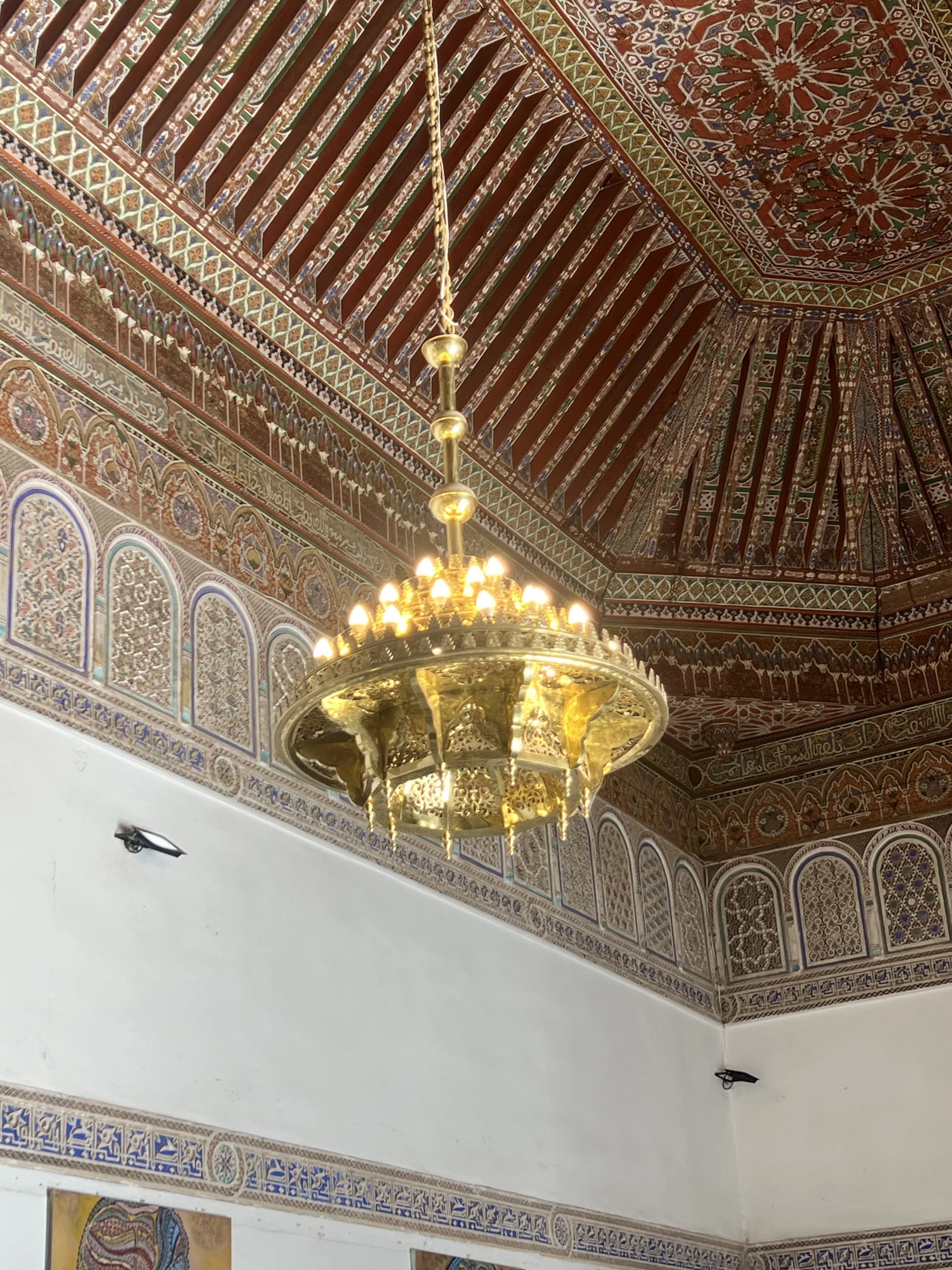
Painted cedar
Middle Atlas cedar ceilings, carved and painted with mineral pigment.
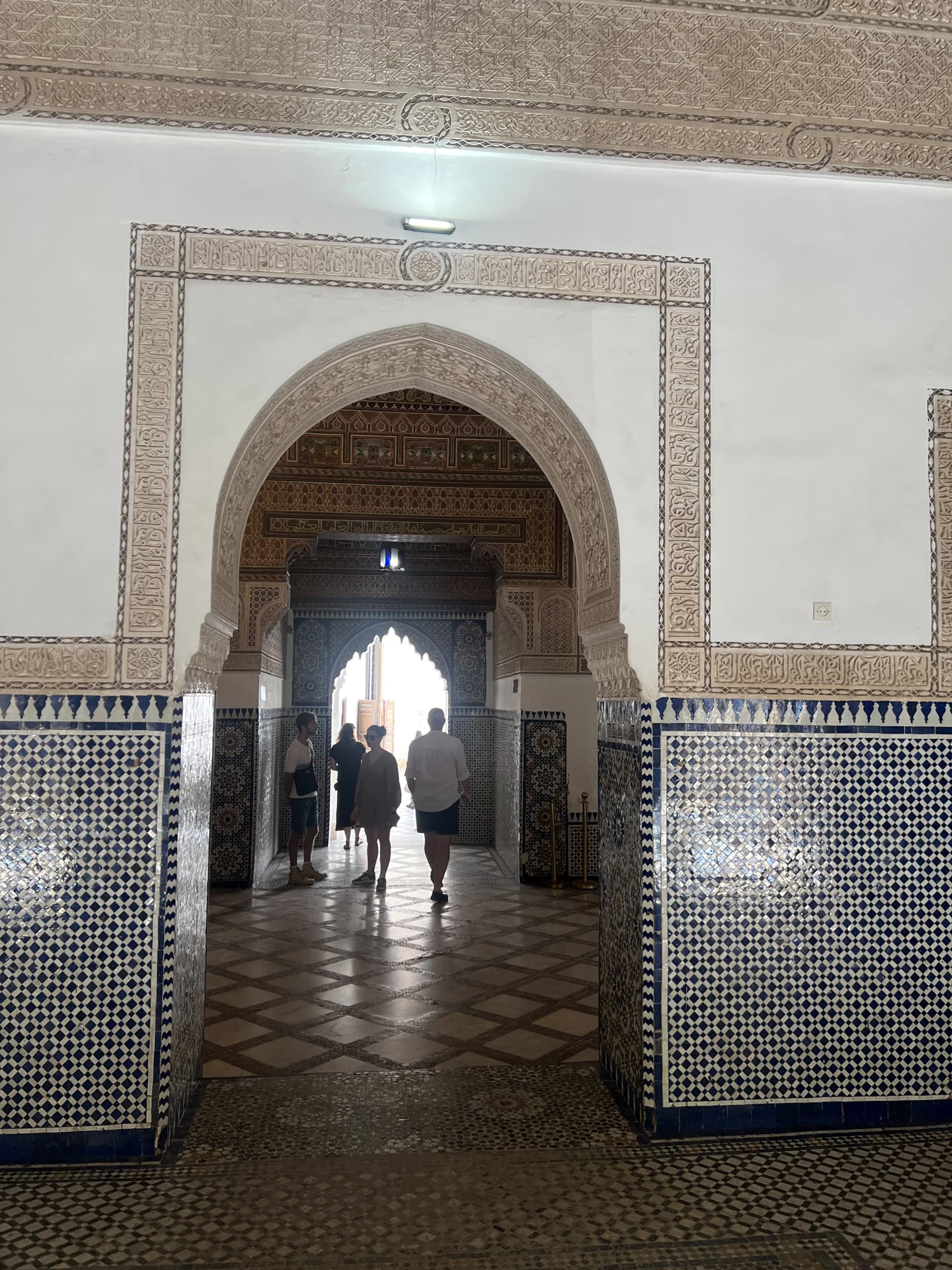
Gebs
Carved gypsum plaster worked wet into arabesque and muqarnas panels.
Marble
Imported marble paving the great courtyard, dated 1896–1897 by inscription.
A schematic of the seven spaces in the order the visitor circuit takes you, with what happened in each.
The palace stands inside the Medina of Marrakesh, inscribed on the UNESCO World Heritage List in 1985 (no. 331). From 1912 it served as the residence of the French resident-general.
Attendance: 410,141 visitors between January and April 2019. No official annual total is published; figures circulating as “500,000 a year” are estimates.
The palace has a real scholarly literature. These are the works this page draws on, not a link to an encyclopedia summary of them.
Where these sources disagree, the disagreement is stated rather than resolved silently. The full bibliography, the open questions and the correction policy are on the sources page.
Experience it in person
Compare your options, then complete your purchase directly on the official ticket portal.
Book Bahia Palace Tickets Online