
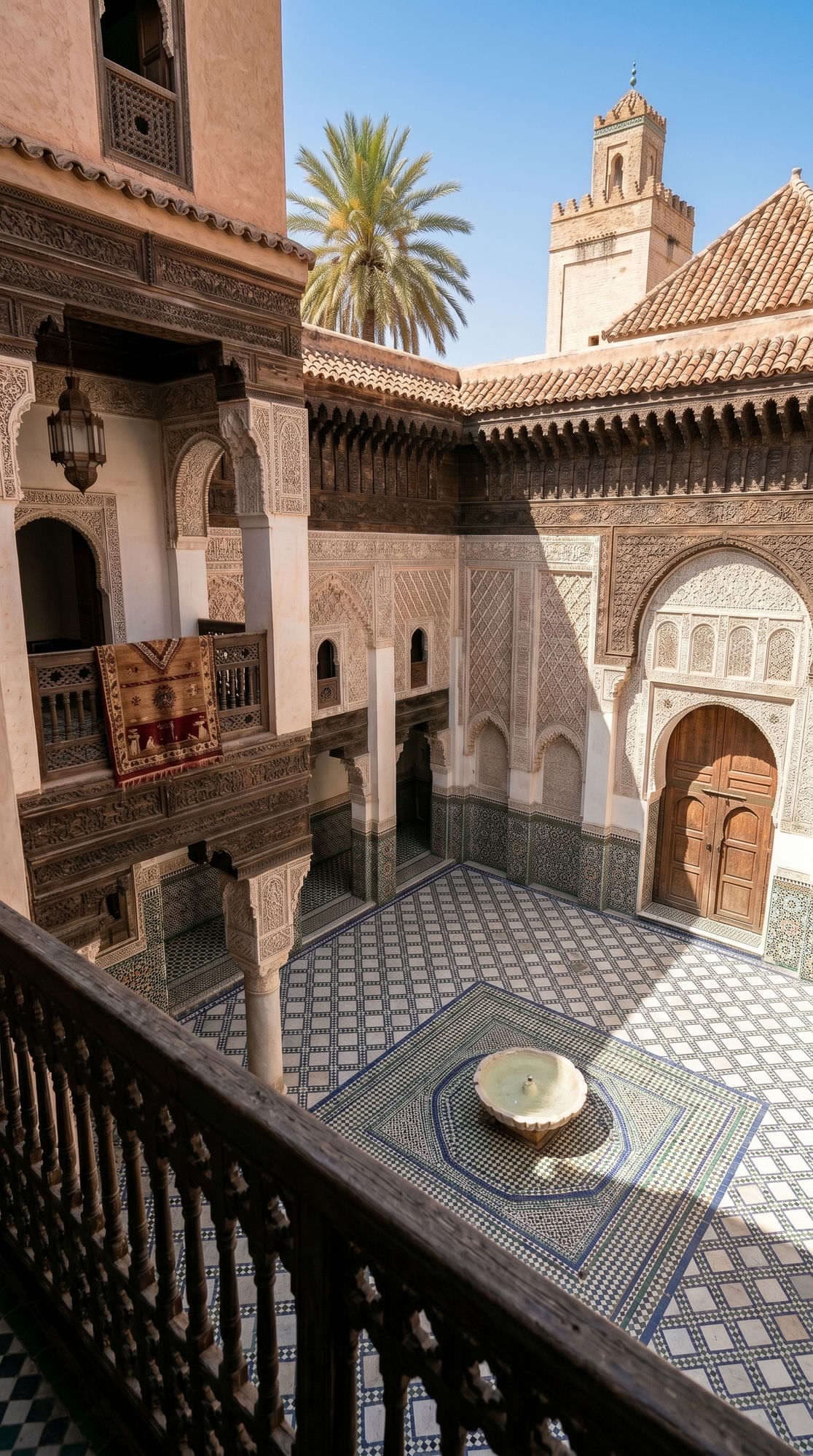
Short answer: yes, without hesitation, for the right visitor. Bahia Palace is one of the finest pieces of 19th-century Islamic architecture in Morocco, and walking through it without prior knowledge still impresses. With context, it's exceptional. Here's the honest version.
Key Takeaways
- At 100 MAD (approx. €9), Bahia Palace covers 8,000 m² of 19th-century Moroccan architecture, more content per dirham than most comparable Marrakech sites, including Majorelle Garden at 150 MAD.
- The rooms are intentionally empty: Sultan Abdelaziz stripped them overnight in May 1900 after Ba Ahmed died. Knowing this before you arrive turns the emptiness from a disappointment into part of the story.
- Arriving before 9:30 AM and booking your ticket online makes the visit significantly better. Both are easy. Most visitors who rate it lower skipped one or both.
What Is Genuinely Impressive at Bahia Palace?
The Scale
Most visitors underestimate it. They expect a riad-sized palace and find roughly 8,000 square meters of interconnected courtyards, reception halls, harem quarters, and gardens open to visitors. The Grand Riad alone, 1,500 square meters of zellige tilework under open sky, stops people mid-stride. If you want to understand the full layout before you arrive, the room-by-room guide covers every section in detail.
The Craftwork
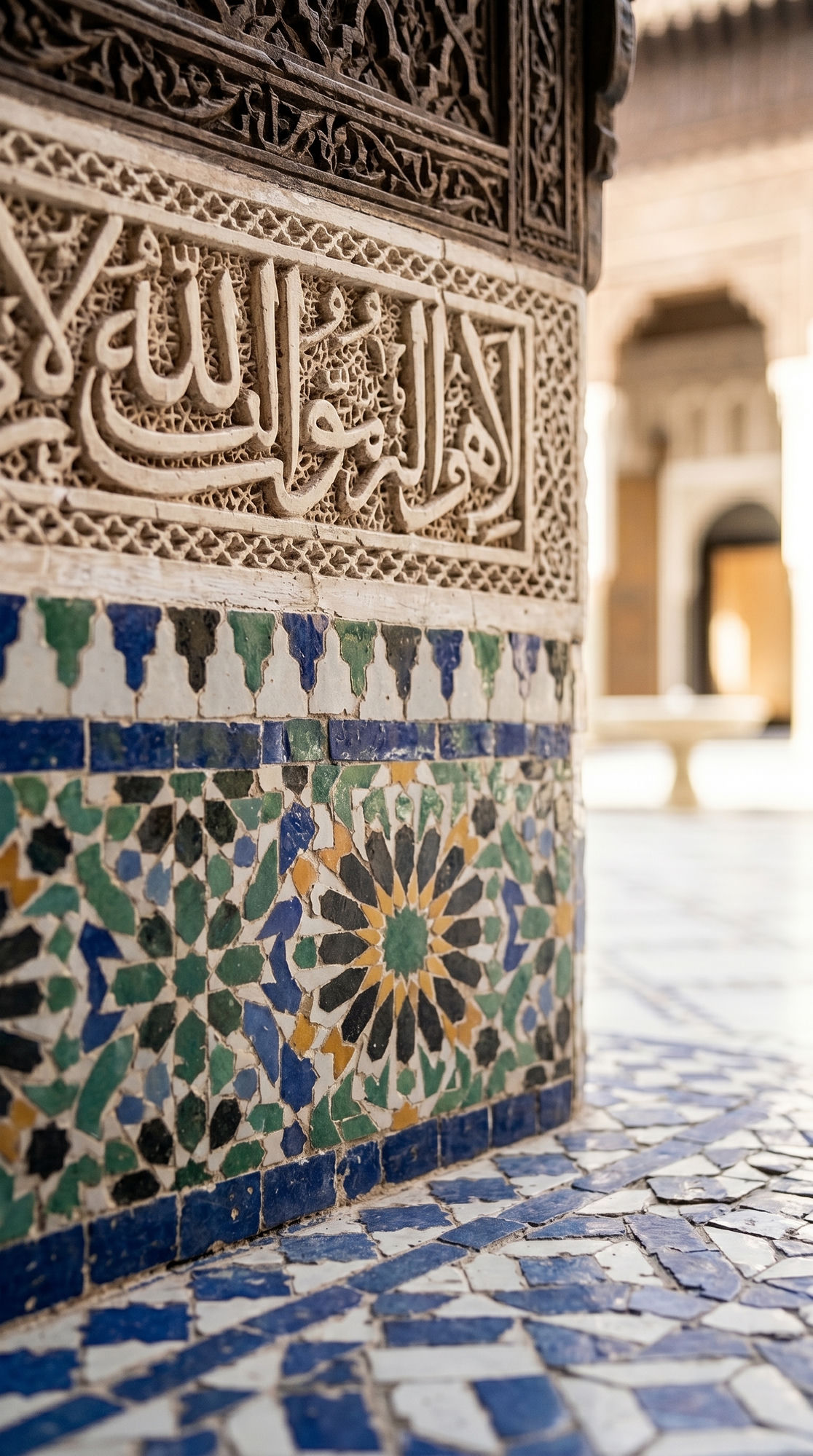
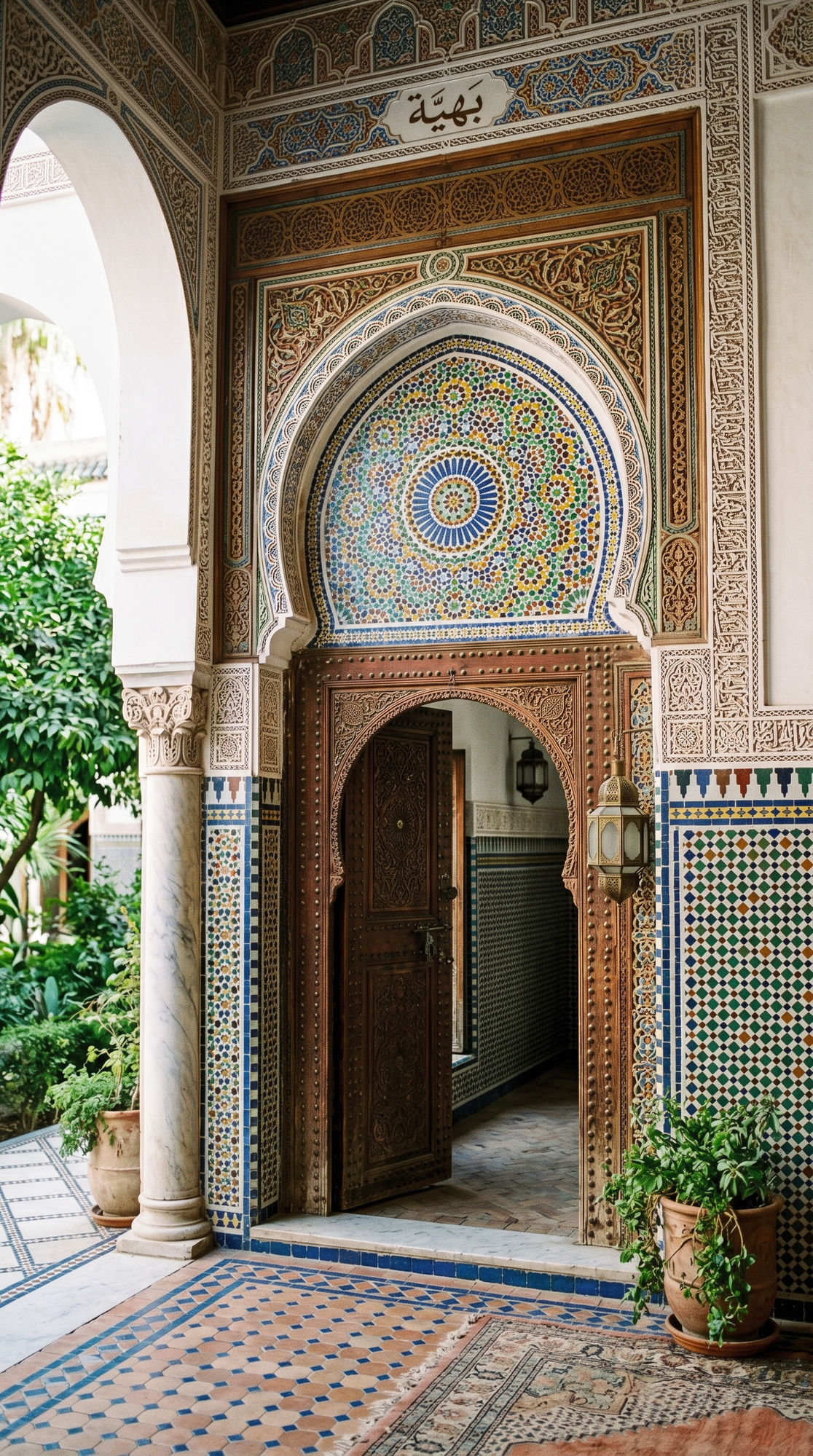
The hand-painted cedar ceilings are legitimately extraordinary. Thousands of skilled craftsmen from Fez worked on this building over multiple years, and their work shows. No two ceiling panels are identical. The mineral pigments, blues, golds, reds, terracottas, have barely faded in 125 years. The zellige tilework, the carved stucco arabesque panels, the Carrara marble columns: every material is high quality and in good condition. You're looking at the best version of what Moroccan craft could produce at its peak.
The Gardens
The gardens behind the formal rooms are planted with jasmine, roses, orange trees, banana trees, and cypress. In spring, the scent is remarkable. In summer, they're a genuine retreat from the heat. Most visitors spend five minutes in the garden on the way out; the people who sit here for twenty minutes consistently describe it as their favourite part of the visit. Morocco's Office National Marocain du Tourisme lists Bahia Palace among the country's top cultural heritage experiences (ONMT, Morocco Tourism Report 2024).
The Story
A man born into slavery who became the most powerful person in Morocco, built the finest private palace in the country, and died to have it stripped bare overnight by the Sultan he'd served. This is a genuinely compelling story and it makes everything you look at more meaningful. The rooms are empty, but the reason they're empty is part of what makes the palace interesting. The full account is in the history of Bahia Palace.
What Do Some Visitors Find Disappointing?
No Furniture or Objects
This is the most common complaint. The rooms are architecturally spectacular but empty: no original furniture, carpets, silverware, or decorative objects remain. When Ba Ahmed died in 1900, Sultan Abdelaziz had everything stripped out immediately. Visitors expecting a furnished, lived-in palace are sometimes underwhelmed. Knowing this in advance changes the experience: you're visiting a shell, but it's a shell of extraordinary quality.
Crowds at Midday
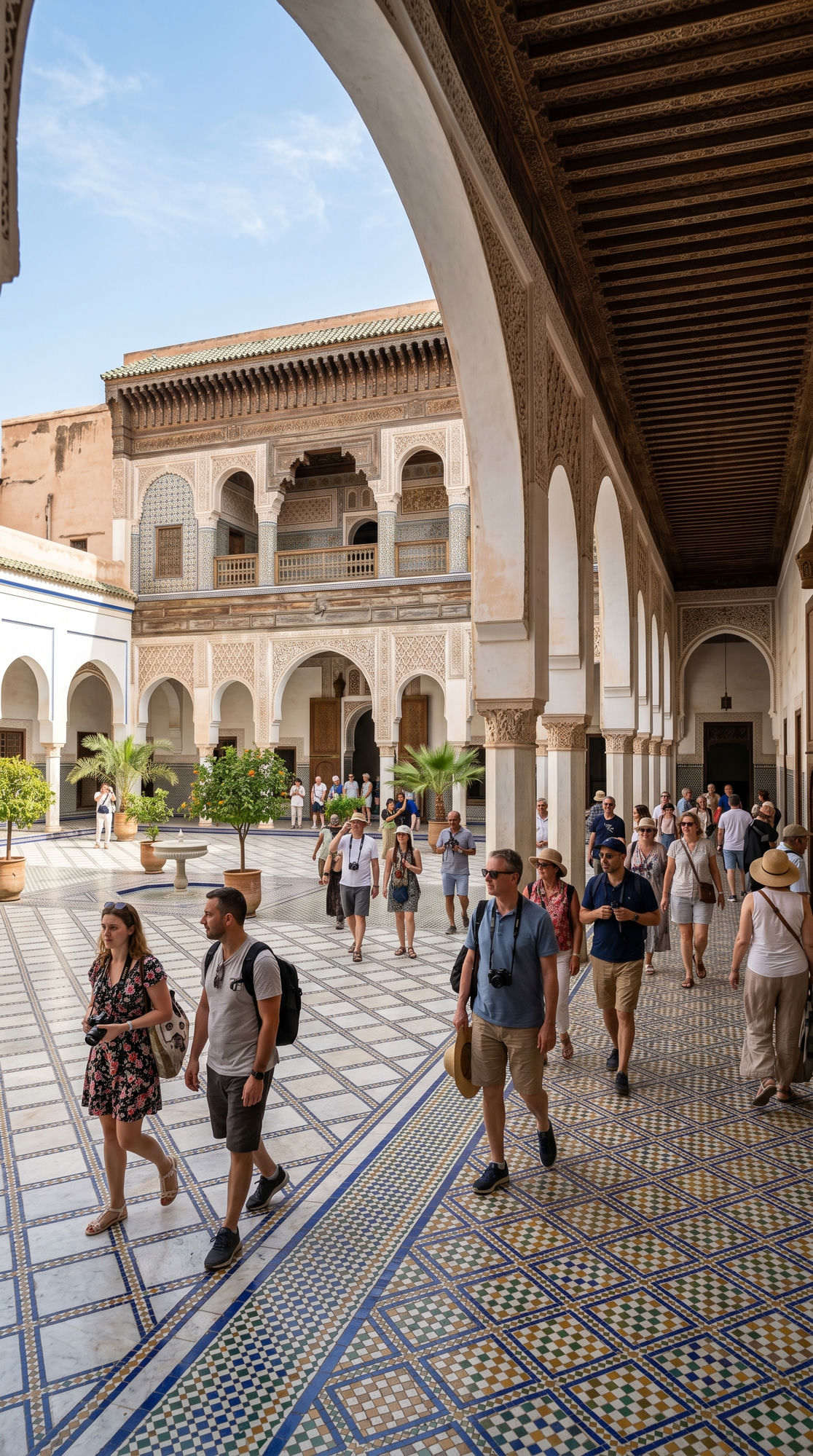
Between 10:30 and 14:00, the Grand Riad fills with overlapping tour groups. The narrow corridors between sections get congested. It's still worth visiting during these hours, but it's a noticeably different experience from a 9:00 AM visit. See Bahia Palace opening hours for the best timing advice by season, including Ramadan variations. This is a management problem rather than a problem with the palace itself, and it's entirely avoidable with good timing.
Limited English Signage
The labelling inside the palace is sparse. Without context, some of the more elaborate rooms look similar to each other and visitors can miss significance they'd otherwise notice. The audio guide available at the entrance solves this entirely, as does reading this article before you go.
In our experience, visitors who arrive knowing that the rooms are intentionally empty, and why, rate the palace significantly higher than those who don't. Five minutes of reading before your visit is the single highest-return preparation you can make.
How Does Bahia Palace Compare to Other Marrakech Sites?
| Site | What it offers | Time needed | Entry fee |
|---|---|---|---|
| Bahia Palace | Architecture, scale, history, gardens | 75–90 min | 100 MAD |
| Saadian Tombs | Concentrated ornate detail, history | 30–40 min | 100 MAD |
| El Badi Palace | Atmospheric ruins, scale, storks | 45 min | 100 MAD |
| Majorelle Garden | Botanical, colour, design heritage | 45–60 min | 150 MAD |
| Ben Youssef Madrasa | Islamic architecture, zellige, courtyard | 45 min | 50 MAD |
At 100 MAD, Bahia Palace is the same price as the Saadian Tombs and El Badi Palace (all three are 100 MAD, the standard 2026 rate for Ministry of Culture monuments) but offers significantly more floor space and content. Compared to Majorelle Garden (150 MAD), it offers more cultural substance per dirham for visitors primarily interested in heritage rather than botanical design.
Who Is Bahia Palace Perfect For?
- History enthusiasts: the story of Ba Ahmed and the collapse of his power is one of the most dramatic in Moroccan history; the palace is the physical embodiment of it
- Architecture and design lovers: the craftwork is the main attraction and it's in exceptional condition
- Photographers: zellige floors, carved ceilings, courtyard geometry, and garden light give you a huge range of subjects in a compact area. The photography guide covers the best light and angles for each section.
- First-time visitors to Morocco: Bahia Palace is the best single introduction to traditional Moroccan architecture and the country's recent political history
- Families with children: open spaces, visual variety, and children under 7 enter free
Who Might Prefer a Different Marrakech Site?
- Visitors expecting a furnished interior like a European palace or stately home: the empty rooms will disappoint without prior context about why they're empty
- People with very limited time who only have 30 minutes: the palace rewards slower exploration; a 30-minute dash leaves most of it unseen
- Visitors primarily interested in gardens and botany: the palace gardens are pleasant, but Majorelle Garden is more remarkable for this specific interest
The Verdict
At 100 MAD and 90 minutes, Bahia Palace represents excellent value for what it delivers. The architecture is genuinely world-class. The story behind it is genuinely compelling. The main variable is how you engage with it: knowing the history and what to look for transforms a pleasant walk-through into a memorable experience.
Arrive early, read up beforehand or use the audio guide, and skip the queue. Those three things, timing, context, and a pre-booked ticket, are the difference between "nice palace" and "one of the highlights of Morocco." The official entrance fee and ticket options are covered on the entrance fee page.
Frequently Asked Questions
Is Bahia Palace worth it for non-history lovers?
Yes. You don't need to be a history enthusiast to be impressed by Bahia Palace. The architectural quality and the scale of the Grand Riad are visually striking even without context. That said, knowing the story of Ba Ahmed, a slave who became the most powerful man in Morocco, makes the visit significantly richer. Five minutes of reading before you go is well worth the investment.
Is 100 MAD good value for Bahia Palace?
Yes. 100 MAD is approximately €9 or $10. For that price you get roughly 8,000 square meters of exceptional Moroccan architecture open to visitors, 90 minutes of exploration, and access to one of the country's most significant cultural heritage sites. It's cheaper than Majorelle Garden (150 MAD) while offering more cultural content for most visitors.
What's the best way to prepare for a visit to Bahia Palace?
Read a brief account of Ba Ahmed ibn Moussa's story before you visit. This site's history article covers it in full. Know that the rooms are intentionally empty, and that the reason is part of the story. Arrive at 9:00 AM for the best light and fewest crowds. Book your ticket in advance so you're inside within minutes of arriving.