
When travellers search for Bahia Palace vs El Badi Palace, they want a clear answer: which of Marrakech's two most iconic royal palaces deserves a spot on their itinerary? The short answer is both — but they offer radically different experiences. Morocco's 17.4 million international visitors in 2024 (ONMT, Morocco Tourism Annual Report 2024) flock to Marrakech's southern medina to see this pair of palaces. Here's exactly how they differ so you can plan your visit with clarity.
Key Takeaways
- Bahia Palace (100 MAD) is ornate, intimate, and covered in zellige, carved stucco, and painted cedar. It's a 60 to 90 minute experience of Moroccan craftsmanship at its finest. El Badi Palace (100 MAD) is vast, roofless, and atmospheric: 16th-century ruins on a scale that makes Bahia Palace feel like a private home by comparison.
- They are 800 metres apart — about 10 minutes on foot. Most visitors who come to the southern medina see both in a single morning, starting at Bahia Palace at 9:00 AM and walking to El Badi by 10:30.
- If you only have time for one, choose based on your interest: Bahia Palace for craftsmanship and history, El Badi Palace for archaeological drama and panoramic views.
How Do Bahia Palace and El Badi Palace Compare at a Glance?
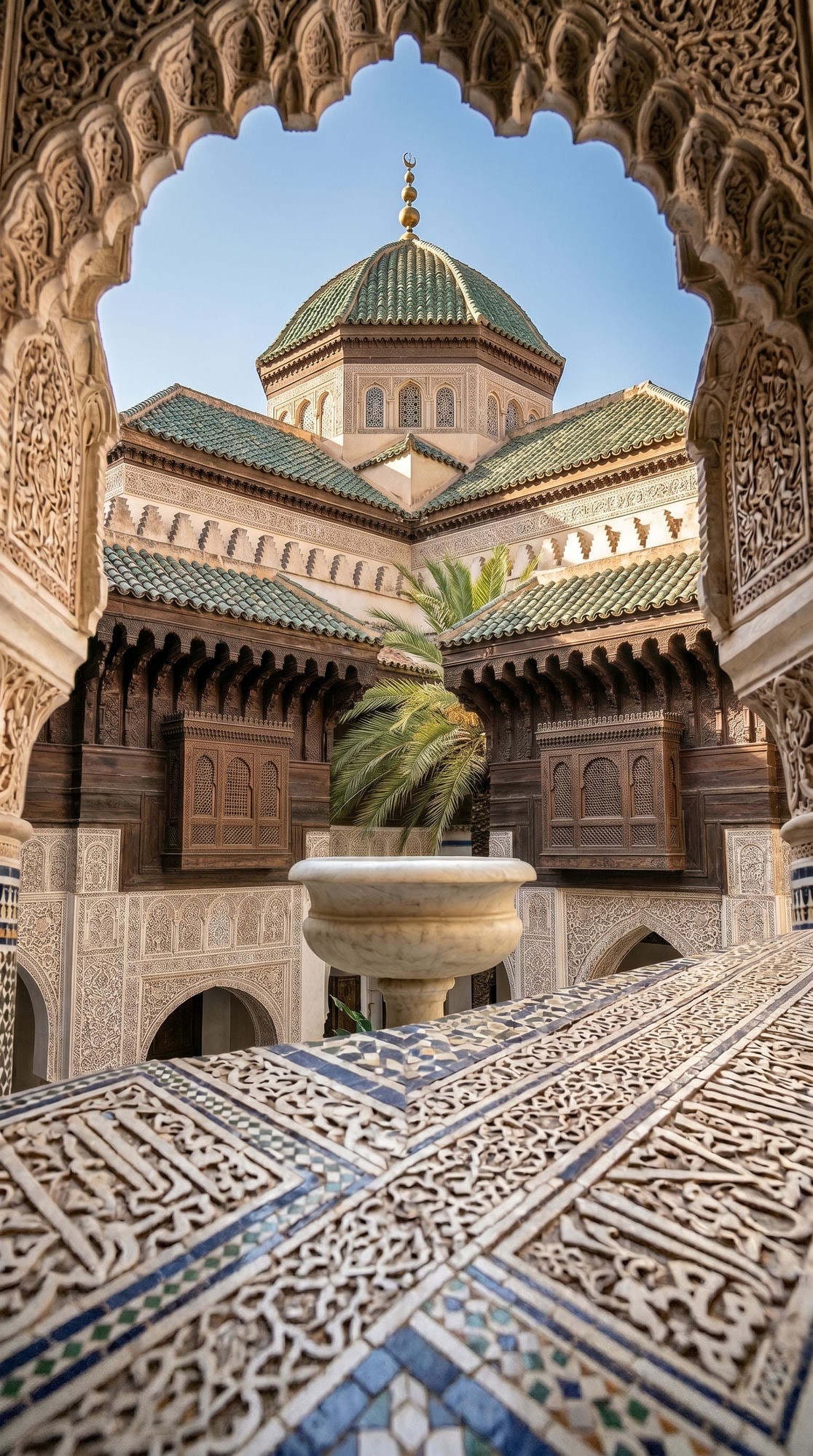
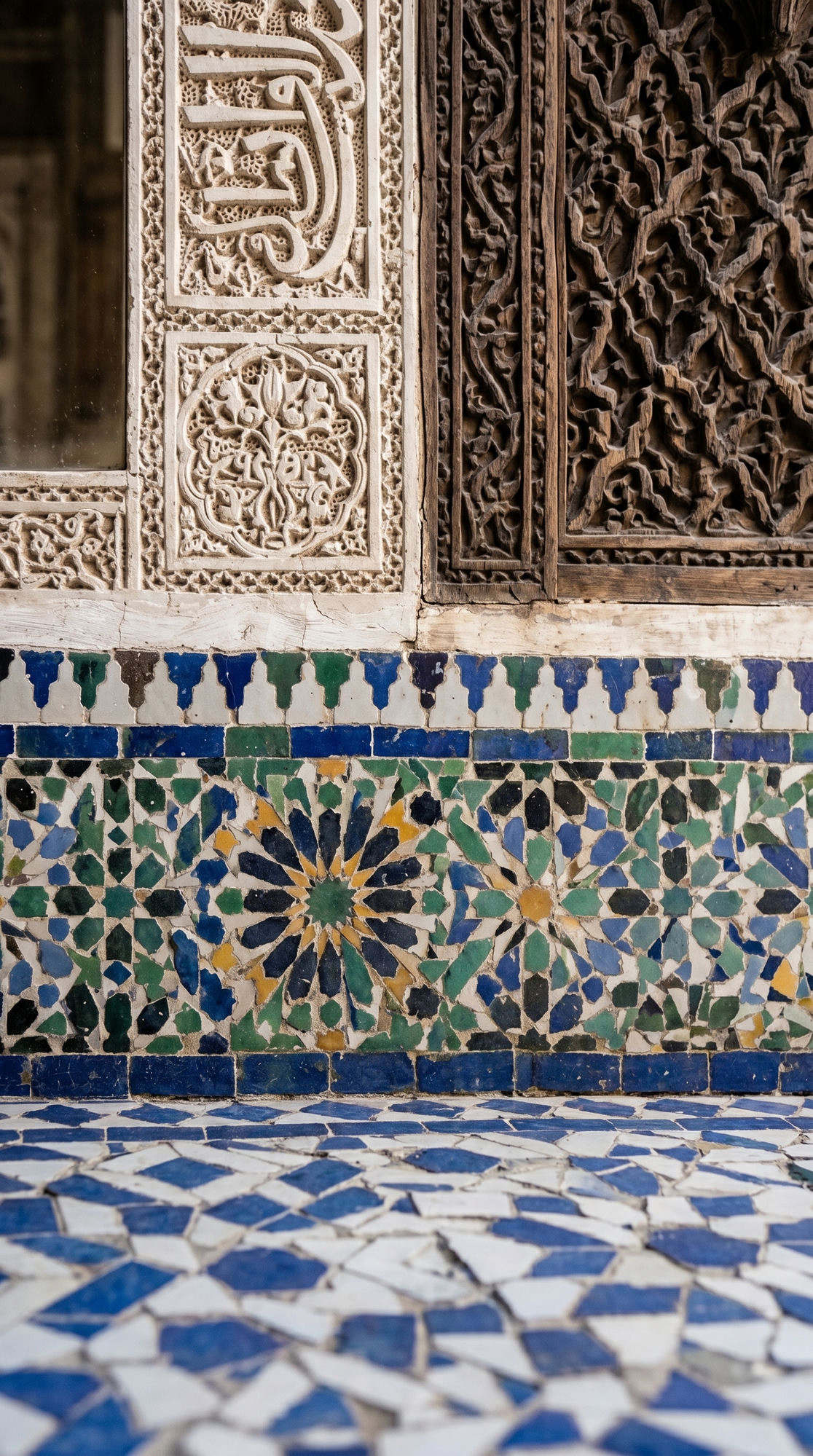
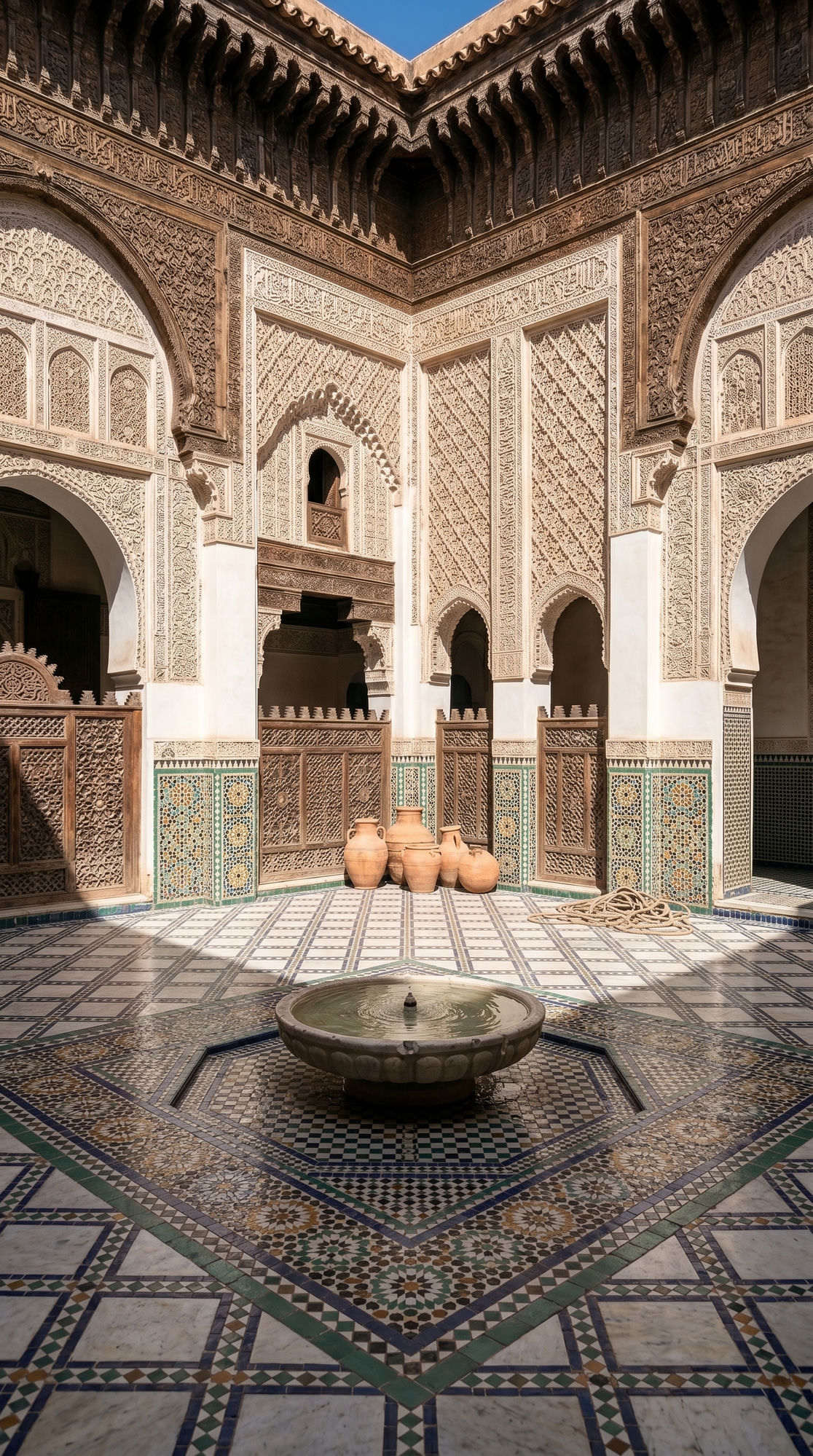
Bahia Palace (built 1866–1900) is a celebration of intimate Moroccan luxury. Its 150 rooms are covered in hand-cut zellige mosaics, intricately carved cedar wood ceilings, and delicate stucco plasterwork. The atmosphere is elegant, shaded, and peaceful. Most visitors spend between 60 and 90 minutes inside. It's ideal for photography, architecture lovers, and anyone who wants to experience the finest Moroccan craftsmanship up close.
El Badi Palace (built 1578, Saadian dynasty) is the complete opposite: vast open-air ruins with enormous pisé walls surrounding a sunken 135-metre courtyard. Where Bahia is ornate and enclosed, El Badi is dramatic and skeletal: a ghost palace stripped of its gold and marble centuries ago. Most visitors spend around one hour exploring. It suits history enthusiasts, rooftop views, and wide-angle photography against the Atlas Mountains.
What Is the Story Behind Bahia Palace?
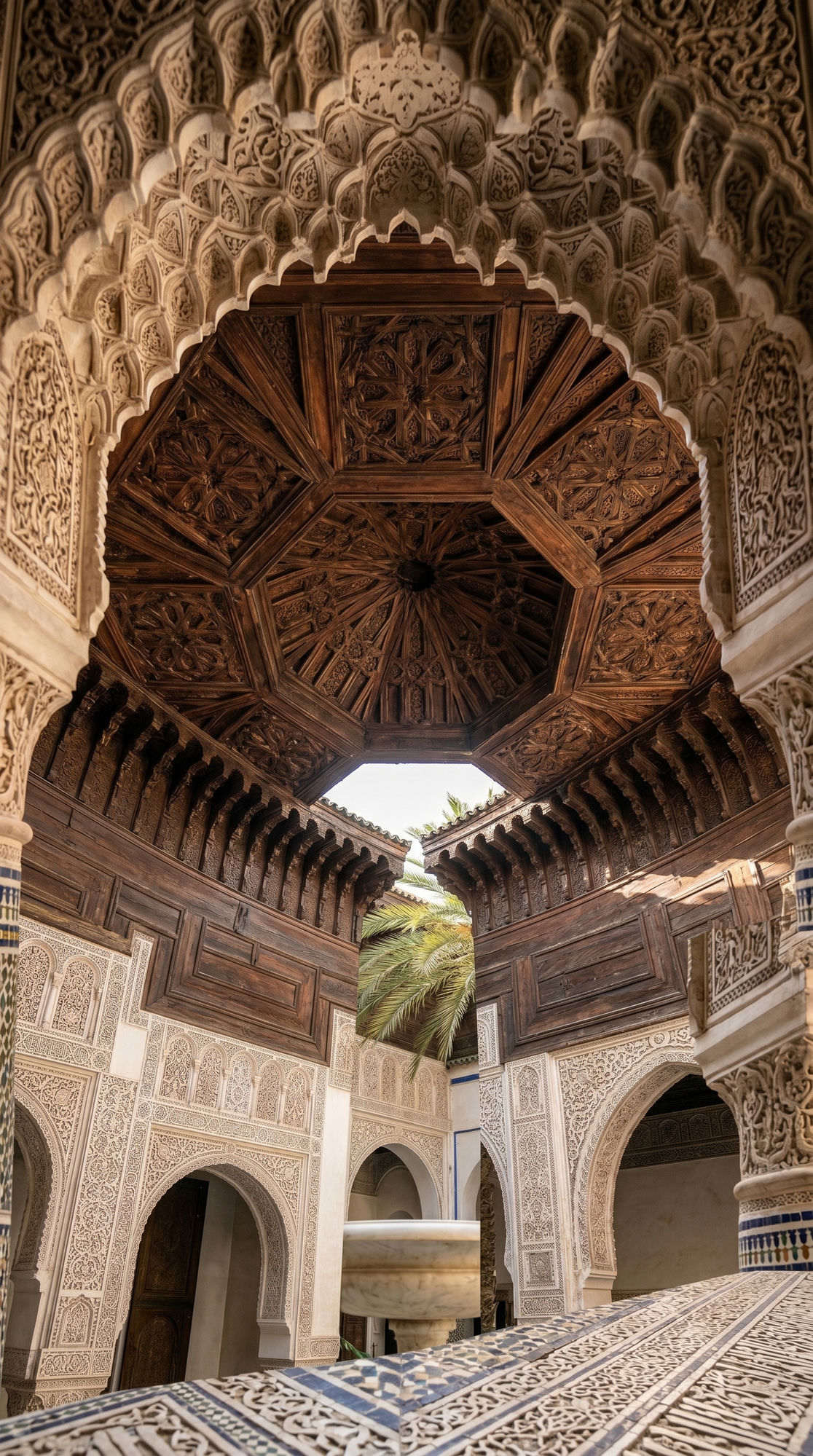
Bahia Palace was built during the late 19th century by two Grand Viziers: Si Moussa, who began the original structure, dated by inscription to 1866–67, and his son Ba Ahmed (Bou Ahmed), who dramatically expanded it between 1894 and 1900. The word "Bahia" means "brilliance" or "beauty" in Arabic, and the name fit: Ba Ahmed employed Fez-trained maalmin in numbers no contemporary record fixes, to craft its zellige mosaics, carved cedar ceilings, and stucco plasterwork — documented by Encyclopaedia Britannica as one of the most significant examples of Moroccan-Andalusian architecture.
When Ba Ahmed died in 1900, Sultan Moulay Abd al-Aziz immediately ordered the palace looted and its inhabitants expelled overnight. The palace later served as the official residence of the French Resident-General during the Protectorate era. Since Moroccan independence in 1956, it has been a protected heritage site managed by the Ministry of Culture (e-services.minculture.gov.ma). For the full historical account, see the history of Bahia Palace.
What Is the Story Behind El Badi Palace?
El Badi Palace was built in the 16th century by Sultan Ahmad al-Mansur of the Saadian dynasty, following his victory over the Portuguese at the Battle of the Three Kings in 1578. At the height of its glory, the palace contained over 300 rooms decorated with gold, Italian marble, onyx, and crystal. Contemporary historians described it as one of the most magnificent palaces in the Islamic world.
Its decline came swiftly. When the Alaouite Sultan Moulay Ismail came to power in the late 17th century, he ordered El Badi Palace stripped of its materials to build his new imperial capital in Meknès. It took 12 years to dismantle the palace. What remains today are the vast mud walls, sunken gardens, and the ghost of a palace that once rivalled the greatest courts in the world. The one-day southern medina guide covers the most efficient way to see both palaces and the Saadian Tombs.
How Do Their Architectures Differ?
The architectural contrast could not be more striking.
Bahia Palace is a sensory experience. Every room, corridor, and courtyard is covered in decoration: hand-cut zellige tile mosaics climbing the walls, delicate stucco arabesques framing every arch, and intricately painted cedar wood ceilings overhead. The interiors feel intimate and layered, rewarding slow exploration. The room-by-room guide covers what to look for in each section.
El Badi Palace, by contrast, is defined by scale and absence. Its massive pisé (rammed earth) walls enclose a 135-metre courtyard that once held an enormous pool. Today, the emptiness itself is the attraction: storks nest on the ruined towers, orange trees grow in sunken gardens, and the vast space invites you to imagine the vanished grandeur of the Saadian Empire. A basement preserved the original minbar (pulpit) from the Koutoubia Mosque — worth seeking out before you leave.
Which Palace Is Better for Photography?
Both offer extraordinary photography but in completely different ways.
Bahia Palace excels for architectural and portrait photography. Soft light through carved wooden screens (mashrabiya), the vibrant colours of the zellige tilework, and courtyard reflections create excellent shots at any time of day. Morning light (9:00 to 10:30 AM) is the optimal window. The photography guide covers the specific spots and techniques in detail.
El Badi Palace offers dramatic wide-angle shots of ruined towers against the Marrakech sky. Climbing to the rooftop terraces gives you panoramic views of the medina with the Atlas Mountains as backdrop — a completely different style of travel photography. Storks on the towers are a reliable natural foreground element in spring.
What Is the Visitor Experience Like at Each Palace?
Visitors consistently describe Bahia Palace as calm, detailed, and visually rich. The palace unfolds as a series of interconnected rooms and courtyards, each more decorated than the last. The pace is slow and contemplative. Most visitors spend 60 to 90 minutes moving through the rooms at their own pace, which is part of what makes it suitable for all ages — including families with children.
El Badi Palace feels more open and archaeological. The atmosphere is less ornate but more monumental. The site hosts the annual Marrakech Popular Arts Festival in its courtyard and attracts both tourists and locals. The rooftop terraces are accessible and give a perspective of the city that is genuinely different from anything at street level.
Can You Visit Both Palaces in One Day?
Absolutely, and most visitors who come to the southern medina do exactly this. Both palaces are approximately 800 metres apart — about 10 minutes on foot through the Mellah district.
- 9:00 AM — Arrive at Bahia Palace for opening. Pre-booked ticket means no queue. See the timing guide for why the first 90 minutes are the most important.
- 10:30 AM — Walk west through the Mellah to El Badi Palace
- 11:00 AM — Explore El Badi Palace and the rooftop terraces
- 12:30 PM — Lunch nearby. The Saadian Tombs are 5 minutes from El Badi: add them before lunch if you haven't visited yet. See the Saadian Tombs guide for the combined half-day.
How Do the Ticket Prices Compare?
Bahia Palace: 100 MAD (~€9) for foreign adult visitors. Children under 7 free. Moroccan nationals pay 30 MAD. Online tickets bypass the door queue entirely. Full breakdown on the entrance fee page.
El Badi Palace: 100 MAD (~€9) for foreign adult visitors. Moroccan nationals pay 30 MAD. No advance booking system at El Badi — ticket at the door in cash.
If you visit both on the same day, budget approximately 200 MAD per foreign adult for both entries — excellent value for the combined historical experience.
Which Palace Should You Visit?
- Choose Bahia Palace if you love Moroccan interior design, detailed craftsmanship, intimate spaces, and architectural photography. The honest review covers what it actually delivers.
- Choose El Badi Palace if you prefer open-air ruins, panoramic city views, and a sense of historical scale without the need for context about the craftwork.
- Visit both if you want the full story of Marrakech's royal past: from the Saadian dynasty's 16th-century empire to the opulent private world of a 19th-century Grand Vizier. For most visitors with a full day available, combining Bahia Palace in the morning with El Badi Palace in the late morning gives a complete and deeply satisfying morning in the southern medina.
Frequently Asked Questions
Is Bahia Palace or El Badi Palace better?
Both offer unique experiences. Bahia Palace is ideal for lovers of Moroccan interior design and detailed craftsmanship, while El Badi Palace appeals to those who prefer open-air ruins and panoramic views. Most visitors recommend visiting both in a single morning, starting at Bahia Palace at 9:00 AM.
How long does it take to visit both palaces?
Plan approximately 60 to 90 minutes for Bahia Palace and 1 hour for El Badi Palace. Combined with the 10-minute walk between them, a half-day (9:00 AM to 1:00 PM) is enough to explore both comfortably, with time left for the Saadian Tombs if you start promptly.
What is the best time to visit Bahia Palace?
Between 9:00 and 10:30 AM, when crowds are thinnest and the morning light creates ideal conditions for photography inside the decorated courtyards. See the full timing guide for month-by-month advice.
Are Bahia Palace and El Badi Palace close to each other?
Yes. The two palaces are approximately 800 metres apart in Marrakech's southern medina, about 10 minutes on foot. They are easy to combine in a single morning visit, along with the Saadian Tombs 5 minutes from El Badi.
Do I need to book tickets in advance?
Advance booking is recommended for Bahia Palace, especially during peak season (March through May and September through November), where the door queue can reach 30 to 45 minutes. El Badi Palace generally has shorter queues and tickets can be purchased at the entrance. See the first-visit tips guide for what to prepare for both sites.