
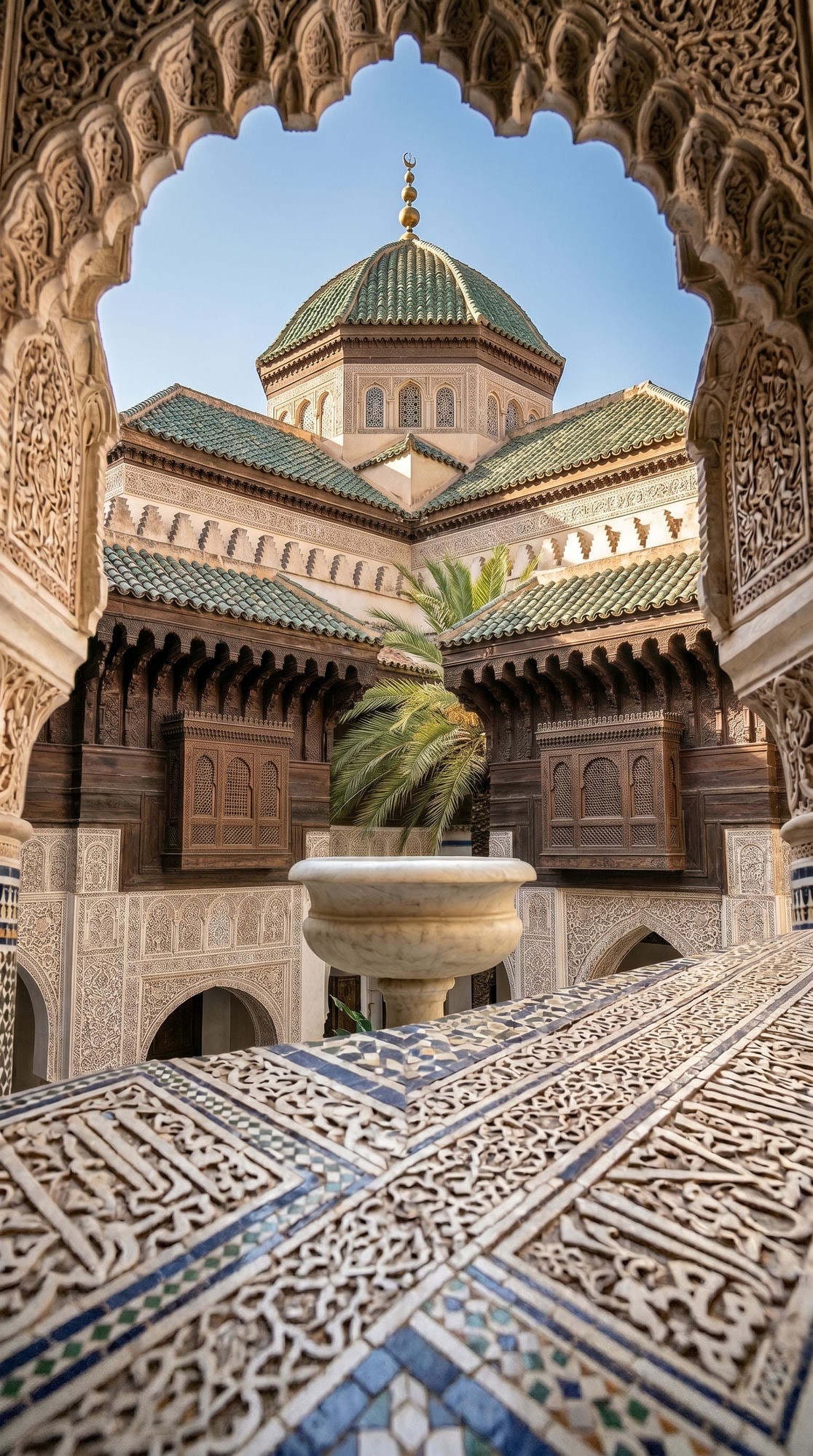
Two of Marrakech's most-visited sites, about 3 km apart. Both stunning, both crowded at the wrong time, and both worth visiting — but for completely different reasons. Morocco welcomed 17.4 million international visitors in 2024 (ONMT, Morocco Tourism Annual Report 2024), and Marrakech's two most-photographed destinations absorb a significant share of that number. Here's how they compare so you can plan your time properly.
Key Takeaways
- Bahia Palace costs 100 MAD and gives you 60 to 90 minutes of detailed architecture, history, and courtyards. Majorelle Garden costs 150 MAD for 45 minutes of botanical drama. Per dirham, Bahia Palace offers more time and content.
- If you only have one morning, start with Bahia Palace at 9:00 AM. Both sites peak with crowds at the same time (10:30 AM onwards), so hitting the larger and more complex site first is the correct sequence.
- Both are genuinely worth visiting if you have a full day. They offer completely different experiences and complement each other well: historic interiors in the morning, a modern botanical garden in the afternoon.
How Do Bahia Palace and Majorelle Garden Compare at a Glance?
| Bahia Palace | Majorelle Garden | |
|---|---|---|
| Entrance fee | 100 MAD (~€9) | 150 MAD (~€15) + 50 MAD Berber Museum |
| Time needed | 60–90 min | 45–75 min |
| Crowd peak | 10:00–14:00 | 10:30–15:00 |
| Photography | Excellent — interiors, courtyards, architecture | Excellent — botanical, colour contrast |
| Best for | History, architecture, Moroccan culture | Gardens, design, fashion heritage |
| Location | Southern medina | Gueliz (New Town), 3 km northwest |
| Pre-booking | Recommended | Essential in high season |
What Does Bahia Palace Actually Offer?
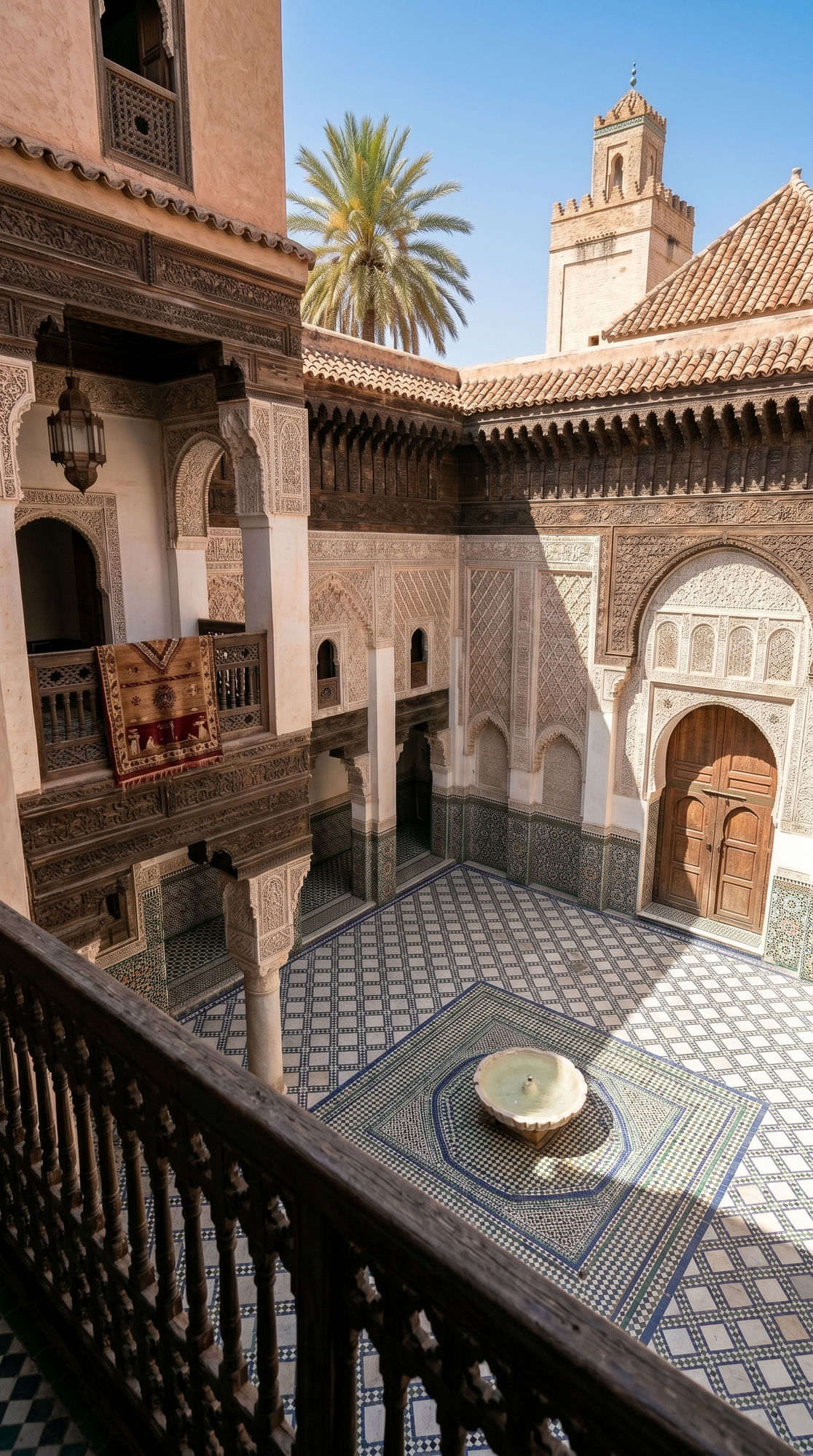
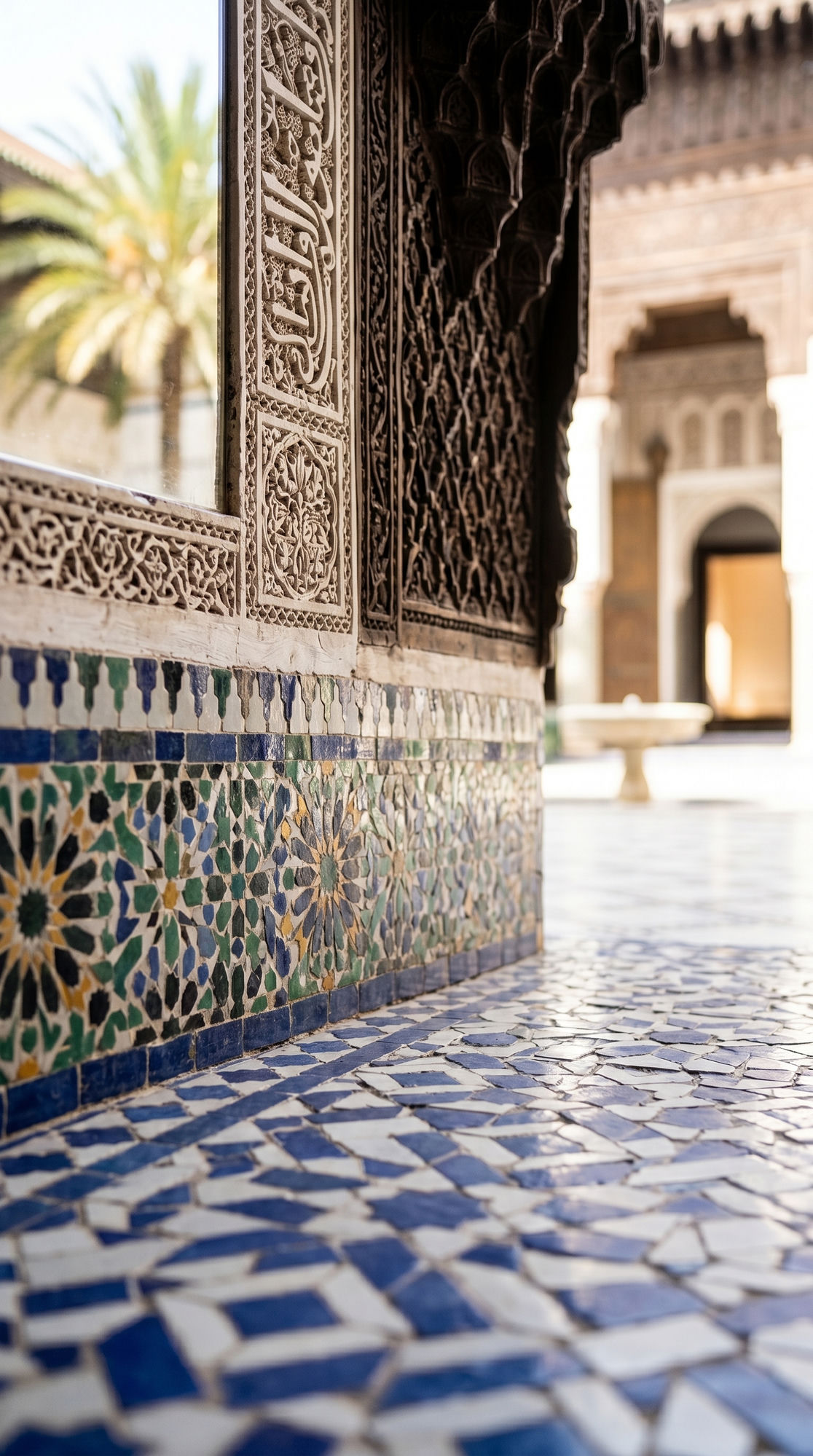
Bahia Palace is a 19th-century royal palace with a total complex of roughly 8 hectares — the area open to visitors spans approximately 8,000 square meters across multiple courtyards, reception halls, harem quarters, and gardens. The architecture is the entire point: hand-painted cedar ceilings, zellige tilework floors, carved stucco archways, and orange tree gardens that have barely changed in 125 years. The palace was built by Grand Vizier Ba Ahmed between 1894 and 1900 and stripped of its furniture overnight when he died, which is part of what gives the empty rooms their strange weight.
What it delivers: A genuine sense of stepping into a different era. The Grand Riad courtyard alone stops most visitors in their tracks. The history is real and dramatic. Understanding it changes how you look at every room.
Who it's for: History enthusiasts, architecture fans, photographers who work with interiors, and anyone interested in Moroccan cultural heritage.
Honest downside: The rooms are empty: no original furniture or decorative objects remain. Some visitors find this underwhelming without context. An audio guide or prior reading makes a significant difference. The room-by-room guide and the history article are both free preparation that significantly improves the experience.
What Does Majorelle Garden Actually Offer?
Majorelle Garden is a 1-hectare botanical garden designed by French painter Jacques Majorelle in the 1920s and 1930s, and purchased by Yves Saint Laurent and Pierre Bergé in 1980. The signature cobalt blue villa (Majorelle Blue) against lush tropical greens, lotus ponds, and a remarkable cactus collection makes it one of the most photographed places in Morocco. The Berber Museum inside the villa is excellent — a serious anthropological collection in an unexpected setting. The YSL Memorial Garden (where Saint Laurent's ashes were scattered) adds emotional resonance for fashion and design fans.
What it delivers: Visual impact. The colour contrast, that specific shade of cobalt against tropical green, is genuinely striking and unlike anything else in Morocco.
Who it's for: Garden lovers, design and fashion enthusiasts, photographers shooting outdoors, and anyone wanting a break from the medina's intensity.
Honest downside: It's expensive for its size. At 150 MAD entry (plus 50 MAD for the museum), you get less than an hour in a relatively compact 1-hectare space. It can feel rushed and crowded when tour groups arrive simultaneously. The same 150 MAD buys 100 MAD for Bahia Palace entry and the audio guide.
Which One Should You Choose If You Can Only Visit One?
Choose Bahia Palace if: You're interested in Moroccan history and architecture, you want to understand what the city actually was, or you're a photographer who works well with interiors and structural subjects. The honest review of Bahia Palace covers the full case.
Choose Majorelle Garden if: You're a garden or design enthusiast, you have limited time and want a single high-impact visual experience, or you have a specific connection to the YSL story.
For most first-time visitors to Marrakech, Bahia Palace offers more depth and cultural substance per dirham. Majorelle is beautiful but brief. If you only have one morning and one afternoon in the city, Bahia Palace is the stronger choice. If you have two full days, do both.
Can You Do Both in One Day? Yes: Here's How
Absolutely, and it's one of the best full days in Marrakech. The two sites are about 3 km apart — a 15-minute taxi or 35-minute walk through the medina and into Gueliz.
Recommended order and timing:
- 09:00 — Arrive at Bahia Palace at opening. Pre-booked ticket means you walk straight in. Spend 75 to 90 minutes before the tour groups arrive. See the timing guide for why 9:00 AM matters so much at both sites.
- 10:30 — Exit Bahia Palace and walk north through the medina or take a petit taxi toward Gueliz. A 20-minute walk takes you through real Marrakech neighbourhoods that most tourists skip.
- 11:15 — Quick lunch in Gueliz. The neighbourhood around Majorelle has good café options that are less tourist-oriented than Jemaa el-Fna.
- 12:30 — Majorelle Garden. Pre-book your ticket online — the walk-in queue in high season is brutal. Spend 60 to 75 minutes including the Berber Museum.
- 14:00 — Done. Afternoon free for the souks, Ben Youssef Madrasa, or El Badi Palace. The 2-day Marrakech itinerary covers how to fit everything else in.
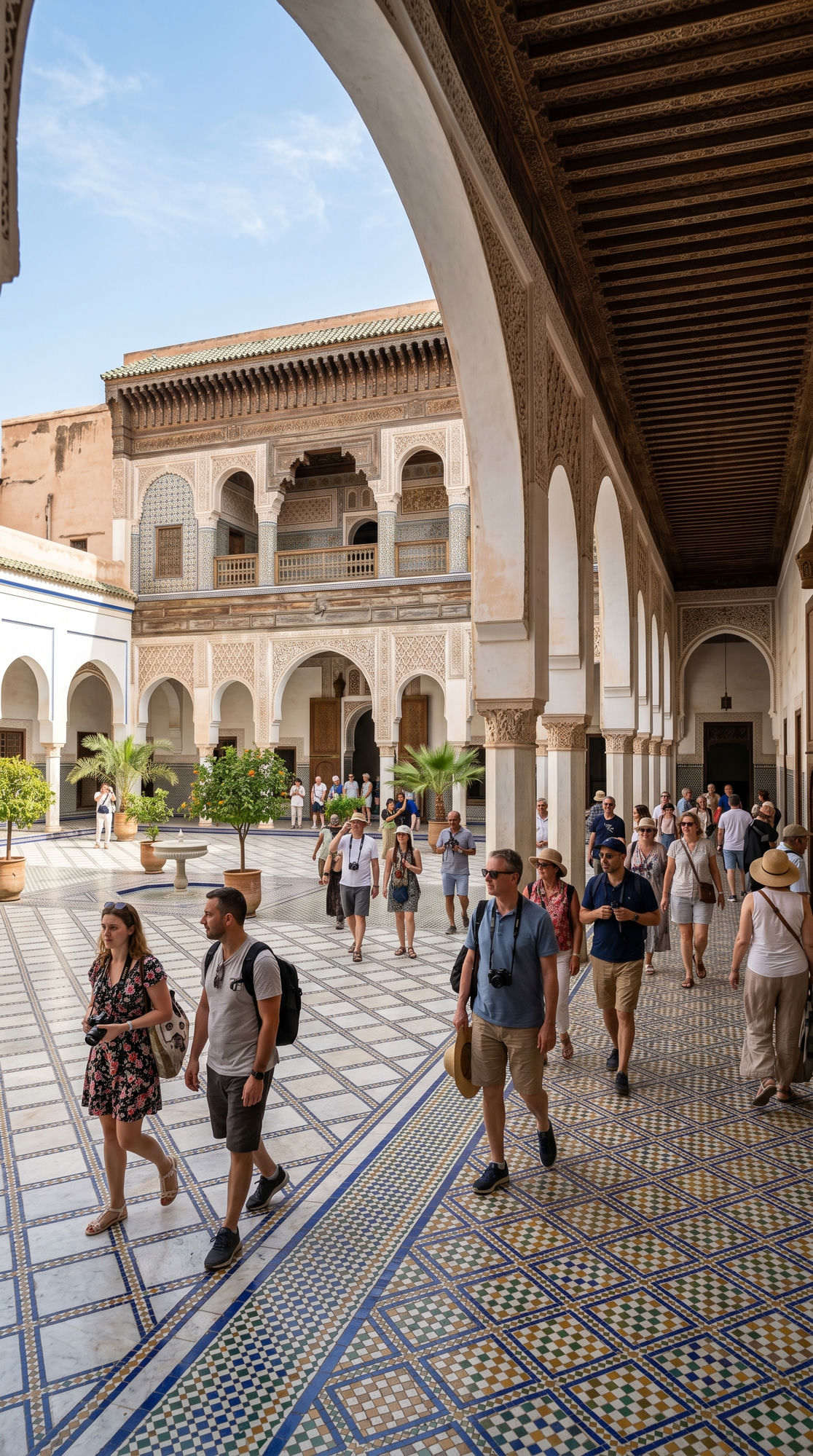
The key is hitting Bahia Palace first at 9:00 AM. Both sites get crowded mid-morning; starting early at the palace and reaching Majorelle by midday gives you the best experience at each. Going in the other order means arriving at Bahia Palace just as the tour buses do.
Frequently Asked Questions
Is Majorelle Garden more expensive than Bahia Palace?
Yes, significantly. Bahia Palace costs 100 MAD (approximately €9) for foreign adults. Majorelle Garden costs 150 MAD (~€15) for garden entry, or 200 MAD with the Berber Museum inside. For most visitors, Bahia Palace offers more cultural content per dirham: more space, more historical depth, and more to spend time on. See the Bahia Palace entrance fee guide for full pricing including children's rates.
Which is better for photography: Bahia Palace or Majorelle Garden?
They offer completely different photographic subjects. Majorelle is better for colour and botanical photography: the cobalt blue against tropical green is very distinctive. Bahia Palace is better for architectural photography: zellige floors, carved archways, painted ceilings, and courtyard geometry. If you shoot both styles, do both. The Bahia Palace photography guide covers the specific spots and light windows.
Can you walk between Bahia Palace and Majorelle Garden?
Yes, it's about 3 km and takes 35 to 45 minutes on foot. The route takes you through the medina and out into Gueliz (the modern city). It's a pleasant walk if you're not in a hurry. In summer (June–August), a taxi makes more sense: 25–35 MAD and air-conditioned. On how to navigate from Bahia Palace to the rest of the medina, see the directions guide.