
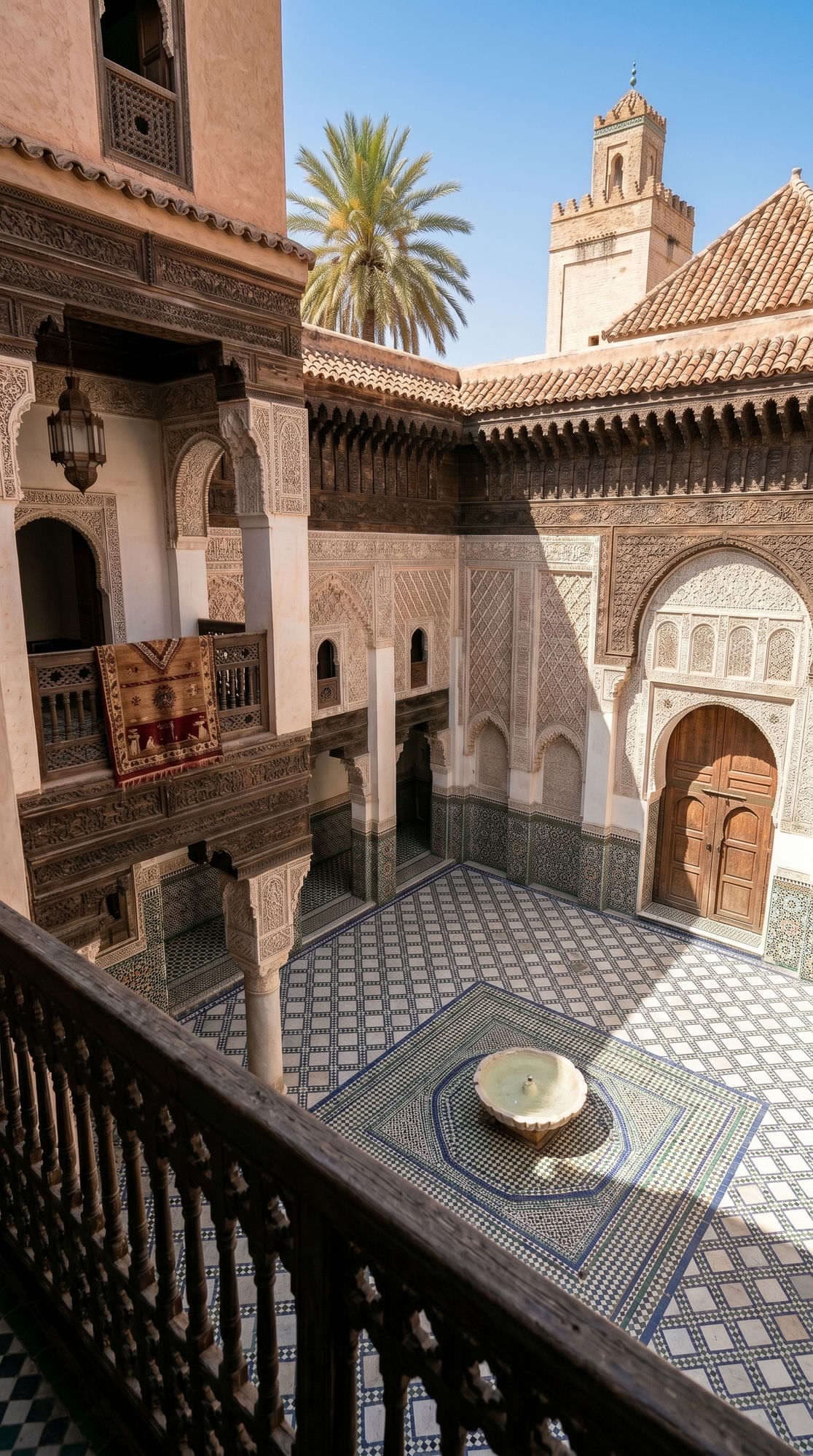
Most visitors to Marrakech's southern medina walk straight past one palace on their way to the other. Bahia Palace draws the queues, the tour buses, and the guidebook coverage. Dar Si Said — now the National Museum of Weaving and Carpets (Musée National du Tissage et du Tapis), reopened in 2018 following restoration — sits a few minutes away on the same street, nearly empty on most mornings. What most guides don't mention is why the two exist side by side: both buildings were constructed between 1894 and 1900, in the same architectural style, by brothers from the same family. Ba Ahmed ibn Musa expanded and completed Bahia Palace in his role as Grand Vizier; his brother Si Said ibn Musa, who served as a minister in the same court, built what became Dar Si Said. In 2024, Morocco welcomed 17.4 million international visitors (ONMT, Morocco Tourism Annual Report 2024), and almost all of them chose Bahia. Whether that's the right call depends on what you're looking for.
- Both palaces were built by brothers from the same family between 1894 and 1900 using craftsmen from Fez — they share the same architectural vocabulary but differ dramatically in scale and layout.
- Bahia Palace spreads across ~8,000 m² on a single level; Dar Si Said is multi-level with a distinctive upper floor, a riad garden, and a carved wooden pavilion — smaller in footprint, different in character.
- Dar Si Said's biggest advantage is quiet: where Bahia fills with tour groups by mid-morning, Dar Si Said is rarely crowded at any hour. Both can be done in a single half-day.
Quick Answer: Bahia Palace vs Dar Si Said at a Glance
| Bahia Palace | Dar Si Said | |
|---|---|---|
| Built by | Ba Ahmed ibn Musa (Grand Vizier) | Si Said ibn Musa (minister; Ba Ahmed's brother) |
| Period | 1894–1900 | 1894–1900 |
| Focus today | 19th-century palace architecture and history | Moroccan weaving, carpets, traditional crafts (since 2018) |
| Layout | Single level — multiple courtyards, gardens, reception rooms | Multi-level — upper wedding chamber, riad garden, pavilion |
| Size | ~8,000 m² | Compact — much smaller footprint |
| Time needed | 75–90 min | 30–45 min |
| Entry (2026) | 100 MAD (foreign adult) | Verify on arrival |
| Crowds | Moderate to busy (peak: 10:30–14:00) | Rarely crowded |
| Best for | First-time visitors, scale, court history | Craft lovers, upper-floor highlights, quiet experience |
Prices as of 2026 — verify on arrival. Both ticket windows accept cash only.
What Is Dar Si Said?
Dar Si Said was built between 1894 and 1900 by Si Said ibn Musa, a brother of Ba Ahmed — the Grand Vizier who expanded Bahia Palace during the same years. Si Said served as a minister in the same court, and the two brothers appear to have competed in architectural ambition: both commissioned craftsmen from Fez to produce carved plaster, zellige tilework, and painted cedar ceilings in the same tradition. The result was two high-quality palaces built in parallel, a few hundred metres apart on the same medina street.
Unlike Bahia Palace, which is arranged across a single level of interconnected courtyards and reception rooms, Dar Si Said is multi-level. The ground floor centres on a courtyard with a riad garden and a carved painted-wood pavilion; a carved wooden staircase leads to the upper floor, where the building's most celebrated room is found — an ornate wedding chamber with exceptional stucco decoration and painted cedar ceilings, traditionally used for bridal preparations and ceremonies.
Since reopening in 2018 following restoration, the building operates as the National Museum of Weaving and Carpets (Musée National du Tissage et du Tapis). The collection covers traditional Moroccan textile arts: handwoven carpets and kilims from the Atlas Berber traditions, urban workshop styles from Fez and Rabat, historical weaving tools, and examples of regional craft variation from across Morocco. Verify current opening hours and ticket price on arrival.
What Is Bahia Palace?
Bahia Palace was expanded and completed by Ba Ahmed ibn Musa between 1894 and 1900, when he served as Grand Vizier under Sultan Abdelaziz. At completion it was the largest and most lavishly decorated private residence in Morocco. Ba Ahmed died in 1900 and within days Sultan Abdelaziz had every piece of furniture, carpet, and decorative object stripped from the rooms. The building has been empty ever since — which is the first thing visitors notice and the detail that most needs explaining before you arrive. The full account is in the Bahia Palace history article. Entry is 100 MAD for foreign adults (confirmed 2026 rate). A pre-booked ticket skips the door queue without changing the price.
Architecture and What You Actually See
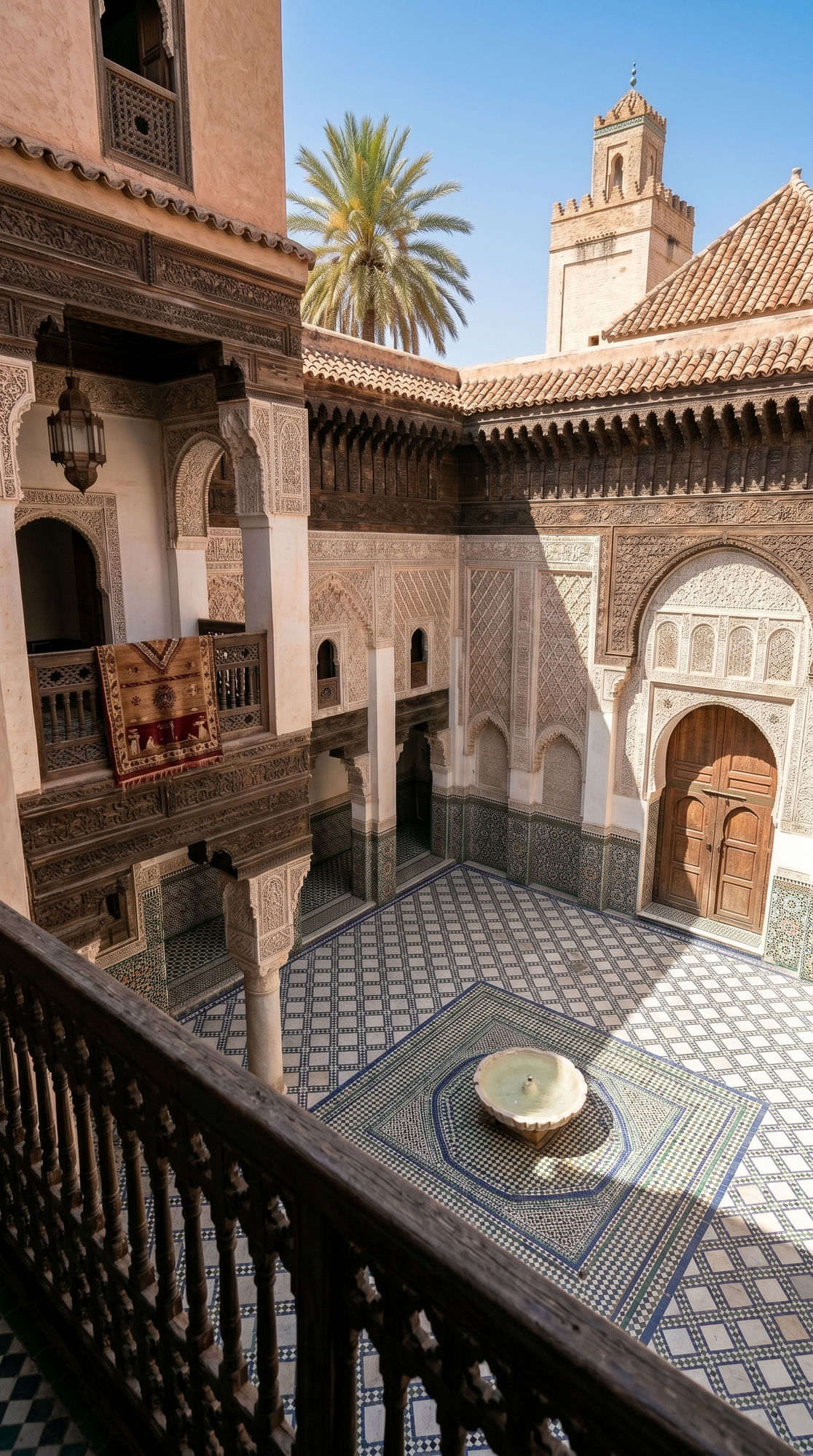
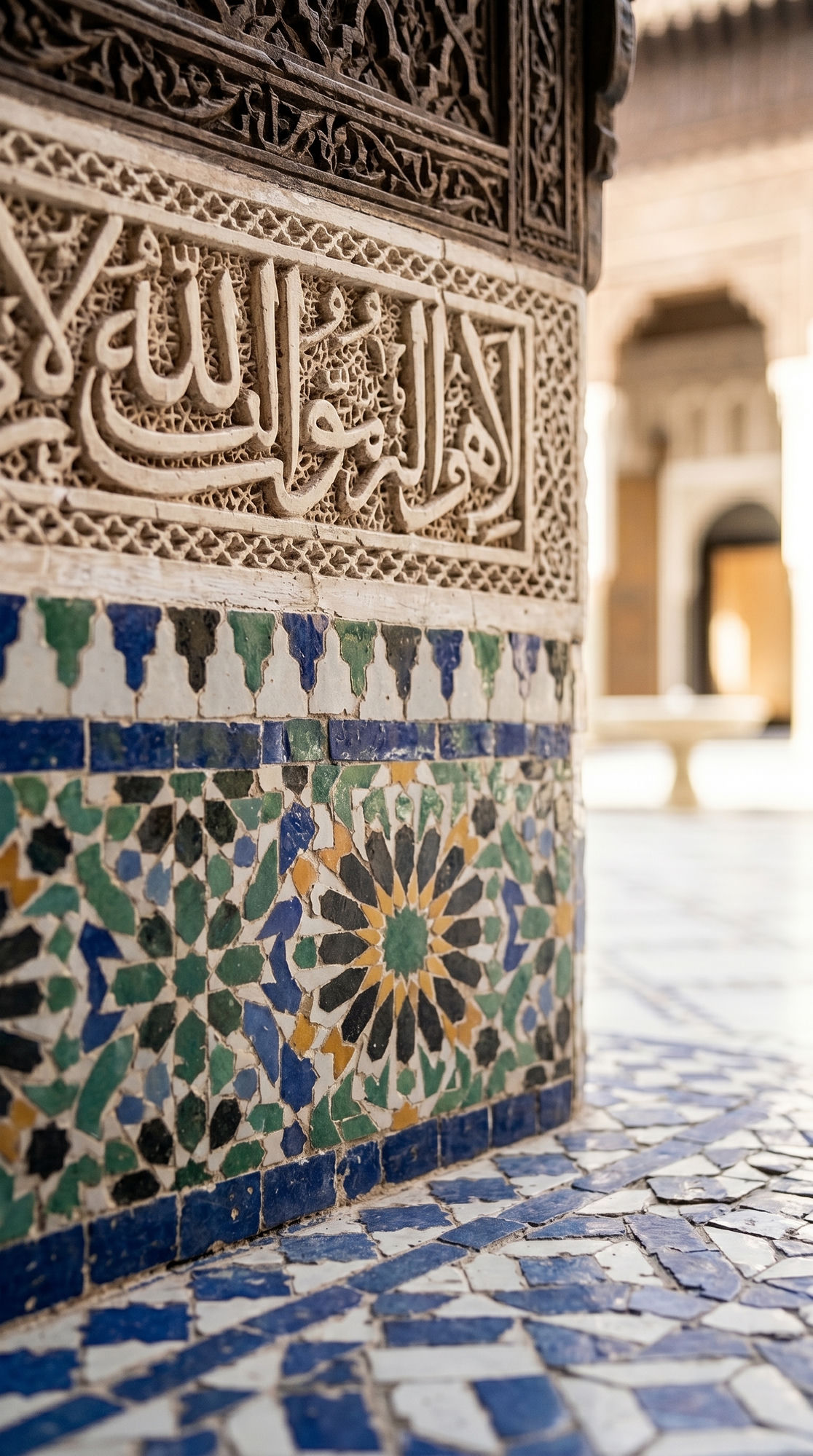
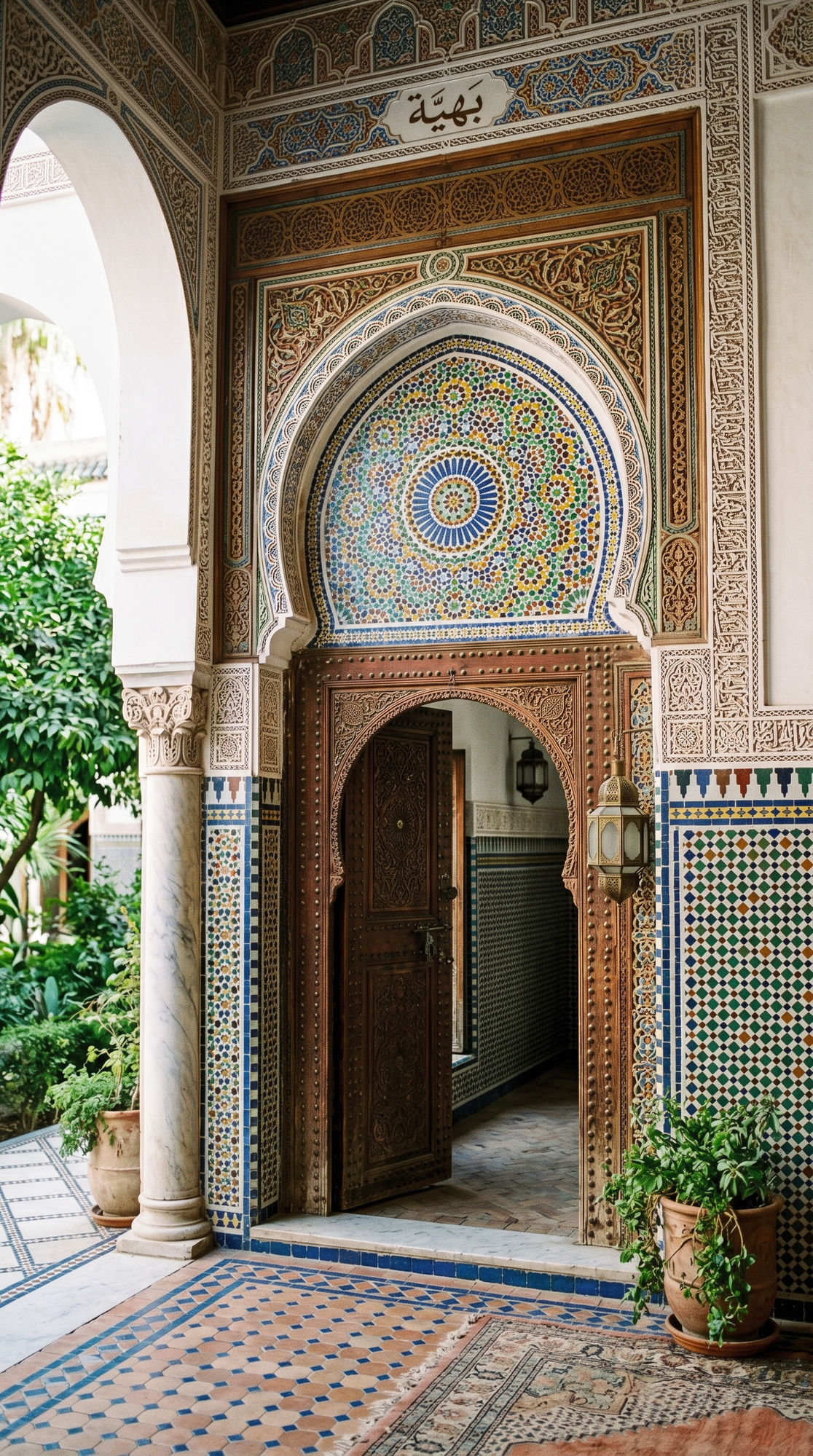
Both buildings draw on the same craft vocabulary — zellige mosaic floors, carved stucco arabesque panels, hand-painted cedar ceilings, carved wood screens — because they were commissioned in the same period by brothers from the same family using craftsmen from the same Fez workshops. The family resemblance is unmistakable. What differs is scale, layout, and what each building was designed to show.
Bahia Palace unfolds horizontally. The experience is cumulative: the Small Riad, then the Large Riad, the Grand Riad (roughly 1,500 m² of open courtyard planted with orange trees), the formal reception rooms, the harem quarters, the garden. Each space leads to the next. The rooms are empty — Ba Ahmed's possessions were stripped out the day he died — but the craftsmanship speaks for itself. The Grand Reception Room and the harem ceiling panels are among the finest painted cedar work in Morocco. Plan 75–90 minutes and you still won't have lingered long enough in every room.
Dar Si Said works differently. The ground floor centres on an intimate riad courtyard with a garden and a carved painted-wood pavilion — the kind of space that rewards sitting still rather than moving through. A carved wooden staircase leads to the upper floor, where the visit's highlight is the wedding chamber: an ornate room with exceptional stucco decoration and painted cedar ceilings, used historically for bridal preparations. It's the most elaborately decorated interior in the building, and the one most visitors remember. The museum's textile and carpet collection is arranged through the surrounding rooms. At 30–45 minutes the visit is self-contained and unhurried.
The honest comparison: Bahia Palace's architecture is more impressive across its full sequence of spaces. Dar Si Said's upper floor — particularly the wedding chamber — is genuinely excellent and holds up against Bahia's best rooms. Neither is a consolation prize.
Size and Time Needed
Bahia Palace requires 75–90 minutes to see properly — less than that and you're rushing through the harem quarters and skipping the garden. The site covers roughly 8,000 m² and is arranged as a single-level sequence of rooms; there's a lot of ground to cover. Crowds after 10:30 AM make slower exploration harder, which is the main reason arriving at 9:00 AM matters. The southern medina guide covers how to sequence Bahia with the other monuments nearby.
Dar Si Said takes 30–45 minutes. The ground floor courtyard, riad garden, and pavilion can be seen in 10–15 minutes; the upper floor with the wedding chamber and museum rooms accounts for the rest. It's not a site that rewards 90 minutes the way Bahia does — its value is in concentration and quiet, not in the depth of its horizontal space. The multi-level layout means the visit has a natural structure: downstairs for architecture and atmosphere, upstairs for the building's finest craftwork and the textile collection.
Crowds: Dar Si Said's Real Advantage
This is the clearest practical difference between the two sites. Bahia Palace appears in every Marrakech guidebook, every tour group itinerary, and every "top 10 things to do" list. By 10:30 AM the Grand Riad has overlapping tour groups moving through it in opposite directions. The narrow corridors between sections get genuinely congested. Arriving at 9:00 AM avoids most of this; by 11:00 it's unavoidable.
Dar Si Said, on the same street, attracts a fraction of that traffic. On most mornings you'll share the courtyard with a handful of other visitors. The riad garden and ground-floor pavilion are peaceful spaces — the kind of quiet that Bahia Palace only offers in its first 30 minutes at opening. In our experience, visitors who find Bahia's midday crowds overwhelming consistently rate Dar Si Said higher than they expected — not because it's architecturally more impressive, but because the experience of being there is simply more restful. If you want to see what Marrakech's palace architecture feels like without the noise, Dar Si Said is the more honest version of that experience.
Price
Bahia Palace is 100 MAD per foreign adult (confirmed 2026 rate, set by Morocco's Ministry of Culture). Cash only at the door; the nearest ATMs are on Rue Riad Zitoun el Kedim. A pre-booked ticket skips the queue at the same price.
Dar Si Said's current ticket price should be verified on arrival. Available sources quote figures that conflict and are likely outdated — do not rely on any number you find online. Come with dirhams; the ticket window is cash only. Whatever the current price, the combined cost of both sites in a single half-day is modest.
Can You Visit Both Bahia Palace and Dar Si Said in One Day?
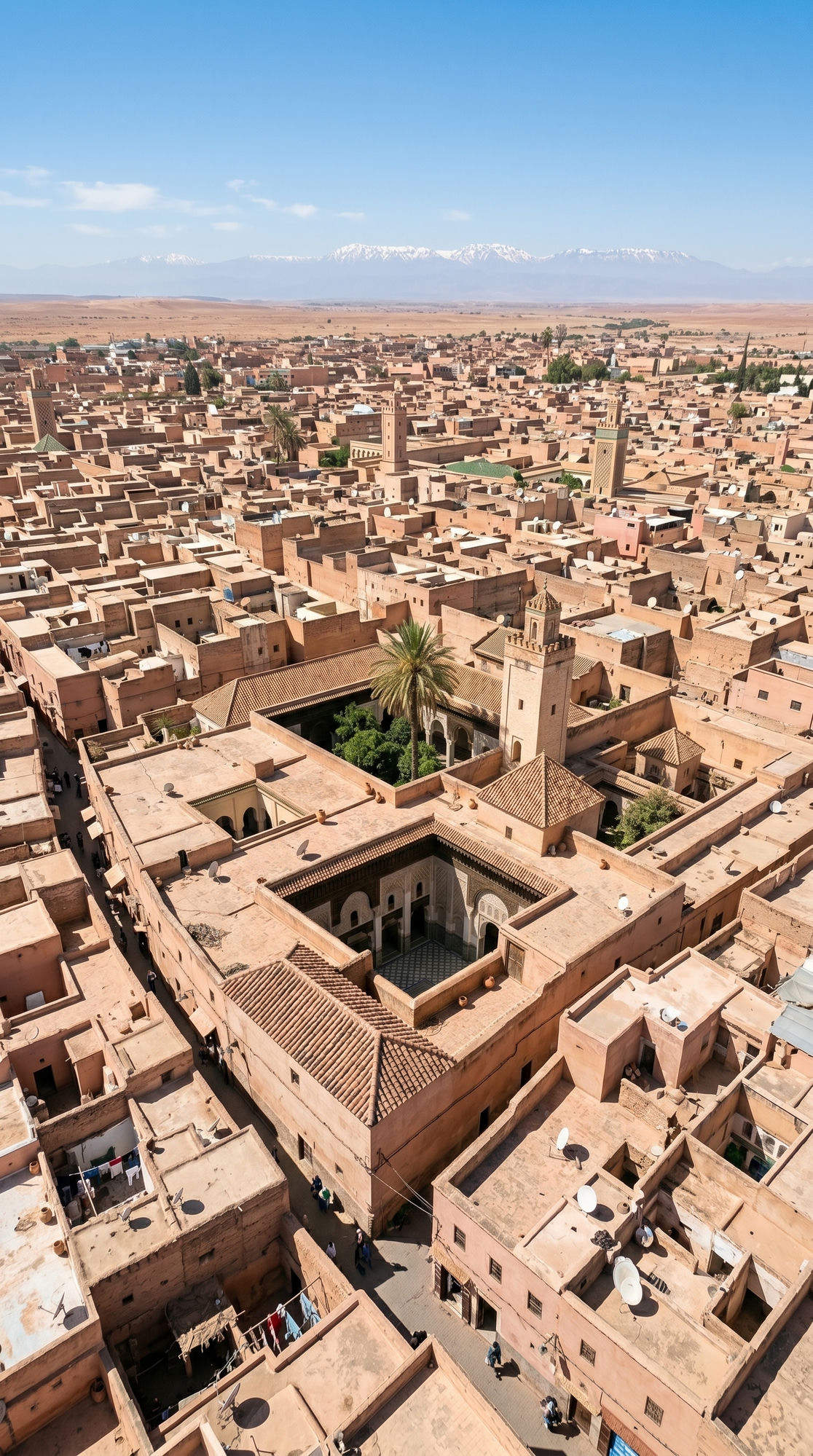
Yes, easily. The two buildings are a few minutes' walk apart on Rue Riad Zitoun el Jedid. The logical sequence is Bahia Palace first — it's larger, benefits most from an early arrival, and is best seen before the crowds build. Dar Si Said is a natural second stop on the way out, adding 30–45 minutes before you continue north toward Jemaa el-Fna or east toward the Saadian Tombs.
A practical combined half-day:
- 08:50 — Arrive at Bahia Palace (opens 09:00)
- 10:30 — Leave Bahia, walk to Dar Si Said (~5 min)
- 11:15 — Leave Dar Si Said; continue to the Saadian Tombs, El Badi Palace, or lunch
To extend into a full southern medina morning, the combined Bahia Palace and Saadian Tombs guide covers how to fit all three principal sites into one sequence. For the El Badi Palace side of the comparison, the Bahia vs El Badi article covers that pair separately.
Which Should You Choose?
Choose Bahia Palace if you:
- Are visiting Marrakech for the first time — it's the best single introduction to 19th-century Moroccan palace architecture
- Want the full horizontal sequence of courtyards, reception rooms, harem quarters, and garden
- Have only one monument slot in a tight itinerary
- Are interested in the political history behind the building — the story of Ba Ahmed's rise and sudden fall is among the most dramatic in Moroccan history
Choose Dar Si Said if you:
- Are specifically interested in Moroccan textile arts, carpet traditions, or traditional weaving
- Want to see the upper-floor wedding chamber — the most ornate single room in the building — and the carved wooden pavilion in the courtyard garden
- Want a genuinely quiet museum experience rather than a busy monument
- Are returning to Marrakech and have already seen Bahia Palace
Choose both if you:
- Have a half-day free in the southern medina
- Want to see the two brothers' competing palaces side by side — the same craftsmanship, radically different outcomes in terms of fame and visitor numbers
- Are doing the full southern medina monument loop and want to make the most of the area
The honest summary: Bahia Palace is the more important site by most measures and is the right first choice for anyone new to Marrakech. Dar Si Said is worth the 30-minute detour if you're walking past on the way between monuments — the wedding chamber alone justifies it, and the quiet courtyard garden is a genuine contrast to what you've just experienced at Bahia. If you're undecided and have the time, visit both. The Bahia Palace visitor guide covers everything you need to prepare for the main palace.
Frequently Asked Questions
How far is Dar Si Said from Bahia Palace?
A few minutes on foot — both are on or just off Rue Riad Zitoun el Jedid in Marrakech's southern medina. The walk is roughly 5 minutes. They're close enough to visit back-to-back without any additional transport.
What is Dar Si Said called now?
Dar Si Said now operates as the National Museum of Weaving and Carpets (Musée National du Tissage et du Tapis), reopened in 2018 following restoration. The building retains its original 19th-century riad architecture — including the multi-level layout, the upper-floor wedding chamber, and the carved wooden courtyard pavilion — while the collection focuses on traditional Moroccan textiles and carpet weaving traditions from across the country.
Is Dar Si Said worth visiting if you've already seen Bahia Palace?
Yes. Dar Si Said offers things Bahia doesn't: the upper-floor wedding chamber, a riad garden, a carved painted-wood pavilion, and the museum's textile collection. It's also noticeably quieter at any hour of the day. At 30–45 minutes and a modest entry fee, it adds meaningfully to a southern medina morning rather than repeating what you've just seen at Bahia.
Can I visit both Bahia Palace and Dar Si Said in one day?
Easily. Allow 75–90 minutes for Bahia Palace (arrive at 09:00 AM) and 30–45 minutes for Dar Si Said immediately after. Total: under 2.5 hours for both. You can then continue to the Saadian Tombs or El Badi Palace — see the combined monuments guide for the full sequence.
What is the difference between Bahia Palace and Dar Si Said?
Bahia Palace is much larger (~8,000 m²), single-level, and spread across multiple interconnected courtyards. Dar Si Said is compact and multi-level, with a riad garden, a painted-wood pavilion, and an ornate upper-floor wedding chamber. Both were built by brothers between 1894 and 1900 using the same Fez craftsmen. Bahia gets the crowds; Dar Si Said gets the quiet.
Which has better architecture — Bahia Palace or Dar Si Said?
Bahia Palace has more of it — more rooms, more ceiling panels, more courtyards. But Dar Si Said's upper-floor wedding chamber holds up against Bahia's finest rooms in terms of craftwork quality. Both were built by brothers from the same family using craftsmen from the same Fez workshops in the same decade, so the tradition is identical. The difference is scale, not quality.
How much does Dar Si Said cost to visit in 2026?
Verify on arrival — available sources conflict and the figures circulating online are likely outdated. Come with dirhams; the ticket window is cash only. Bahia Palace is 100 MAD for foreign adults (confirmed 2026 rate).
Sources
- Morocco Office National Marocain du Tourisme (ONMT). "Morocco Tourism Annual Report 2024." visitmorocco.com
- UNESCO World Heritage Centre. "Medina of Marrakesh." World Heritage List, Inscription No. 331, 1985. whc.unesco.org/en/list/331
- Morocco Ministry of Culture. Monument information. e-services.minculture.gov.ma
- Wikipedia contributors. "Dar Si Said Museum." Wikipedia, The Free Encyclopedia. en.wikipedia.org
- Fondation Nationale des Musées (Maroc). "Musée national du Tissage et du Tapis Dar Si Saïd." fnm.ma