
Bahia Palace in Marrakech attracts an estimated an estimated 500,000 visitors a year (no official annual total is published). Most people follow the same path through the famous courtyards, take their photographs, and leave. But for those who slow down and look carefully, the palace reveals an entirely different world, one filled with hidden stories, forgotten symbols, and extraordinary details that most tourists walk right past.
Here are 10 hidden details inside Bahia Palace that are easy to miss, and why each one matters.
Key Takeaways
- Bahia Palace was built 1894–1900 using craftsmen from Fez. The zellige tilework, hand-painted cedar ceilings, and carved plasterwork are all in near-original condition more than 125 years later.
- Every detail in the palace has meaning: the zellige imperfections are intentional, the plasterwork contains Quranic verses, the courtyard is a passive cooling system, and the garden is modelled on the Islamic paradise.
- The rooms are empty because Sultan Abdelaziz ordered everything stripped overnight after Ba Ahmed died in May 1900. Understanding this turns the emptiness from disappointment into part of the story.
1. Why Are Bahia Palace's Zellige Mosaics Never Perfectly Symmetrical?
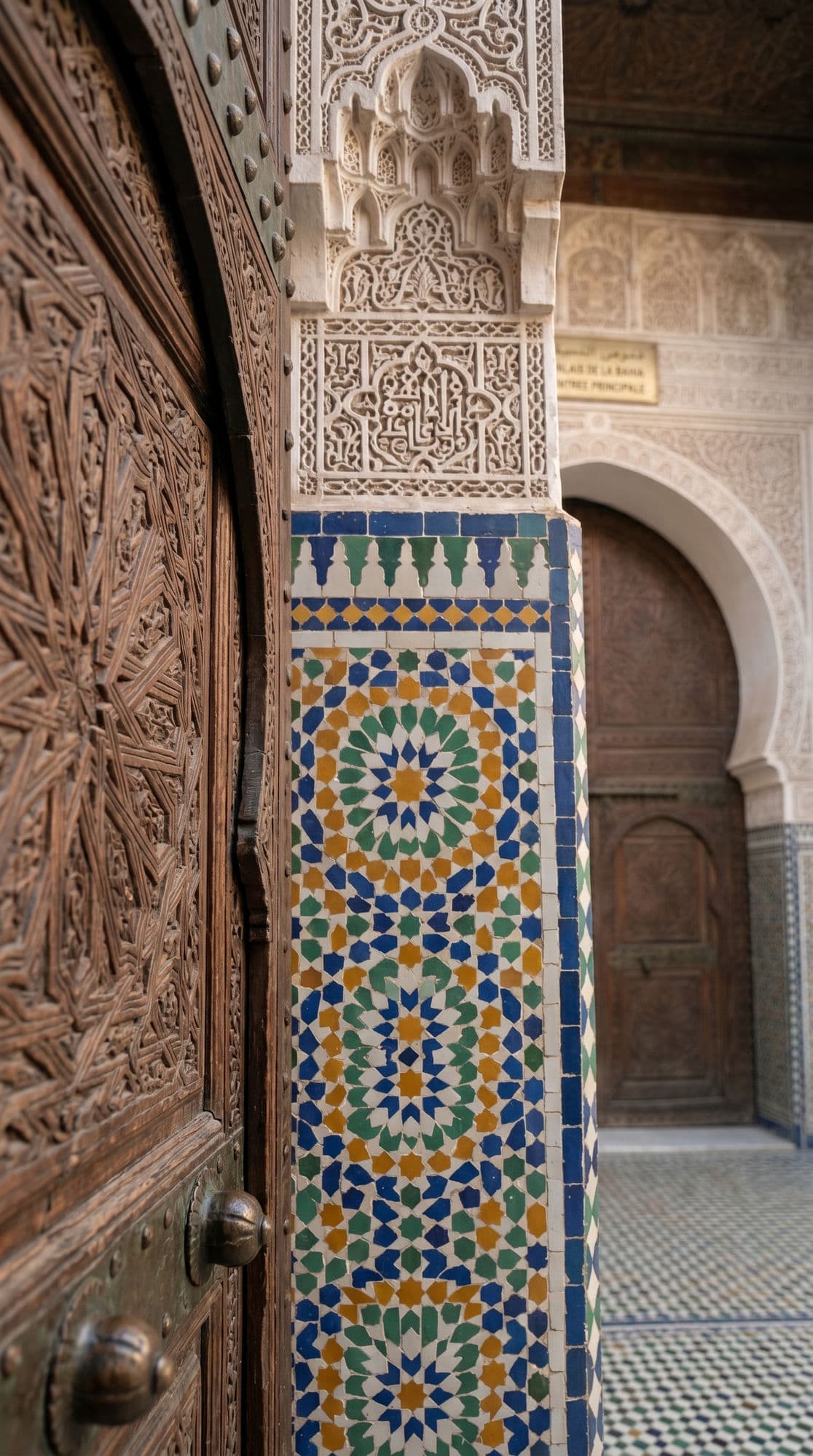
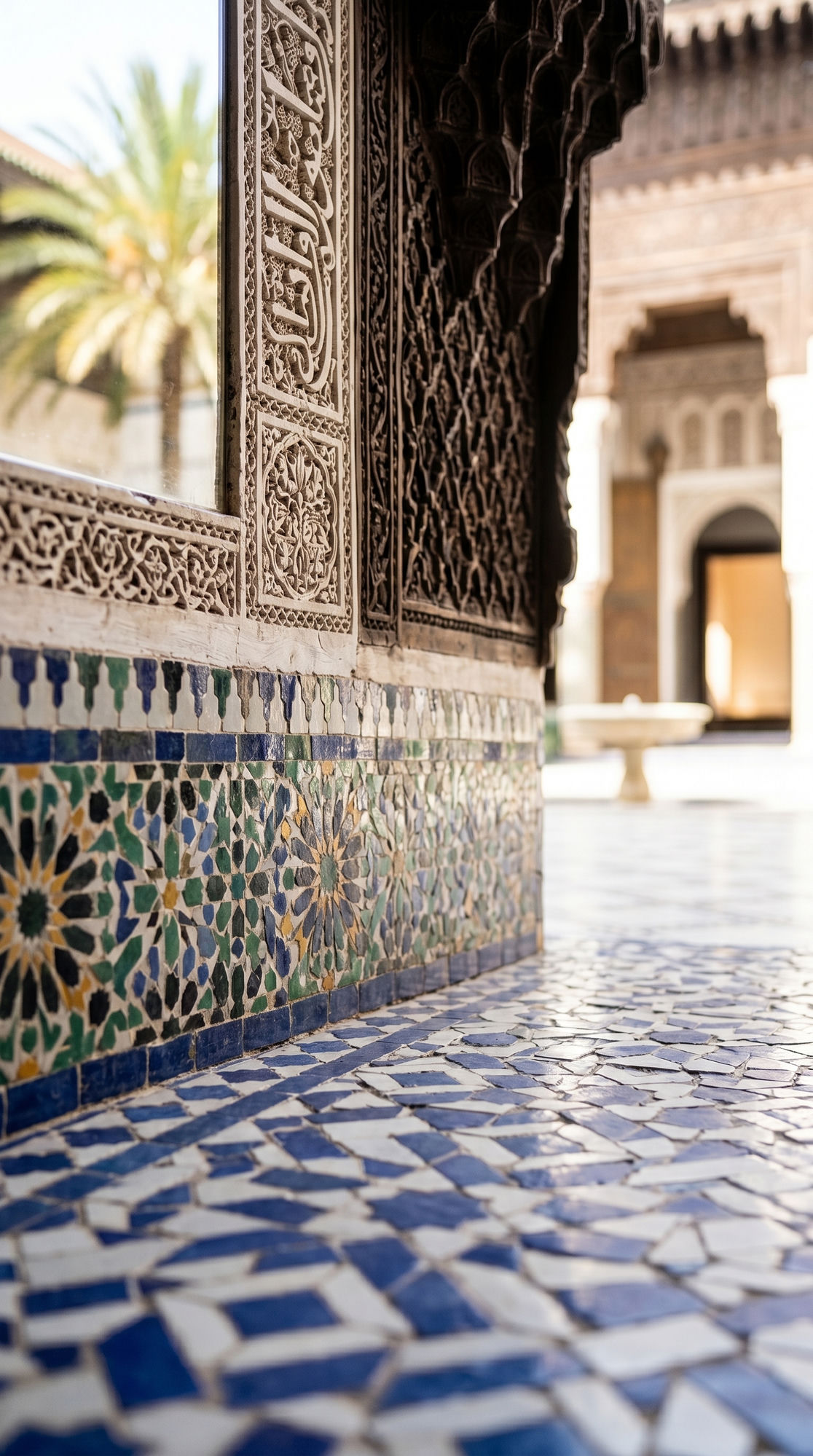
The zellige tilework covering the lower walls and floors of Bahia Palace is breathtaking at first glance. But look more closely and you will notice something remarkable: no two panels are exactly identical. Every mosaic was cut and assembled entirely by hand by master craftsmen called maallems.
Each piece of zellige is individually chipped from a fired clay tile using a special hammer and chisel. The slight variations in angle, size, and colour that result from this process are not mistakes — they are a deliberate reflection of the Islamic artistic philosophy that only God can create perfection. The imperfections are intentional and considered a mark of authenticity. In our experience, this is the detail that most changes how visitors look at the floors. The same tilework that initially reads as decorative pattern reveals itself as a philosophical statement when you know what you're looking at.
2. How Were the Cedar Wood Ceilings Hand-Painted?
The carved and painted cedar wood ceilings throughout Bahia Palace are among the finest examples of Moroccan craftsmanship in existence. What most visitors do not realise is that every inch of the intricate geometric and floral patterns was painted entirely by hand using natural pigments. The construction ran from 1894 to approximately 1900, during which thousands of skilled craftsmen from Fez worked simultaneously on the palace (Encyclopaedia Britannica, Marrakech).
Artisans worked with brushes made from animal hair, using mineral-based colours that have maintained their richness for more than 130 years. Look for the fine detail work in the corners and borders, areas that most tourists never look up at long enough to notice. The Grande Salle d'Honneur has the most celebrated ceiling in the palace.
3. How Does the Grand Courtyard Stay Cool on Hot Days?
The large central courtyard of Bahia Palace, known as the Grand Riad, feels noticeably cooler than the streets outside even on the hottest Marrakech days. This is not an accident. The architects designed the courtyard to function as a natural cooling system.
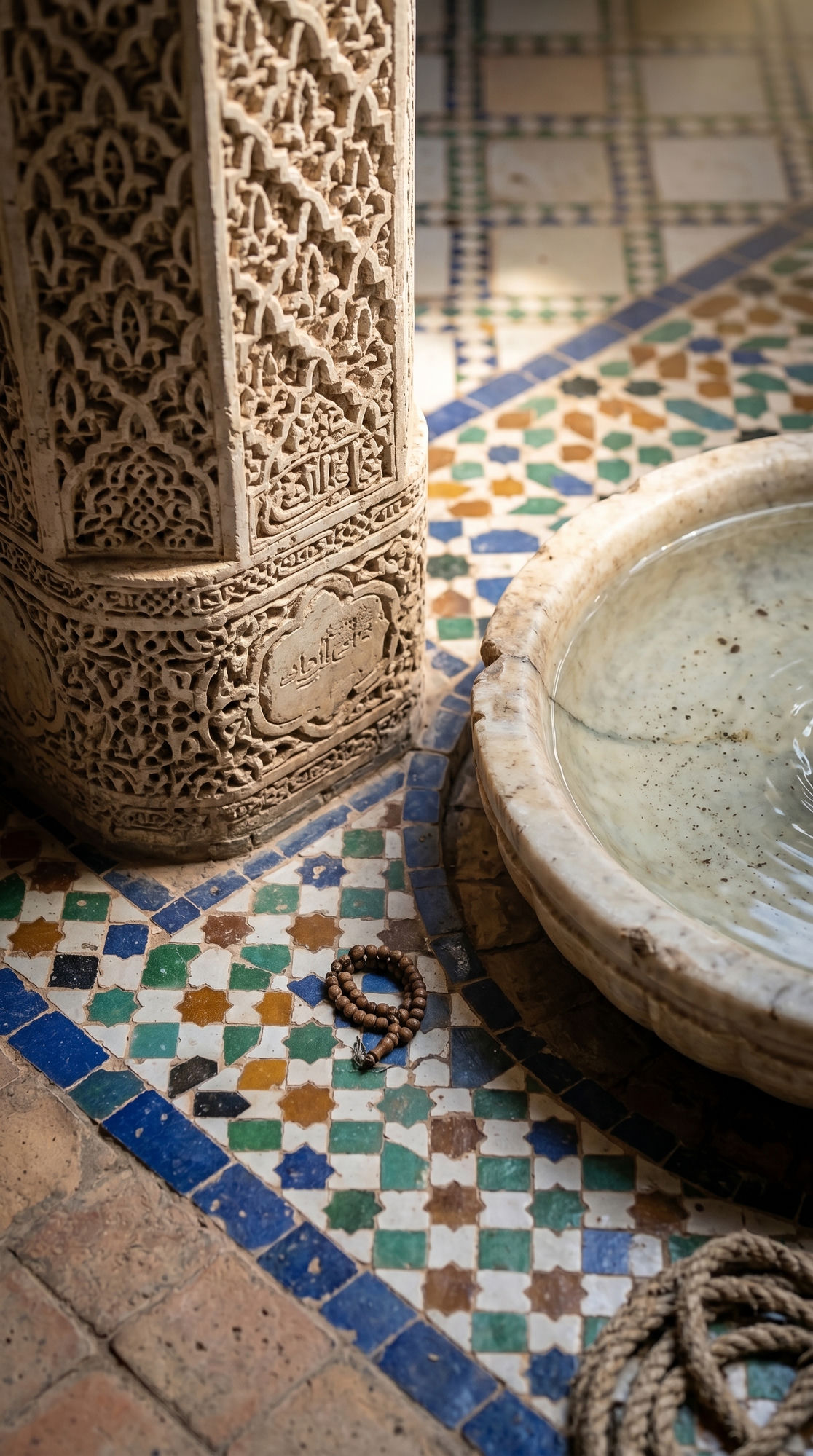
The marble floors, the central fountain, the surrounding orange trees, and the tall enclosing walls all work together to channel cool air downward and create a microclimate inside the courtyard. This passive cooling technique, developed across centuries of Moroccan architecture, was sophisticated environmental engineering long before modern air conditioning existed.
4. Why Does Bahia Palace Have No Geometric Symmetry?
Unlike European palaces which typically follow strict geometric symmetry, Bahia Palace was built without a formal architectural plan. Grand Vizier Si Moussa, and later his son Ba Ahmed, added rooms, courtyards, and wings over several decades according to their personal needs and preferences.
The result is a labyrinthine layout with over 150 rooms that does not follow a predictable pattern. Corridors lead unexpectedly into courtyards. Rooms open into other rooms at unusual angles. Many visitors get slightly disoriented inside, which is part of what makes exploring the palace so interesting. The room-by-room guide maps the layout before your visit so you understand the logic, such as it is, behind the design.
5. What Do the Carved Plaster Inscriptions in Bahia Palace Say?
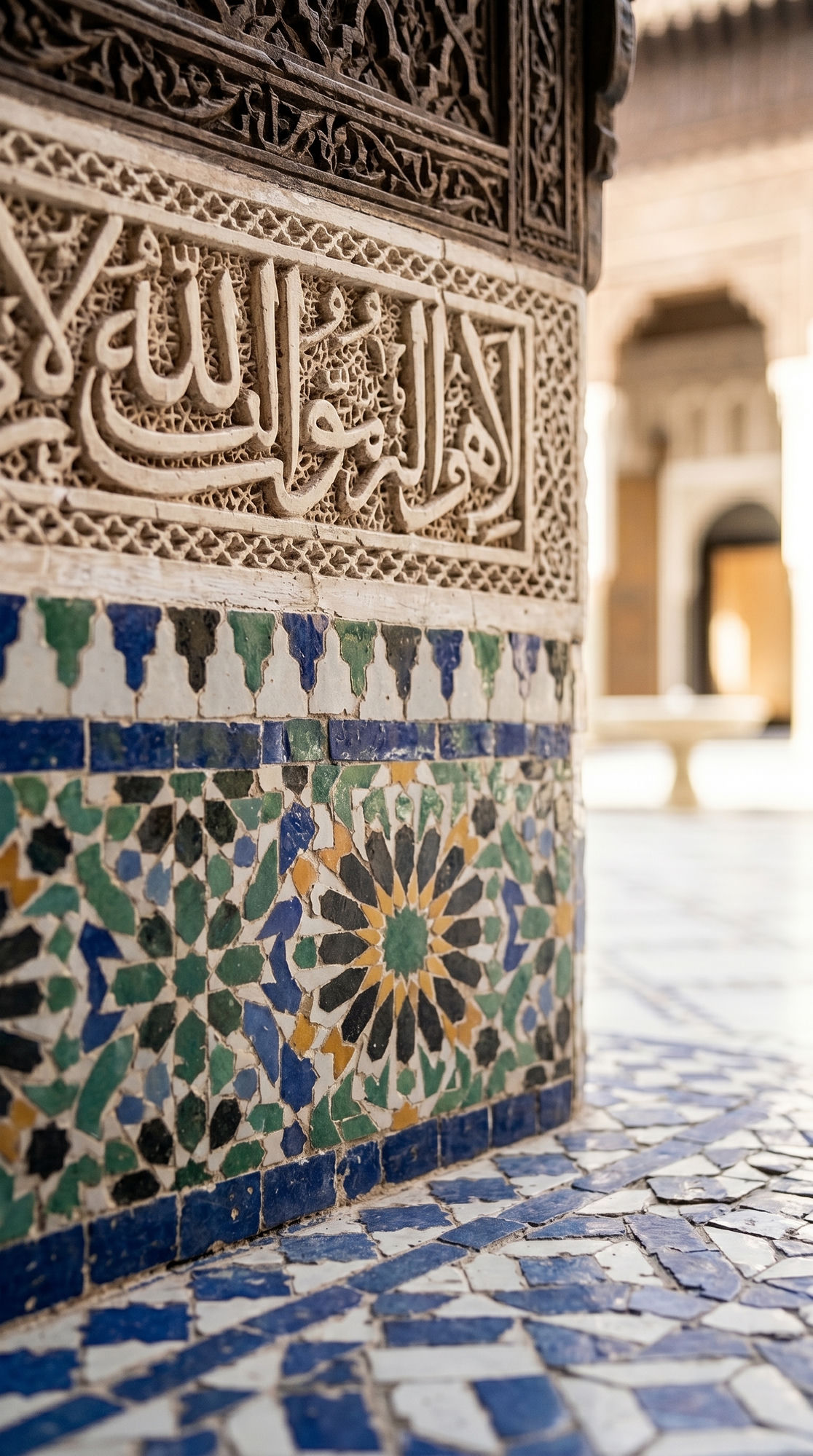
The ornate carved plaster panels that decorate the upper sections of the palace walls are not purely decorative. Look carefully at the bands of intricate calligraphy that run along the borders of many rooms. They contain verses from the Quran and classical Arabic poetry.
These inscriptions were placed at a height most visitors do not naturally look at. They were intended not as displays for guests but as spiritual protection and blessings for the inhabitants of the palace. A knowledgeable guide can point them out and translate their meaning. The guided tour specifically covers the calligraphy bands and their Islamic context.
6. The Harem Quarters Had 150 Rooms for One Man
The eastern wing of Bahia Palace contained the private harem apartments of Grand Vizier Ba Ahmed. Historical records indicate that Ba Ahmed had four official wives and 24 concubines, all of whom lived in separate apartments within this section of the palace.
The harem quarters were designed with complete privacy in mind. Separate corridors, private courtyards, and screened windows meant that the women living here rarely came into contact with visitors or male staff. The delicate tilework and painted ceilings in these rooms are some of the finest in the entire palace. For the full account of Ba Ahmed's life and household, the history of Bahia Palace covers it in detail.
7. What Do the Metalwork Patterns on the Palace Doors Mean?
The heavy wooden doors throughout Bahia Palace are covered with hand-engraved metal studs and decorative ironwork. Most tourists photograph the doors but do not stop to examine the patterns closely. The geometric and floral motifs were not chosen randomly: each pattern carried symbolic meaning related to protection, prosperity, and divine blessing.
The large brass door knockers and handles were also carefully crafted. Their weight and sound when struck against the door were considered important. A light knock indicated a female visitor, while a heavier knock announced a male guest, allowing the household to prepare appropriately before opening.
8. Why Were Bahia Palace's Gardens Designed as an Earthly Paradise?
The internal gardens of Bahia Palace were not designed simply to be beautiful. In Islamic architectural tradition, the enclosed garden courtyard, known as a riyad, symbolises paradise on earth. The four sections of a traditional riyad garden represent the four rivers of paradise described in Islamic scripture.
The orange trees, roses, and jasmine planted throughout the palace were chosen not only for their beauty but for their fragrance. Scent was considered an important part of the architectural experience, creating an atmosphere of peace and spiritual elevation. Bahia Palace lies within the Medina of Marrakesh, inscribed on the UNESCO World Heritage List in 1985 (UNESCO World Heritage List, entry #331). The gardens still contain many of the original plant species today.
9. Why Did Ba Ahmed Import Carrara Marble From Italy?
While most of Bahia Palace was built using local Moroccan materials, zellige from Fez, cedar from the Atlas Mountains, and limestone from the Marrakech region, the white marble used for the courtyard floors and fountains was imported from Carrara, Italy.
This detail reflects both the extraordinary wealth of Grand Vizier Ba Ahmed and the global trade connections that Morocco maintained during the late 19th century. Italian marble was considered the finest available, and its presence in a private Moroccan palace was a powerful statement of status and ambition. The Ministry of Culture manages Bahia Palace today as one of Morocco's protected national heritage sites (e-services.minculture.gov.ma).
10. The Palace Was Stripped Bare Overnight
Perhaps the most dramatic hidden story of Bahia Palace involves what happened immediately after Ba Ahmed died in May 1900. Sultan Abdelaziz, who had long resented the enormous power of his Grand Vizier, sent officials to the palace within hours of Ba Ahmed's death.
Everything of value, furniture, carpets, jewellery, gold objects, and personal possessions, was removed and taken to the royal treasury. The palace was emptied so quickly that servants reportedly had no time to save even basic household items. What visitors see today is essentially the architectural shell of the palace, stripped of almost all its original furnishings. For the full story of this overnight stripping and who Ba Ahmed was, see the complete history of Bahia Palace.
Why Is Bahia Palace a Living Museum of Moroccan Craftsmanship?
Bahia Palace preserves traditional Moroccan craftsmanship techniques that are becoming increasingly rare today. The artisans who worked on the palace specialised in different forms: zellige mosaics, carved plaster, painted cedar, and engraved metalwork. Creating these elements required years of apprenticeship with a master craftsman before independent work was permitted.
Every detail was created manually, which is why no two patterns are completely identical. These deliberate imperfections are part of what makes traditional Moroccan craftsmanship unique and authentic. Visitors who understand this look at the palace differently from those who don't. The audio guide available at the entrance covers the craft context in detail.
Why Do Most Tourists Miss These Details?
Many tourists miss these hidden details because they visit the palace quickly as part of crowded tour schedules. Some visitors spend less than an hour inside before moving to other Marrakech attractions. Photography also changes how people experience historical monuments: instead of observing the architecture carefully, many visitors focus mainly on taking pictures and move on before absorbing what they've seen.
Guided tours help significantly. Local guides explain the historical facts and architectural symbolism that visitors would not notice alone. The guided tour guide covers what to ask and what to look for. Booking your ticket in advance is also practical: arriving without a queue means you start your visit calm and with full attention available, not frustrated from 40 minutes in the sun outside.
Frequently Asked Questions
What is the most impressive hidden detail in Bahia Palace?
The hand-painted cedar wood ceilings are considered among the finest examples of traditional Moroccan craftsmanship. Most visitors are so focused on the zellige floors that they forget to look up. The Grande Salle d'Honneur ceiling, in particular, has no equal in Marrakech.
Is there a guided tour of Bahia Palace?
Yes. A guided tour is available and includes a knowledgeable local guide who explains the history, symbolism, and hidden details of the palace. It's the most effective way to encounter the details described in this article.
How long should I spend at Bahia Palace to see everything?
Allow at least 90 minutes to explore the palace carefully. Visitors who rush through in under an hour will miss the majority of what makes the palace remarkable. Two hours is ideal for photographers or anyone who wants to read the inscriptions and examine the craftwork closely.
What happened to the original furniture of Bahia Palace?
Almost all the original furnishings were removed by order of Sultan Abdelaziz immediately after Grand Vizier Ba Ahmed died in May 1900. The palace has been largely empty of its original contents ever since. The full account of why this happened is told in the history of Bahia Palace.
Can I visit Bahia Palace without a guide?
Yes, but a guided visit significantly enriches the experience. Many of the hidden details described here, including the Quranic inscriptions and the garden symbolism, are difficult to identify without expert knowledge. If a full guided tour isn't practical, the audio guide covers the key context at your own pace.