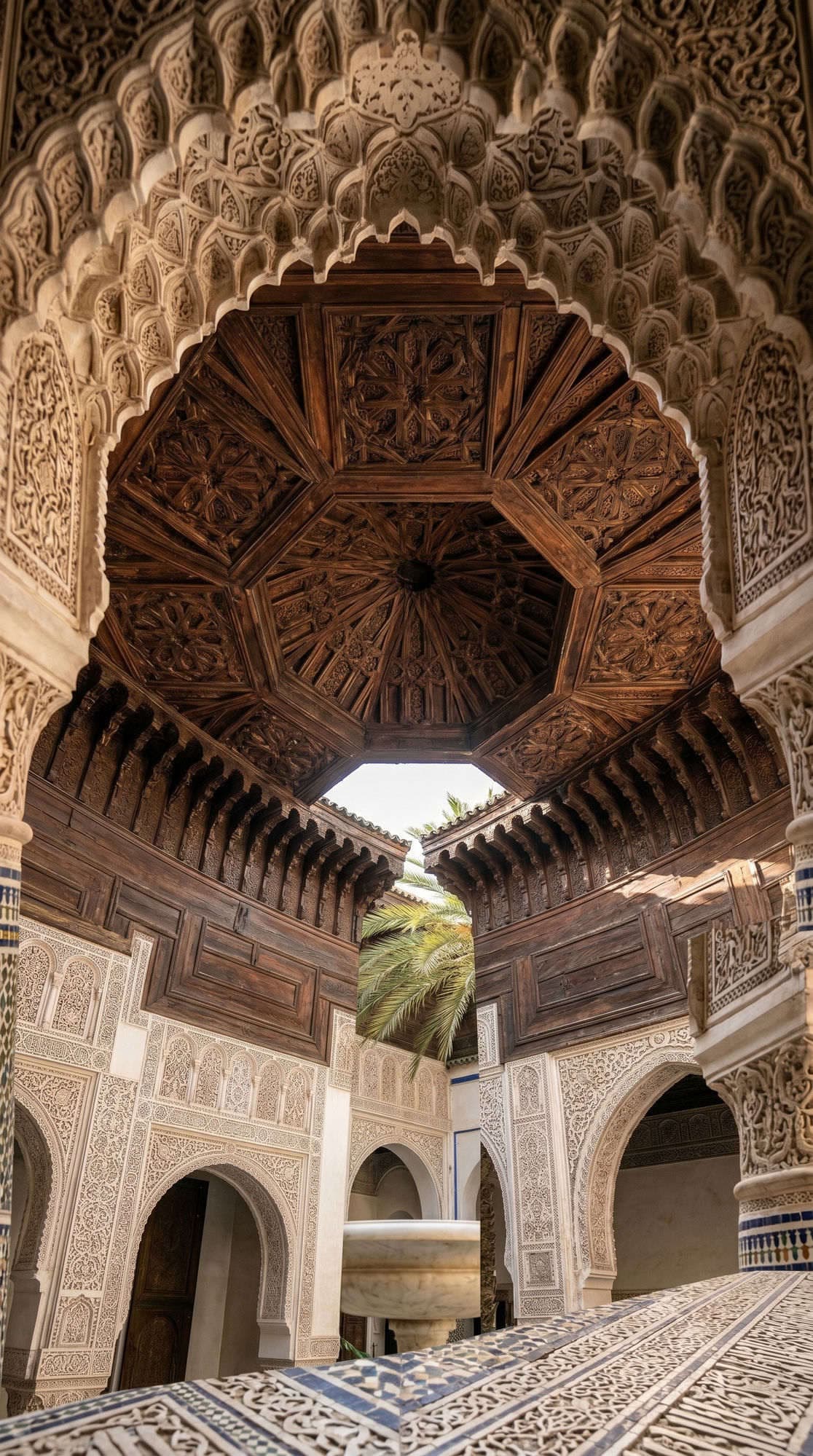
Il Palazzo Bahia non è un edificio ma due, separati da quarant’anni. I padiglioni del giardino recano un’iscrizione che li data al 1866–1867, quando il ciambellano Si Moussa vi si fece costruire una casa. Suo figlio Ba Ahmed trasformò quella casa nel palazzo che oggi si percorre, fra il 1894–1900, nei sei anni in cui governò il Marocco in nome di un sultano adolescente.
al-Bahia significa «la splendente». Si tramanda che fosse il nome della moglie prediletta di Ba Ahmed, anche se alcuni racconti leggono il nome come qualità del palazzo stesso e non di una persona.
Date e cifre di questa pagina sono documentate una per una e riportate per intero sotto Fonti.
Il palazzo fu edificato in due fasi. Si Moussa, hajib (ciambellano) del sultano Muhammad IV e poi gran visir sotto Hassan I, costruì la prima casa sul terreno. Suo figlio Ba Ahmed la ampliò fra il 1894–1900.
Ba Ahmed non ereditò la carica del padre. Fu hajib di Hassan I dal 1879 e, alla morte del sultano in campagna nel 1894, insediò Moulay Abdelaziz, di 14 anni, scavalcando i fratelli maggiori, e governò al suo posto fino alla propria morte.
Il nonno di Ba Ahmed fu ridotto in schiavitù, proprietà del sultano Moulay Slimane, e giunse a esserne l’hajib, il ciambellano. Ba Ahmed nacque invece in una famiglia già radicata nel Makhzen.
La decorazione fu eseguita da maalmin marocchini, soprattutto maestri formati a Fez, specialisti di zellige, gebs e falegnameria in cedro. Ba Ahmed formò l’area assorbendo i lotti di circa 60 case vicine, e 16 giardini furono acquisiti per la proprietà.
Deverdun (1959), dall’iscrizione datata nei due padiglioni del giardino
Deverdun (1959); Ministero della Cultura del Marocco
Deverdun (1959)
Ministero della Cultura del Marocco
Ghachem-Benkirane e Saharoff (1990)
Deverdun (1959)
Cronache marocchine coeve, sintetizzate da Deverdun (1959)
Ministero della Cultura del Marocco
I due padiglioni ai lati del giardino recano un’iscrizione che li data al 1866–1867, la più antica data certa sull’edificio. Si Moussa, ciambellano del sultano Muhammad IV e poi gran visir sotto Hassan I, lo costruisce come residenza privata: non è ancora la Bahia.
Deverdun (1959)
Ahmed ibn Moussa, figlio di Si Moussa, diventa hajib, ciambellano, del sultano Hassan I. Non eredita il visirato paterno: costruisce la propria posizione nei quindici anni successivi.
Deverdun (1959)
Hassan I muore in campagna. Ba Ahmed ne cela la morte quanto basta per insediare Moulay Abdelaziz, di 14 anni, scavalcando i fratelli maggiori, e diventa gran visir e reggente di fatto. Comincia ad ampliare la casa paterna fino a farne un palazzo.
Deverdun (1959)
Ba Ahmed assorbe i lotti di circa 60 case vicine e 16 giardini. Il grande cortile di marmo è datato 1896–1897 da iscrizione. L’architetto è Muhammad ibn Makki al-Misfiwi, di Safi.
Deverdun (1959)
Ba Ahmed muore a Marrakech. Il sultano Moulay Abdelaziz avrebbe ordinato di saccheggiare gli oggetti di valore e di cacciare la casa. La decorazione fissa sopravvisse perché non si poteva portare via.
Deverdun (1959)
Sotto il protettorato francese il palazzo diventa la residenza ufficiale del residente generale, rappresentante della Francia in Marocco.
Ministero della Cultura del Marocco
palaceHistory.tl7Text
Ministero della Cultura del Marocco
La decorazione è opera marocchina in uno stile dalle profonde radici andaluse, eseguita da maalmin formati a Fez. Gli artigiani erano marocchini, non importati da al-Andalus, finita quattro secoli prima. Quattro mestieri spiegano quasi tutto ciò che il visitatore vede.
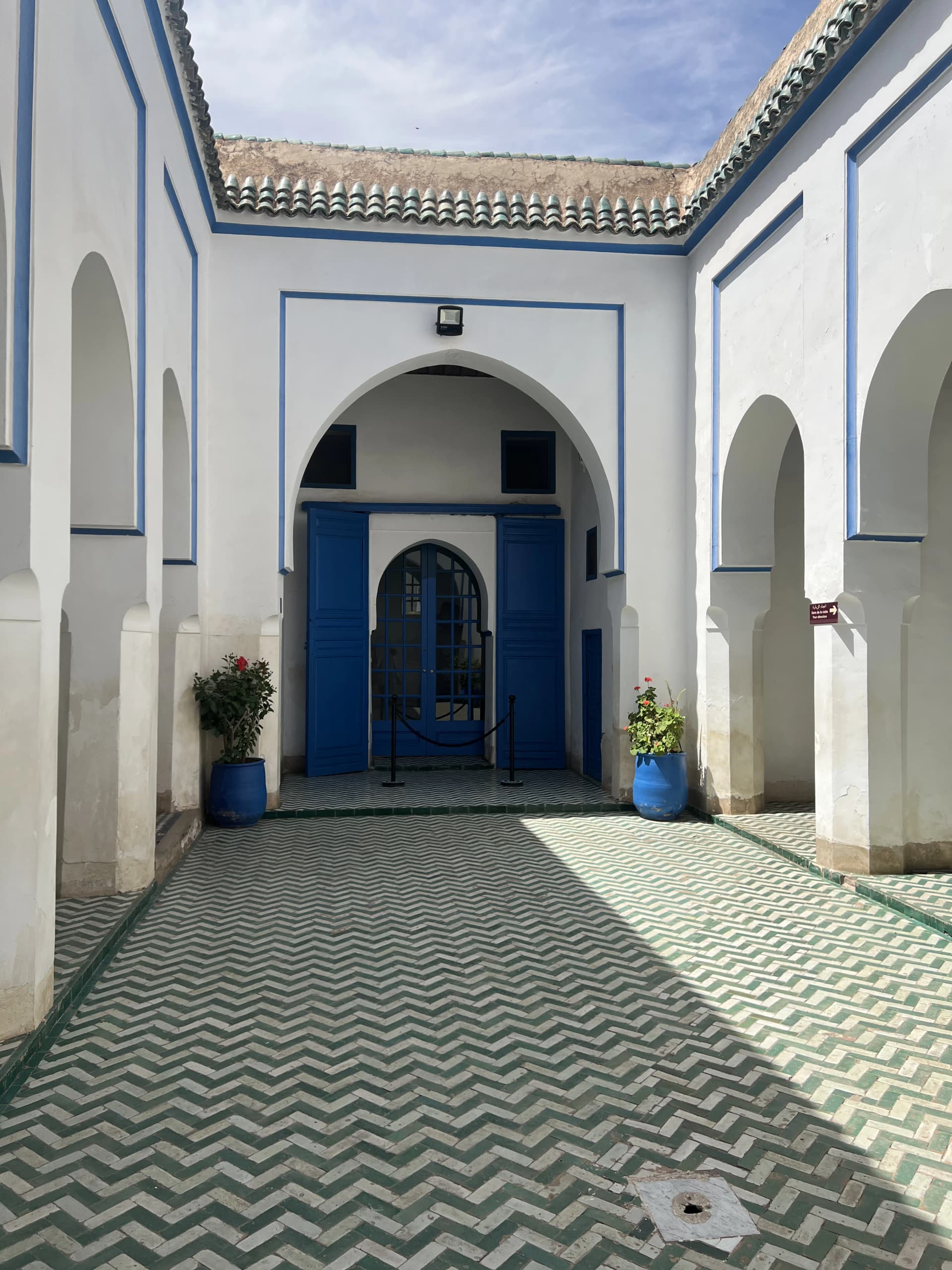
Zellige
Mosaico di terracotta smaltata tagliato a mano, su pavimenti e zoccolature.
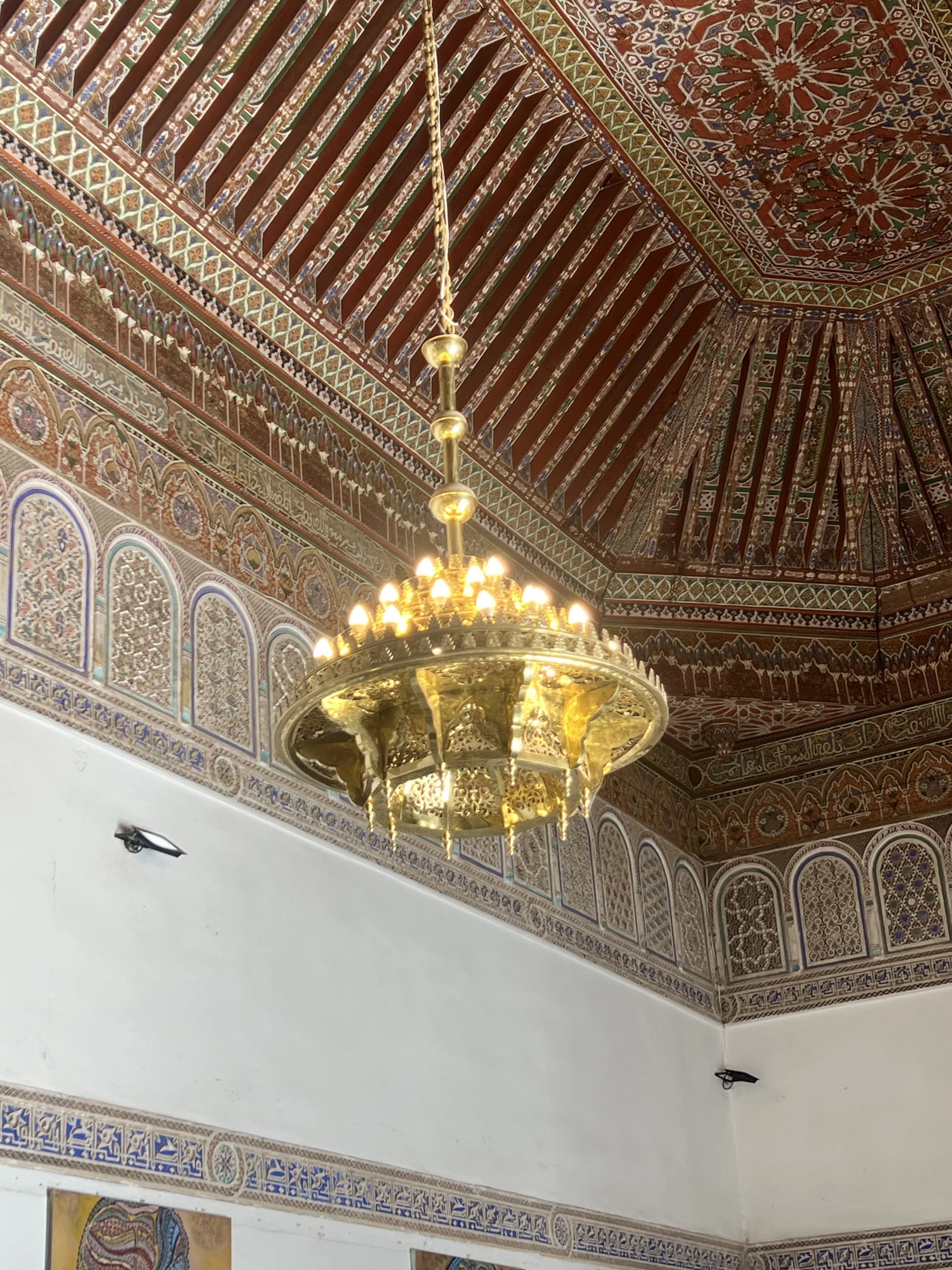
Cedro dipinto
Soffitti in cedro del Medio Atlante, intagliati e dipinti con pigmento minerale.
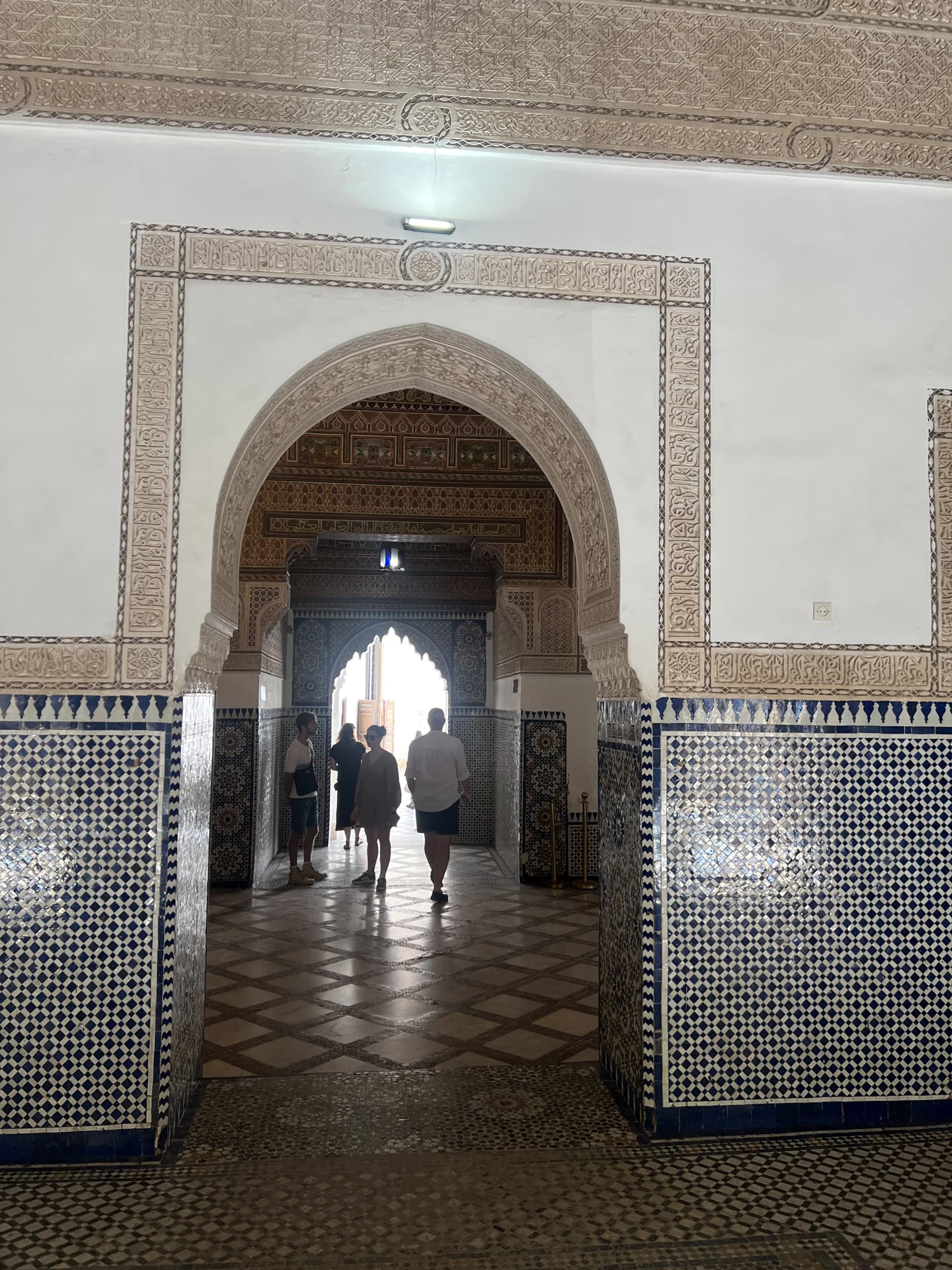
Gebs
Gesso intagliato da fresco in pannelli di arabeschi e muqarnas.
Marmo
Marmo importato che pavimenta il grande cortile, datato 1896–1897 da iscrizione.
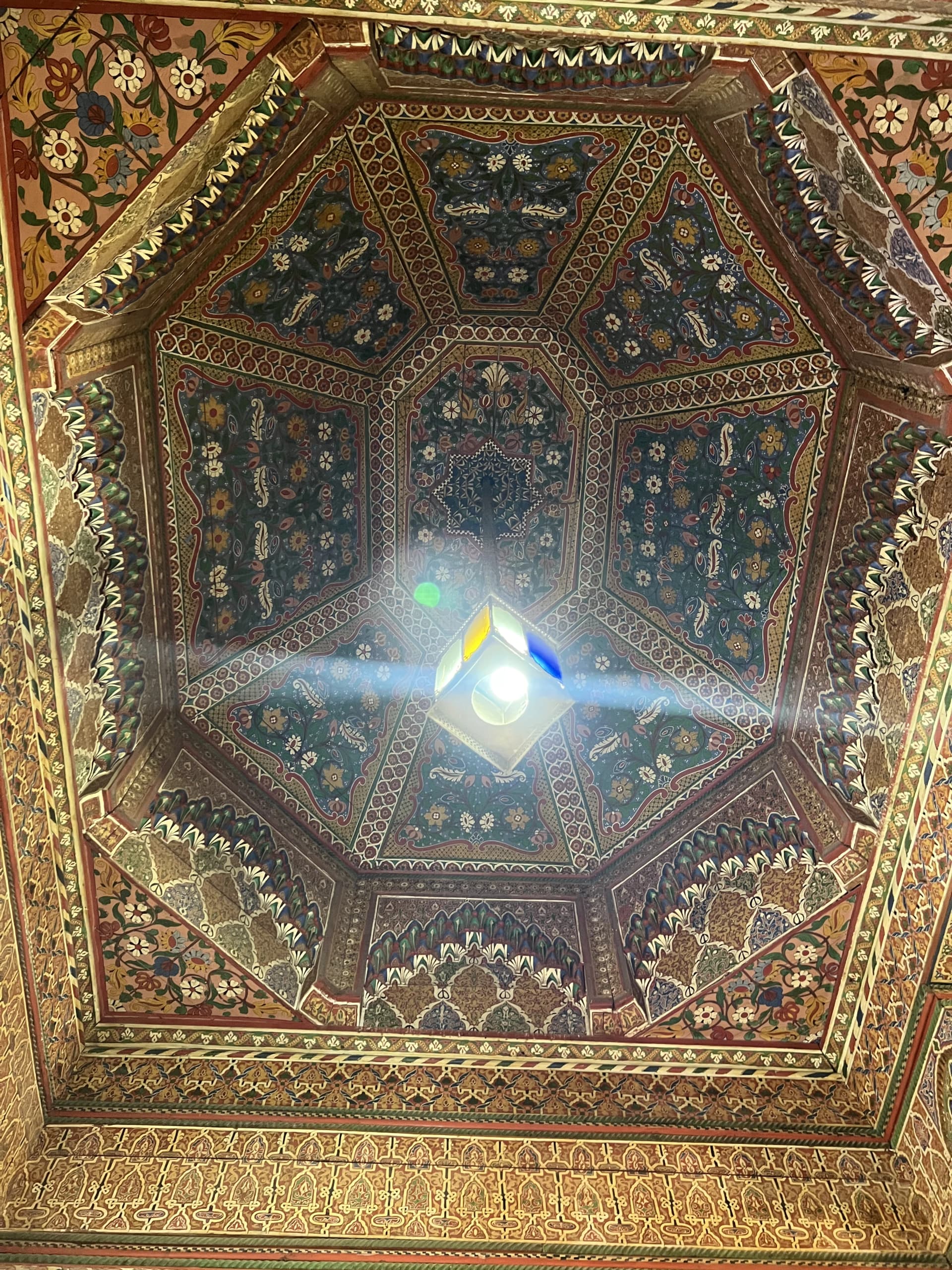
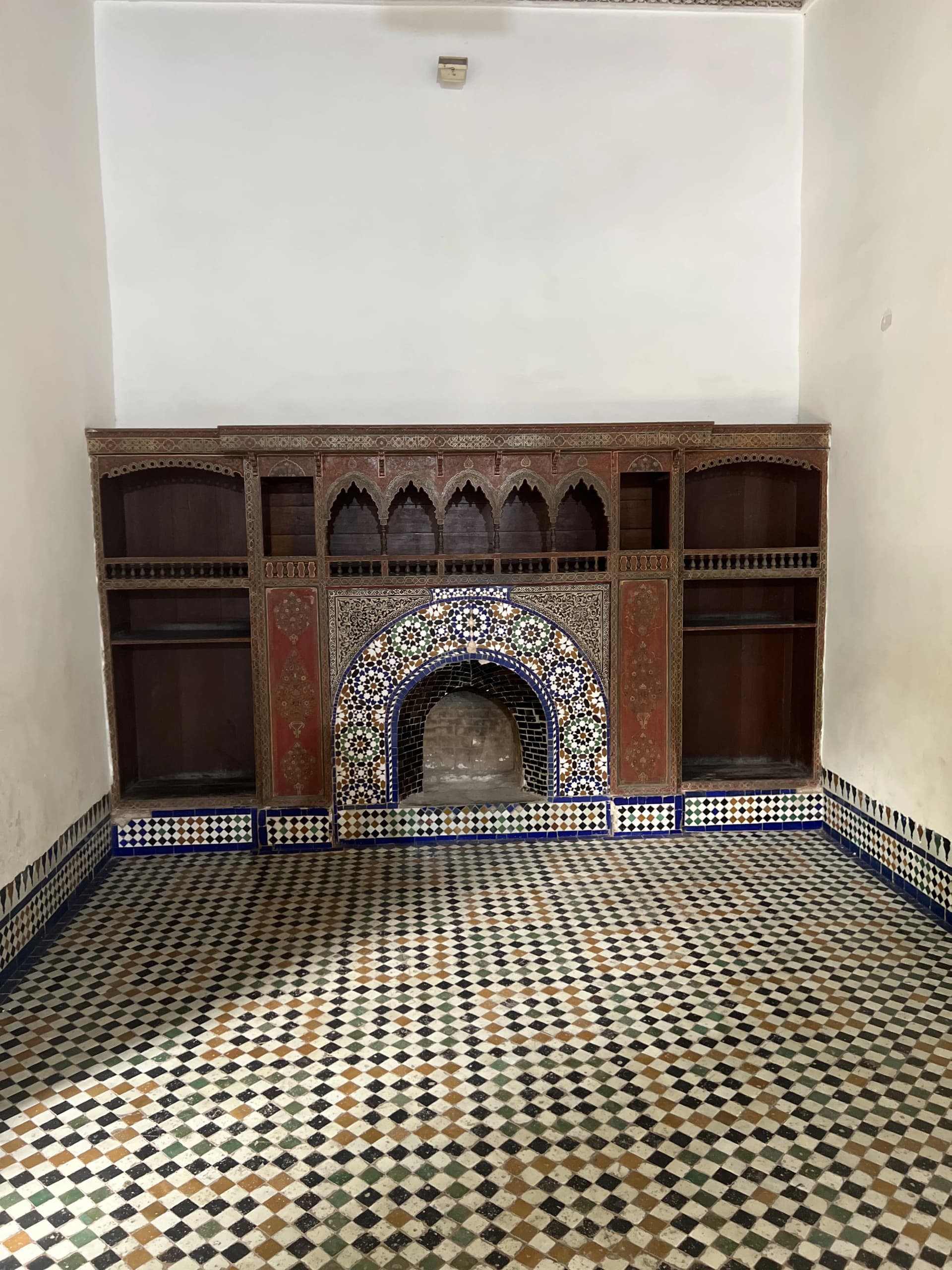
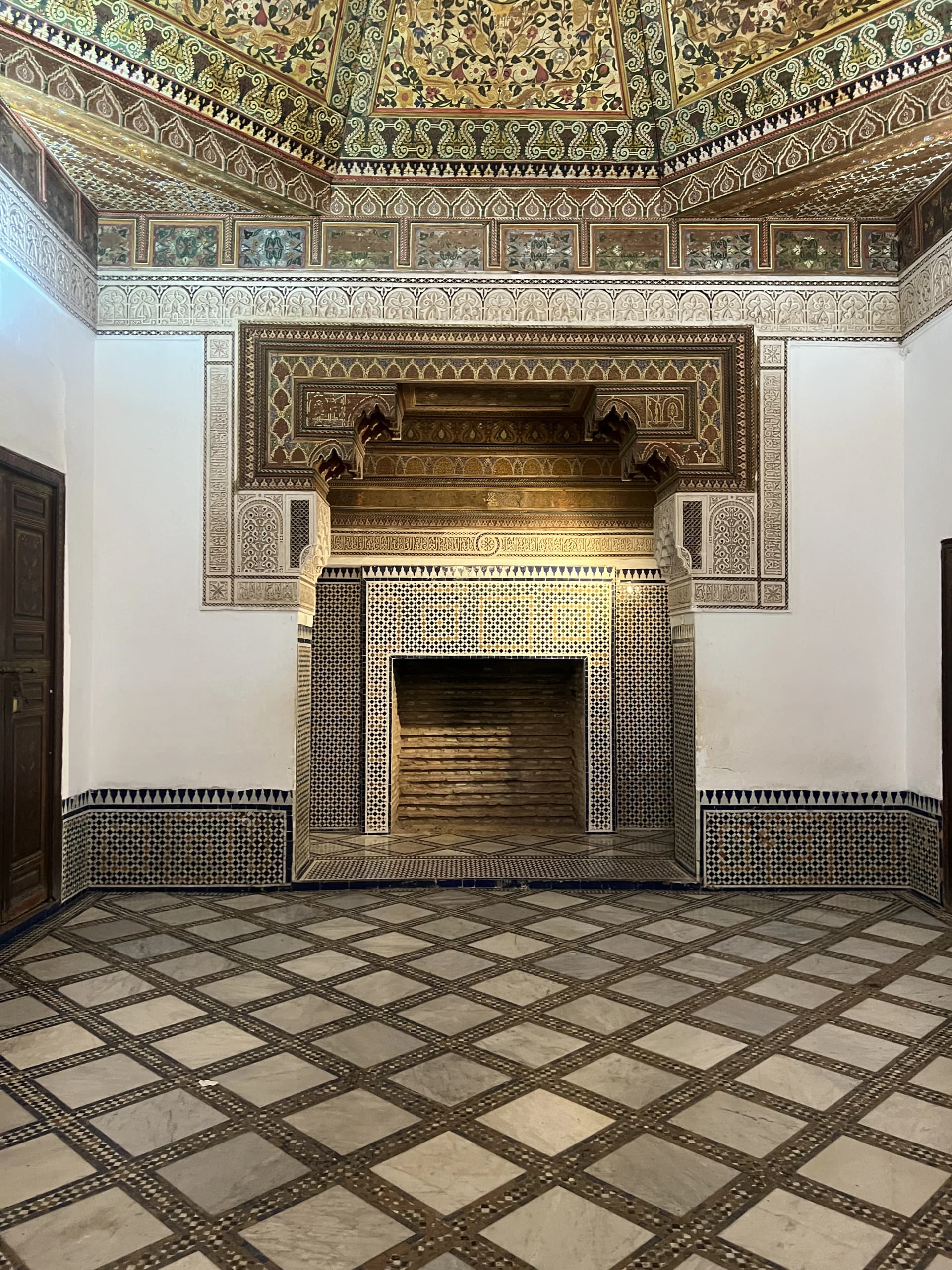
Uno schema dei sette spazi nell’ordine del percorso di visita, con ciò che accadde in ciascuno.
Il palazzo si trova nella medina di Marrakech, iscritta nella Lista del patrimonio mondiale UNESCO nel 1985 (n. 331). Dal 1912 fu residenza del residente generale francese.
Affluenza: 410.141 visitatori fra gennaio e aprile 2019. Non è pubblicato alcun totale annuo ufficiale; le cifre che circolano di «500.000 all’anno» sono stime.
Sul palazzo esiste una vera letteratura scientifica. Queste sono le opere su cui si basa questa pagina, non un link al riassunto che ne dà un’enciclopedia.
Dove queste fonti divergono, la divergenza è dichiarata anziché risolta in silenzio. Bibliografia completa, questioni aperte e politica delle correzioni sono nella pagina delle fonti.
Viverlo di persona
Confronta le opzioni, poi completa l’acquisto direttamente sul portale ufficiale dei biglietti.
Prenota i biglietti per il Palazzo Bahia