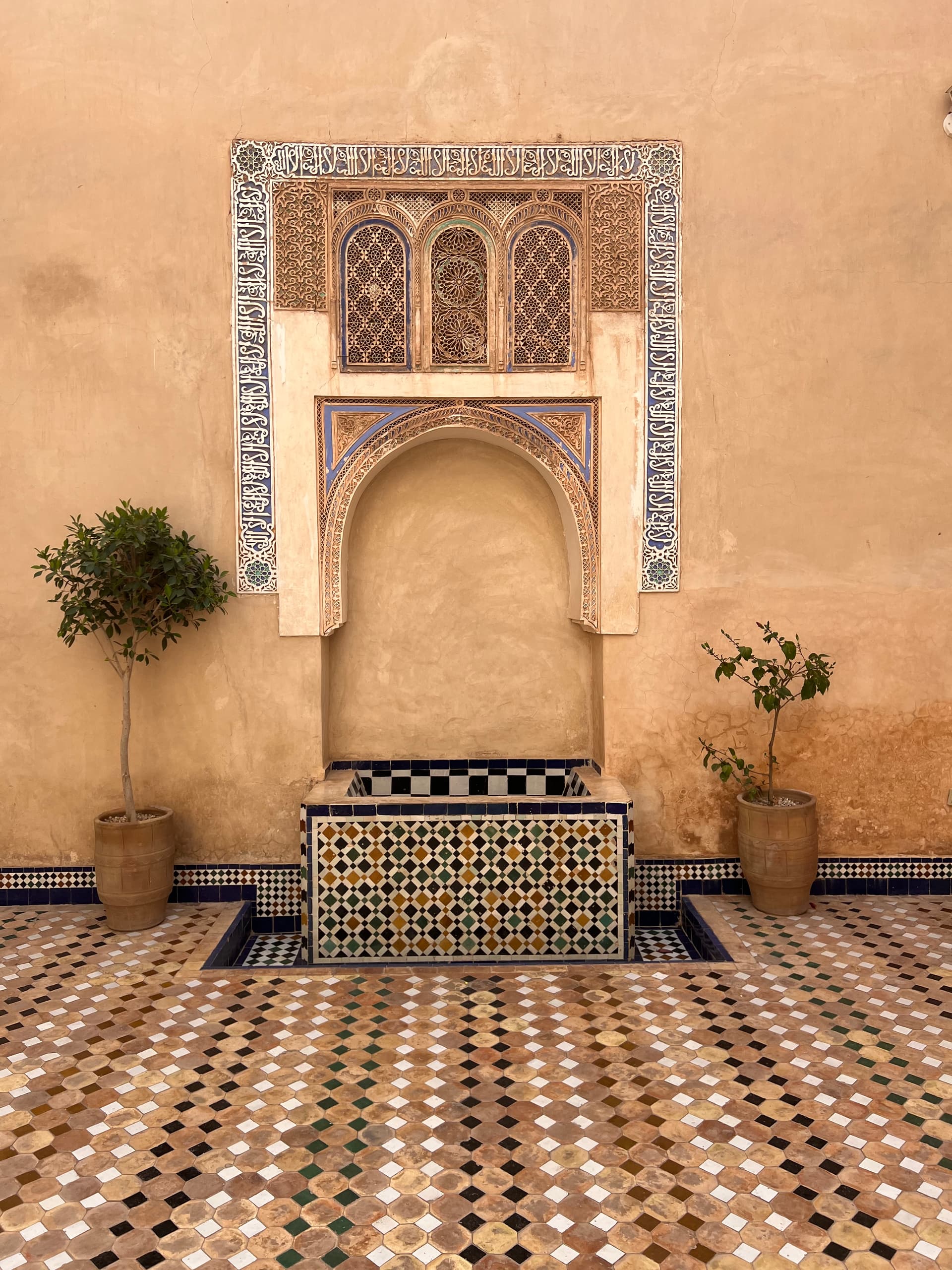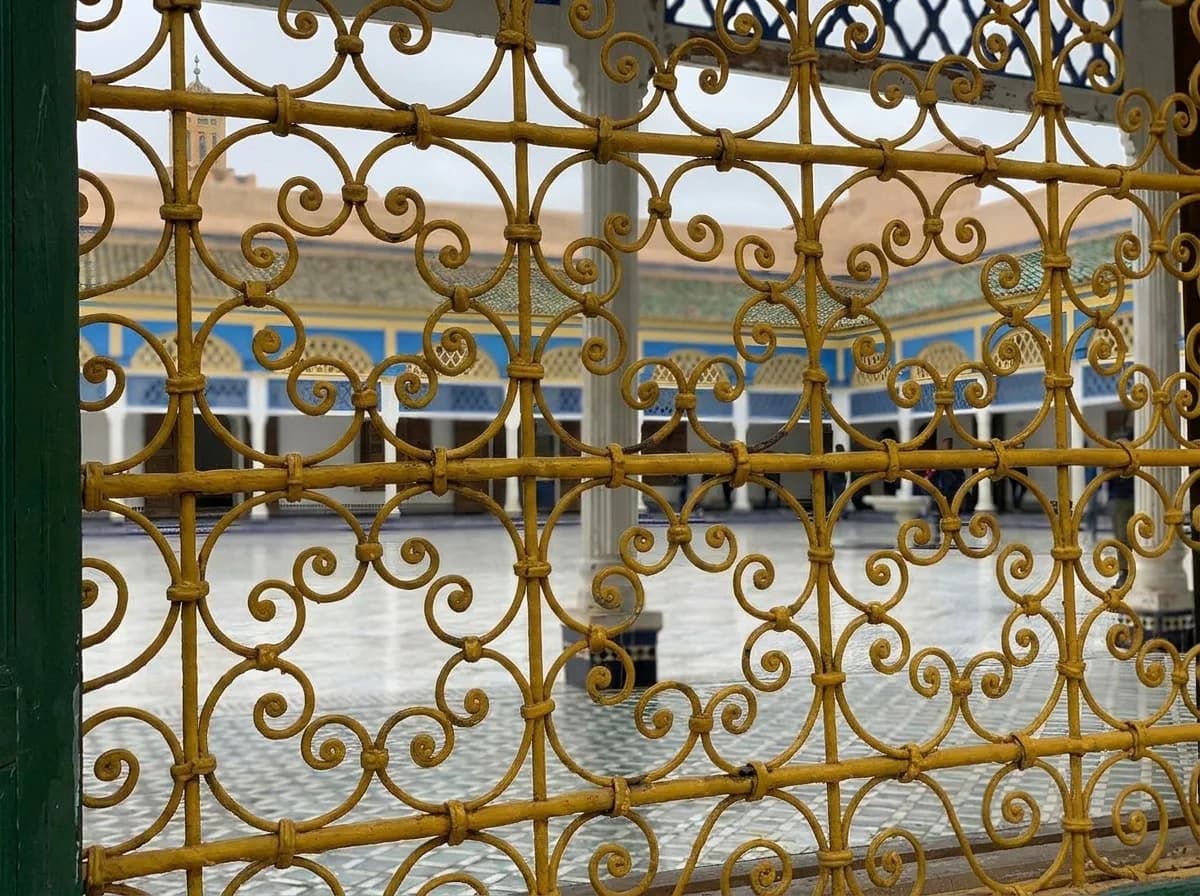
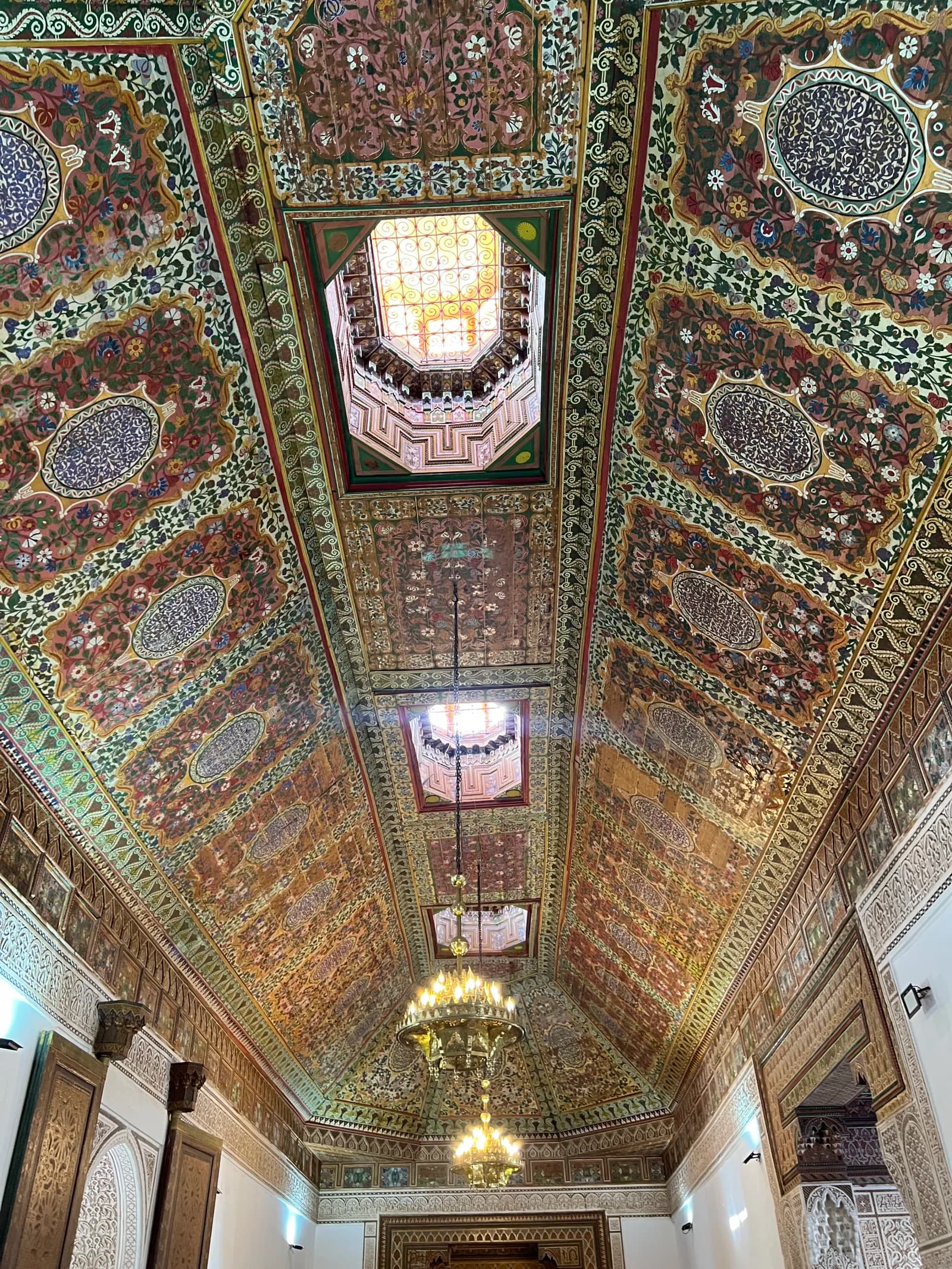
The Bahia Palace is not merely a masterpiece of 19th-century Makhzen architecture; it is a mythical space that has captured the minds of the world's greatest writers, filmmakers, fashion designers, and thinkers. To walk through its marble courtyards, shaded riads, and long, winding chicanes is to follow in the footsteps of legendary figures who found absolute inspiration in Marrakesh.
Here is an anthology of the most beautiful testimonies left by those brilliant minds who succumbed to the magnetic charm of the Bahia.
1. Edith Wharton: The Architecture of Mystery and Calm (1920)
The famous American novelist and the first woman to win the Pulitzer Prize, Edith Wharton, visited the Bahia Palace just after the First World War. In her cult travel book “In Morocco”, she described the palace with a rare poetic sensitivity, struck by the contrast between the fortress-like exterior walls and the softness of the inner courtyards:
"The Bahia Palace is the most beautiful and fantastic of Moroccan palaces. (...) There one finds the secret purity of those inner courtyards where the only sound is the plash of a fountain, contrasting with the brute force of the outer walls. It is an architecture of calm and mystery."
2. Yves Saint Laurent: The Visual Shock That Revolutionized Fashion
Arriving in Marrakesh in 1966, the global haute couture icon Yves Saint Laurent radically changed his way of designing collections after visiting the monuments of the medina. The Bahia Palace, with its painted ceilings and colorful patios, was his greatest lesson in style:
"In Marrakesh, and particularly within the perspectives of the Bahia Palace, I discovered color. The audacity of the artisanal harmonies—that intense blue responding to the saffron yellow of the painted wood and the emerald green of the tiles—taught me how to marry the shades of haute couture. This palace is not a monument of the past; it is a lesson in visual modernity."
3. Alain Resnais & Alain Robbe-Grillet: The Labyrinth of the Seventh Art
In the 1960s, the masters of the French Nouvelle Vague (New Wave) cinema were looking for new ways to film space and time. For their post-modern masterpiece “Last Year at Marienbad” (1961), the screenwriter Alain Robbe-Grillet confessed that the labyrinthine structure of the Bahia had directly dictated the film's staging and atmosphere:
"The organization of the dark corridors, the false trails, and the succession of courtyards bathed in the light of the Bahia Palace dictated our way of conceiving the film's space. We were looking for a mental labyrinth, and the Makhzen architecture of Marrakesh offered us this perfect structure where time seems suspended."
4. Elias Canetti: The Sacred Geometry of Silence
The British writer of Bulgarian origin and Nobel Prize laureate in Literature, Elias Canetti, explored the intimacy of Marrakesh in his masterpiece “The Voices of Marrakesh” (1967). For him, crossing the threshold of the Bahia is a major anthropological rupture from the noise of the outside world:
"Behind the heavy doors of these palaces like the Bahia, the tumult of the souks vanishes all at once. The spaces open onto a sacred geometry that imposes silence. One understands then that the architecture here is not made to be seen from the outside, but to be lived from the inside, like a jealously guarded secret."
5. Juan Goytisolo: The Poem of Wood, Plaster, and Zellij
The immense Spanish writer Juan Goytisolo, a fierce defender of Jemaa el-Fna square and deeply in love with the Marrakesh medina, saw the Bahia Palace as a perfect example of beauty that must be earned and that refuses modern standardization:
"The Bahia Palace is not a dead monument; it is the beating heart of a sacred geometry. Its hidden corridors teach us that in Marrakesh, beauty is never exhibited immediately; it protects itself and it is earned. Walking through the Bahia is like reading a poem written with azulejos (zellij), chiseled plaster, and cedar wood."
Step into the Legend: Let the Bahia Palace Inspire Your Own Story
The Bahia Palace is not just a trip into the past; it is a living space filled with a unique, timeless magic. Just as it awakened the creative genius of Yves Saint Laurent and captured the vivid imagination of Edith Wharton, this palace holds a secret power to inspire every single visitor. Who knows? As you walk beneath its intricately painted ceilings and listen to the gentle whisper of its fountains, you might just discover the spark for your next big project or future masterpiece. Let the magic of Marrakesh transform you and leave your own mark on history. To experience this breathtaking monument without any stress, we highly recommend that you book your Bahia Palace tickets online in advance. Securing your skip-the-line tickets beforehand ensures you bypass the crowded ticket office at the entrance while paying the official ticket price. Step inside, and let your own inspiration begin!