What Is Mousawama? The Art of the Medina Exchange
Mousawama (مساومة) is the Moroccan tradition of price negotiation — and in Marrakech's souks, it is not a battle to be won. It is a conversation to be enjoyed. The word comes from the Arabic root s-w-m (to bid, to set a price), and it describes a practice that is centuries old, deeply social, and genuinely central to the commercial life of the medina.
In Western retail, prices are fixed: you take the item, pay the number on the tag, and leave. In the medina, the first price quoted is an opening position — the start of a dialogue, not a final answer. If you accept the first price without negotiating, you have not saved time. You have simply skipped the part of the experience the vendor was looking forward to.
Understanding this changes everything. You are not being exploited when a vendor quotes high. You are being invited to participate.
Marrakech is not just about its magnificent palaces like the Bahia. The true character of the Red City lives in its people, their generosity, and their unique sense of humour — the bahja. To experience an authentic journey through the medina, you need to understand that bargaining is not a commercial battle. It is a human exchange, and this guide will help you do it well.
Why Bargaining in Marrakech Is Not Rude — It Is Expected
Visitors from Northern Europe and North America sometimes feel uncomfortable haggling because it can feel aggressive or disrespectful. The opposite is true in the medina. Walking away from a price without a counteroffer is what registers as dismissive. That is a different thing from the approaches worth refusing outright, which the Marrakech safety guide sets out one by one. A good negotiation — one that ends with both sides smiling, perhaps over a glass of mint tea — is the highest compliment you can pay a vendor.
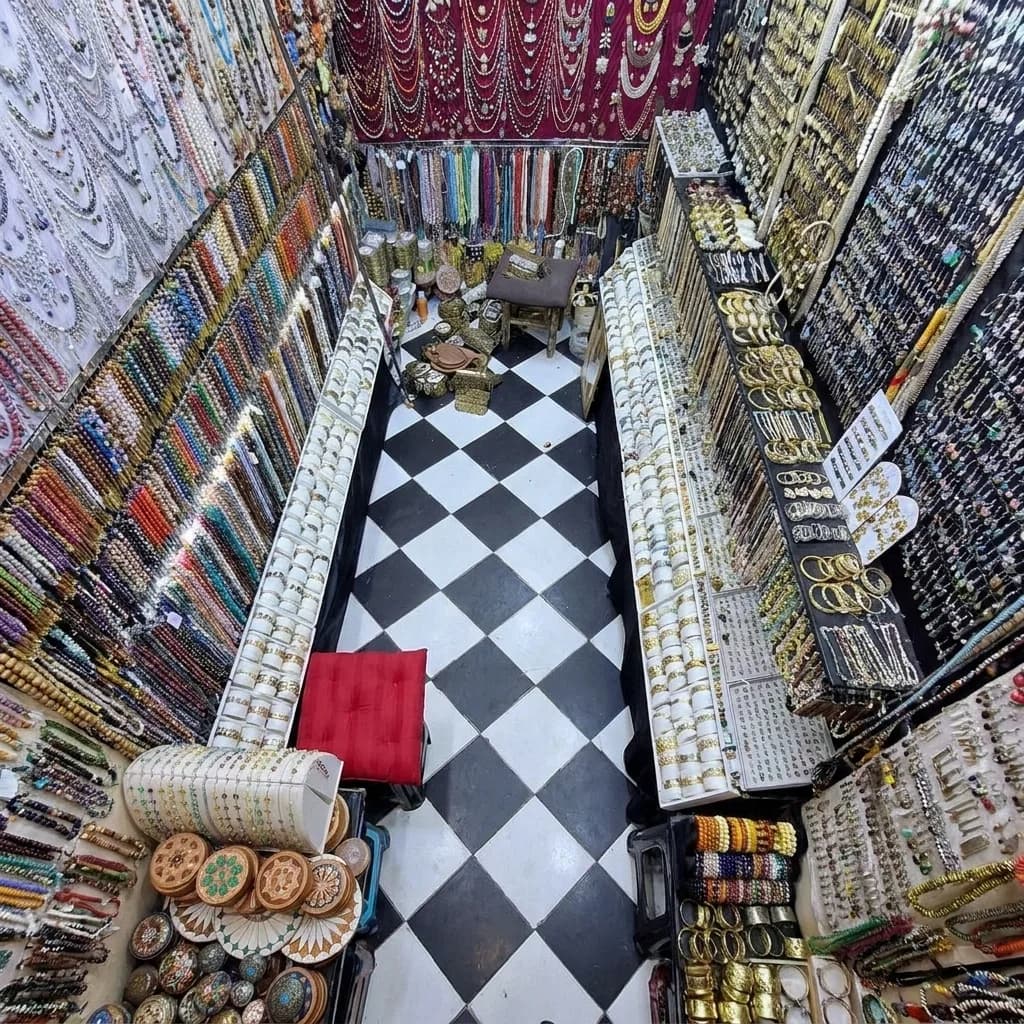
The key cultural principle: both parties should finish the exchange with dignity. You pay a fair price for the item. The artisan earns a decent living. The exchange is personal, not transactional. This matters particularly in Marrakech, where much of the souk economy is informal and family-run. The leather artisans of the tanneries, the weaving cooperatives in the carpet souks, the silverware vendors in the Souk des Bijoutiers — these are real people, many from families who have worked the same few square metres of medina for generations.
Speak Marrakchi: Essential Darija Phrases for the Souks
Using a few words of Darija (Moroccan Arabic) changes how vendors perceive you instantly. You shift from tourist to respected guest.
- "A sadiqi" (ah sah-DEE-kee) — "My friend." The universal opener. "Bonjour, a sadiqi!" said with a smile transforms your reception in any shop.
- "Bshhal hada?" (beh-SHAHL hah-dah) — "How much is this?" The most useful question in the medina.
- "Ghali bzaf" (gha-LEE bzaf) — "It is too expensive." Say it calmly, without aggression, with a friendly shake of the head.
- "Tnaqs shwiya" (tnaks SHWEE-ya) — "Reduce a little." A polite counteroffer opener.
- "3indhom mizanhom" (een-dhom mee-ZAN-hom) — "At the right weight." A Marrakchi expression meaning: the fair price is the one that balances both sides. Use it when you have agreed: "Zwin, 3indhom mizanhom" ("Good, that is the right price").
- "La, Chokran" (lah, SHOK-ran) — "No, thank you." Said while placing your right hand gently over your heart — the universal signal of respectful refusal in Morocco. Use it calmly when you genuinely do not want the item.
- "Lah yhafdak" (lah yeh-HAF-dak) — "May God protect you." A beautiful phrase for expressing genuine gratitude after a transaction. Vendors remember visitors who use it.
- "Hadchi nadi!" (had-shee NAH-dee) — "This is brilliant / perfect!" Use it to compliment an artisan's work. It costs nothing and is worth more than any tip.
Step-by-Step: What a Real Mousawama Looks Like
Here is a typical negotiation in a craft souk — a handmade leather bag, starting price 500 MAD (approximately 45 euros):
- The opening. Vendor: "For you, 500 Dirham — special price, best leather." You: examine the item genuinely. Check the stitching, feel the weight of the leather, take your time. Rushing signals that you are not serious, and it ends the negotiation before it has started.
- The counteroffer. You: "Ghali bzaf. 200?" (approximately 18 euros). The vendor will react with theatrical shock — this is entirely normal and part of the process. Smile. He will come down from 500.
- The middle ground. He comes to 380. You go to 250. He says 320 — "last price, I swear on my mother." He does not mean this literally. It means he is approaching his real floor.
- The settlement zone. You say 280. He says 300. At this point you are 20 MAD (about 1.80 euros) apart. Consider: is this item worth 27 euros to you? If yes, split the difference and say 290. If he agrees, the negotiation is complete.
- The closing. Pay, thank him with "Lah yhafdak," and mean it. He has earned a dignified amount. You have paid a fair price. Both sides leave the exchange satisfied.
One important rule: only begin a negotiation if you are genuinely interested in buying. Walking a vendor through a full negotiation and then leaving without purchasing is considered disrespectful. If you are browsing, say "Ana ghir kanshuf" (I am just looking) and move on. The vendor will understand.
Approximate Prices in Marrakech Souks (2026)
These are honest reference ranges, not targets to drive down to. The lower end reflects a fair price negotiated with goodwill; the upper end is the typical walk-in quote in tourist areas.
| Item | Fair negotiated price (MAD) | First-quote range (MAD) |
|---|---|---|
| Small leather purse | 80–150 | 250–400 |
| Babouche slippers (basic) | 50–80 | 120–180 |
| Hand-painted ceramic plate | 60–120 | 180–300 |
| Argan oil (1 litre, genuine) | 100–150 | 200–400 |
| Woven basket (medium) | 40–80 | 120–200 |
| Carved wooden spice box | 60–120 | 200–350 |
| Hand-knotted small rug | 400–800 | 1200–2500 |
A note on argan oil: genuine food-grade argan oil requires approximately 15 hours of hand labour per litre. The cooperatives that produce it are almost entirely women-run. Paying the real price — 100 to 150 MAD — is not a tourist premium. It is the actual cost of the product. Be cautious of argan oil sold at 40 or 50 MAD: at that price, it is almost certainly diluted or cosmetic-grade repackaged as culinary.
Five Mistakes Foreign Visitors Make in Marrakech Souks
- Apologising for negotiating. You do not need to apologise. Negotiate warmly and confidently — it is what the vendor expects and enjoys.
- Starting too low. A counteroffer below 25 to 30% of the asking price breaks the atmosphere. Start at 40 to 50% and work toward 60 to 70% of the opening price as your target.
- Showing enthusiasm before asking the price. If you say "Oh, it is beautiful — I love it!" before you have seen the price, you have already weakened your position. Admire quietly; negotiate calmly.
- Getting frustrated or impatient. The negotiation is not personal. If it is not going where you want, smile and say "La, Chokran" while moving toward the door. Often the vendor will call you back with a better price. This is normal and expected.
- Haggling over small amounts as a point of pride. If you have agreed on 280 MAD and he asks for 300, consider: 20 MAD is about 1.80 euros. You have already negotiated well. Finishing the exchange with warmth is worth more than the last dirham.
Social Impact: Why Every Dirham Matters
The vast majority of medina workers — orange juice vendors in Jemaa el-Fna, leather artisans in the tanneries, spice merchants in Souk el Attarin, carpet weavers in the northern souks — operate in the informal economy with no guaranteed monthly income, no sick pay, and no safety net beyond their family network.
Every dirham you spend with them flows directly to a local family without intermediaries or commercial markups. Buying a leather bag from the artisan who made it in the Souk Cherratine rather than from a chain store is not just more interesting — it is a direct economic act. The balance to strike: pay a fair price (not a price so low that it insults the craft), and enjoy the exchange for what it genuinely is: one of the things that makes Marrakech unlike anywhere else.
From the Souks to Bahia Palace
One price you never have to negotiate is the palace itself: entry is 100 MAD at the gate, or booked in your name before you arrive.
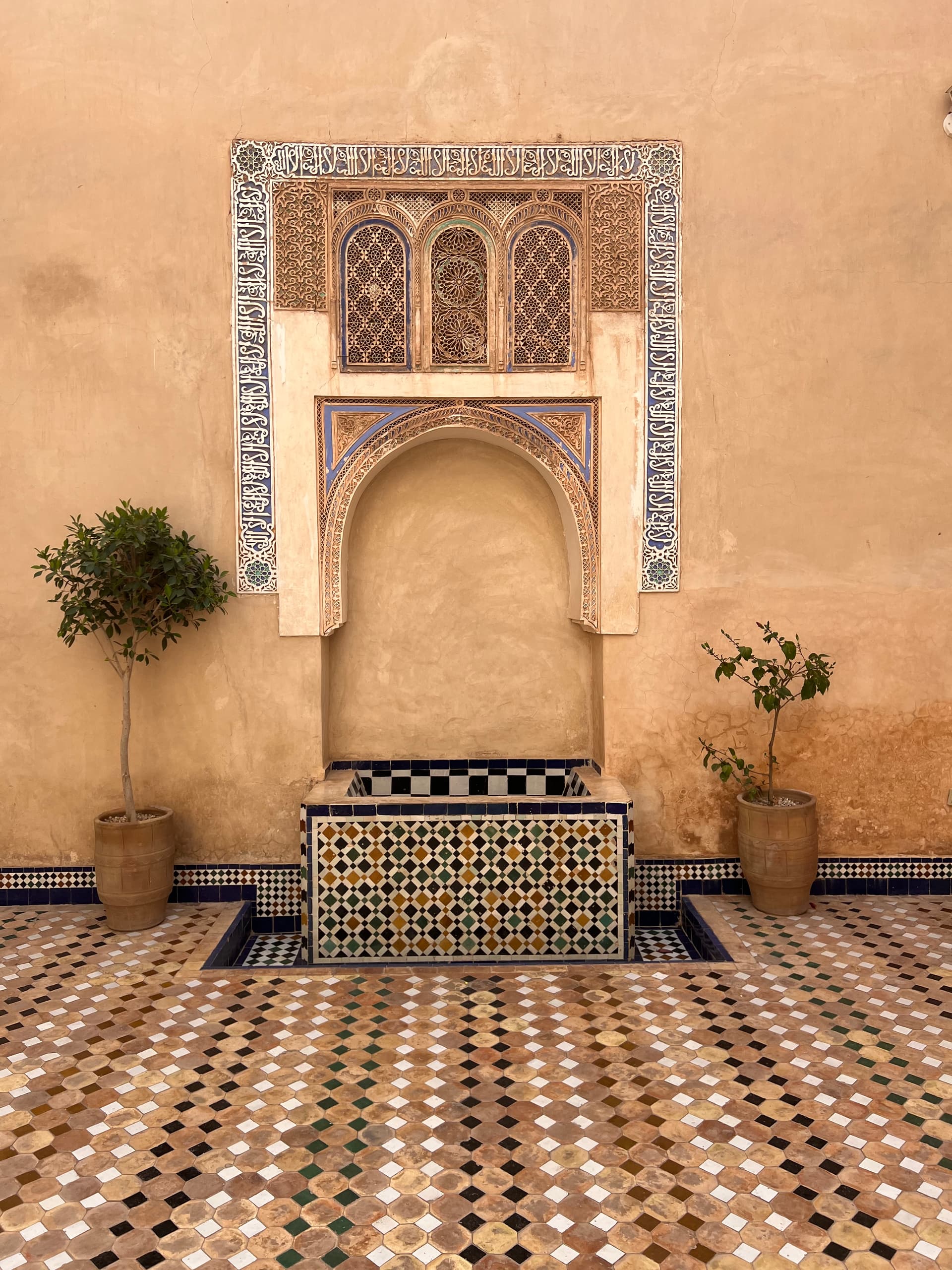
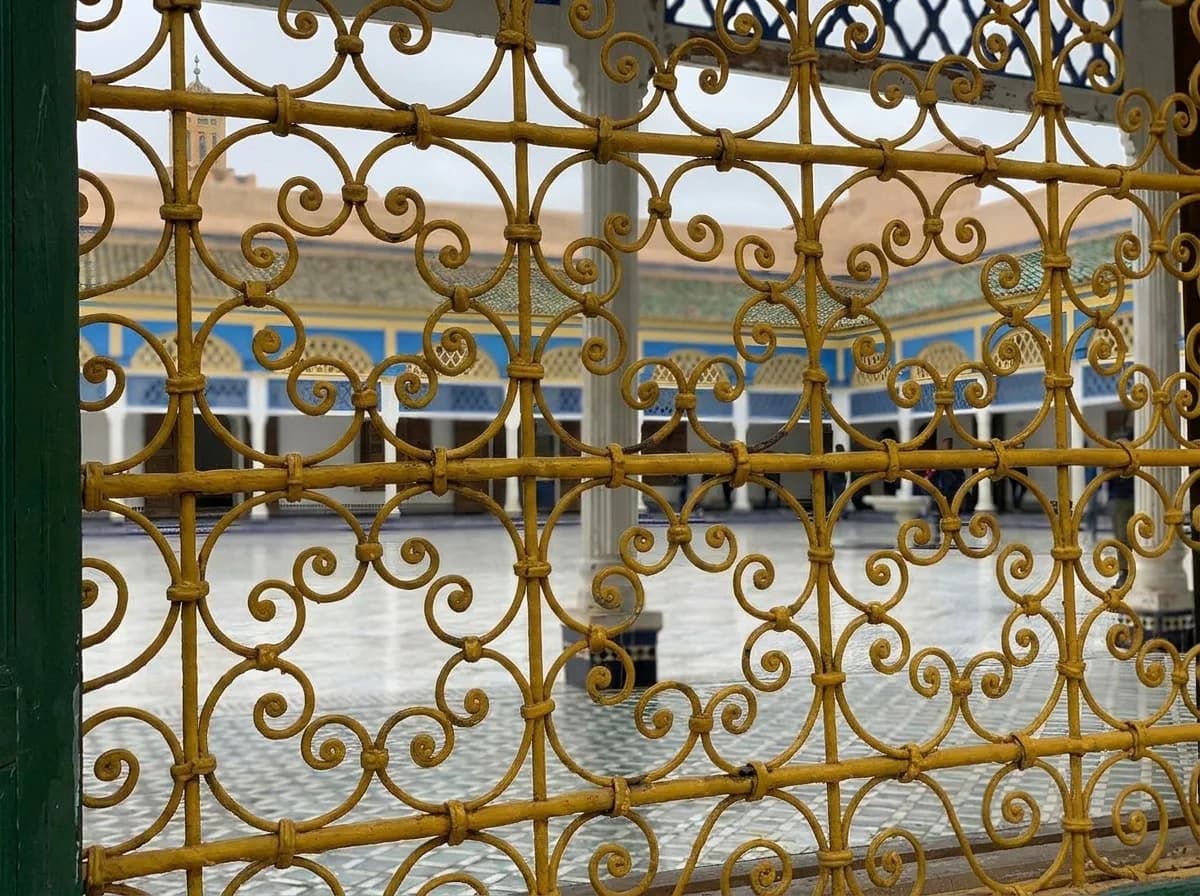
After an afternoon in the souks, the transition to Bahia Palace feels entirely natural. The zellige tilework on the palace floors, the hand-painted cedar ceilings in the Council Room, the carved stucco arabesques in the reception halls — all of it was made by the ancestors of the artisans you just met. The craftsmen who built Bahia Palace between 1894 and 1900 came from Fez and Marrakech, working techniques passed down through apprenticeship for centuries.
Walking through the palace after a morning in the souks, the connection becomes visible: the spice seller and the master craftsman who painted a ceiling panel in 1897 belong to the same tradition. The palace is where that craft reached its highest expression — thousands of individual decisions about colour, geometry, and proportion, made by hands trained from childhood in the same workshops your souk vendors learned their trade.
Book your skip-the-line ticket before you travel — the morning light in the Grand Riad, unobstructed by queues, is the best possible ending to a day that started with mint tea and Darija in the souks.